Showing the guide Famous sculptors, from Donatello to Simone Leigh

View MapMapArtistsEditorial

Art history · Artists

Famous sculptors, from Donatello to Simone Leigh

Six centuries of sculpture in thirty artists: Michelangelo, Bernini and Rodin, Brâncuși, Calder and Louise Bourgeois, and the sculptors of steel, latex, bottle caps and empty space who came after them, with the works to know, where they are and any shows on view now.

By On View · Updated · 30 sculptors

  • Famous sculptors
  • Sculpture
  • Female sculptors
  • Living sculptors
  • Michelangelo
  • Auguste Rodin
  • Constantin Brâncuși
  • Louise Bourgeois
  • Richard Serra
  • Public art

Who are the most famous sculptors? For five centuries the answer was a line of Italians and one Frenchman: Donatello, Michelangelo, Bernini, Canova and Rodin, who carved marble and cast bronze into bodies more alive than any painting. The twentieth century broke the line. Brâncuși polished a bird down to a single curve, Calder hung sculpture from the ceiling and set it moving, Louise Bourgeois and Louise Nevelson made it out of memory and scrap, and since the 1960s sculptors have worked in steel plate, latex, bottle caps, concrete and the empty space inside a house.

Here are thirty sculptors who changed what sculpture can be, in three parts and in order of birth within each: what each made, the two works to know and where they are, and any shows of their work on view now or opening soon in On View’s listings, which change as shows open and close. Eleven of the thirty are women, from Camille Claudel to Simone Leigh.

From Donatello to Rodin6

Five centuries of marble and bronze, from the Florentine who revived the art of antiquity to the Parisian who freed it.

1 / 30Florentine · c. 1386–1466

Donatello

Born and died in Florence

Works to know: David, c. 1440s (Museo Nazionale del Bargello, Florence); Penitent Magdalene, c. 1440–55 (Museo dell’Opera del Duomo, Florence)

The first great sculptor of the Renaissance trained in Lorenzo Ghiberti’s workshop on the doors of the Florence Baptistery and went on to remake nearly every kind of sculpture the ancients had known. His bronze David and his Gattamelata in Padua are the first freestanding nude and the first life-size equestrian bronze made in Europe since antiquity, and his reliefs in rilievo schiacciato, carved only millimeters deep, give marble the depth of a drawing. He also carved the gaunt wooden Magdalene, as far from classical beauty as sculpture had gone.

2 / 30Florentine · 1475–1564

Michelangelo

Born in Caprese, Tuscany; died in Rome

Works to know: Pietà, 1498–99 (St. Peter’s Basilica, Vatican City); David, 1501–04 (Galleria dell’Accademia, Florence)

Michelangelo thought of himself as a sculptor first, and painted the Sistine Chapel ceiling under protest. He carved the Pietà in St. Peter’s in his early twenties, and it is the only work he signed, across the Virgin’s sash; the David, more than five meters tall, came out of a block of marble other sculptors had abandoned, and stood in front of the Palazzo Vecchio until 1873. The unfinished Prisoners in the Accademia show figures fighting their way out of the stone. He was working on another Pietà, the Rondanini, days before he died at eighty-eight; it is in Milan, in the Castello Sforzesco.

3 / 30Italian · 1598–1680

Gian Lorenzo Bernini

Born in Naples; died in Rome

Works to know: Apollo and Daphne, 1622–25 (Galleria Borghese, Rome); The Ecstasy of Saint Teresa, 1647–52 (Santa Maria della Vittoria, Rome)

The sculptor of the Roman Baroque made marble look like skin, hair, leaves and cloth. In his twenties, for Cardinal Scipione Borghese, he carved the Rape of Proserpina, with the god’s fingers sinking into her thigh, and Apollo and Daphne, the nymph turning into a laurel tree as the god catches her. He then spent half a century building papal Rome: the bronze canopy over the altar of St. Peter’s, the colonnade of its square and the Fountain of the Four Rivers in Piazza Navona. Saint Teresa, in her chapel lit from a hidden window, is his theater of sculpture at its height.

4 / 30Venetian · 1757–1822

Antonio Canova

Born in Possagno, in the Veneto; died in Venice

Works to know: Psyche Revived by Cupid’s Kiss, 1787–93 (Musée du Louvre, Paris); Paolina Borghese as Venus Victrix, 1805–08 (Galleria Borghese, Rome)

The great sculptor of Neoclassicism gave the cool ideal of Greek marble a warmth no one had managed since Bernini, polishing his figures until they glowed by lamplight. Napoleon sat for him, and so did his sister Pauline, half-naked as Venus; after Waterloo the Pope sent Canova to Paris to bring back the works the French had taken from Rome, and he returned with many of them. His plaster models fill the gipsoteca in his birthplace, Possagno.
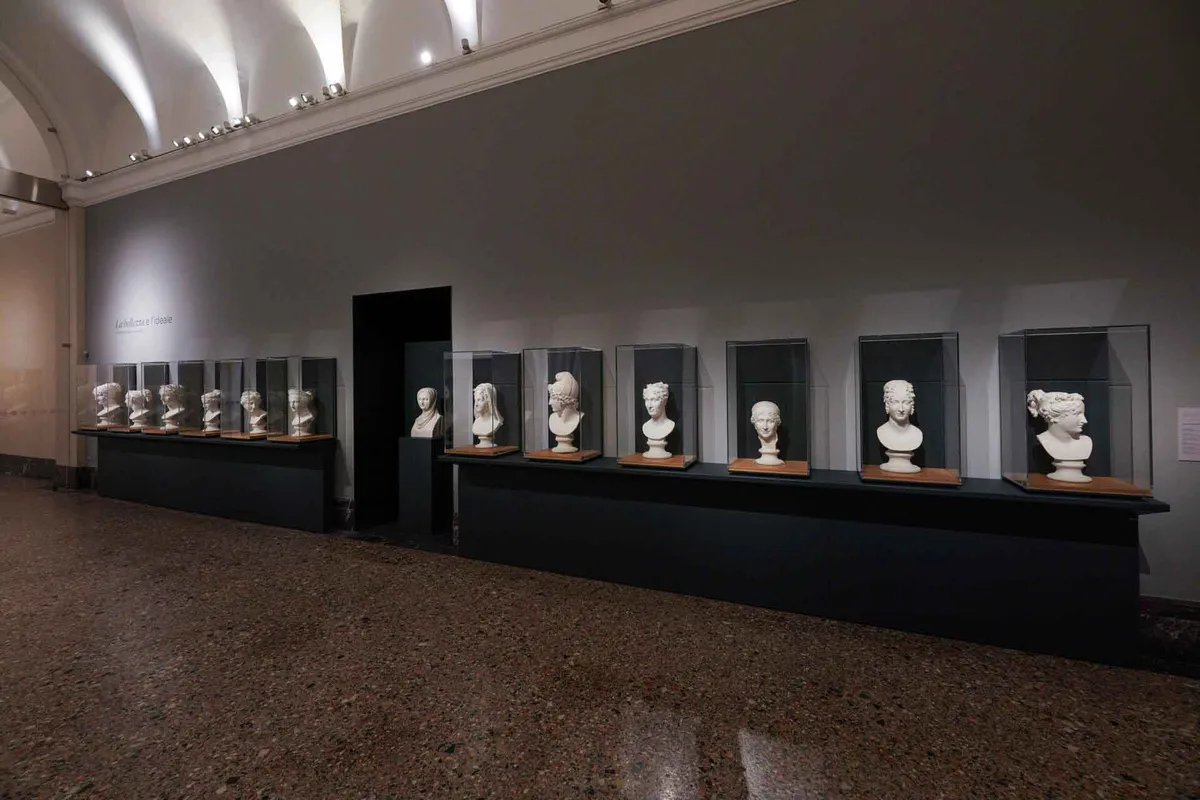
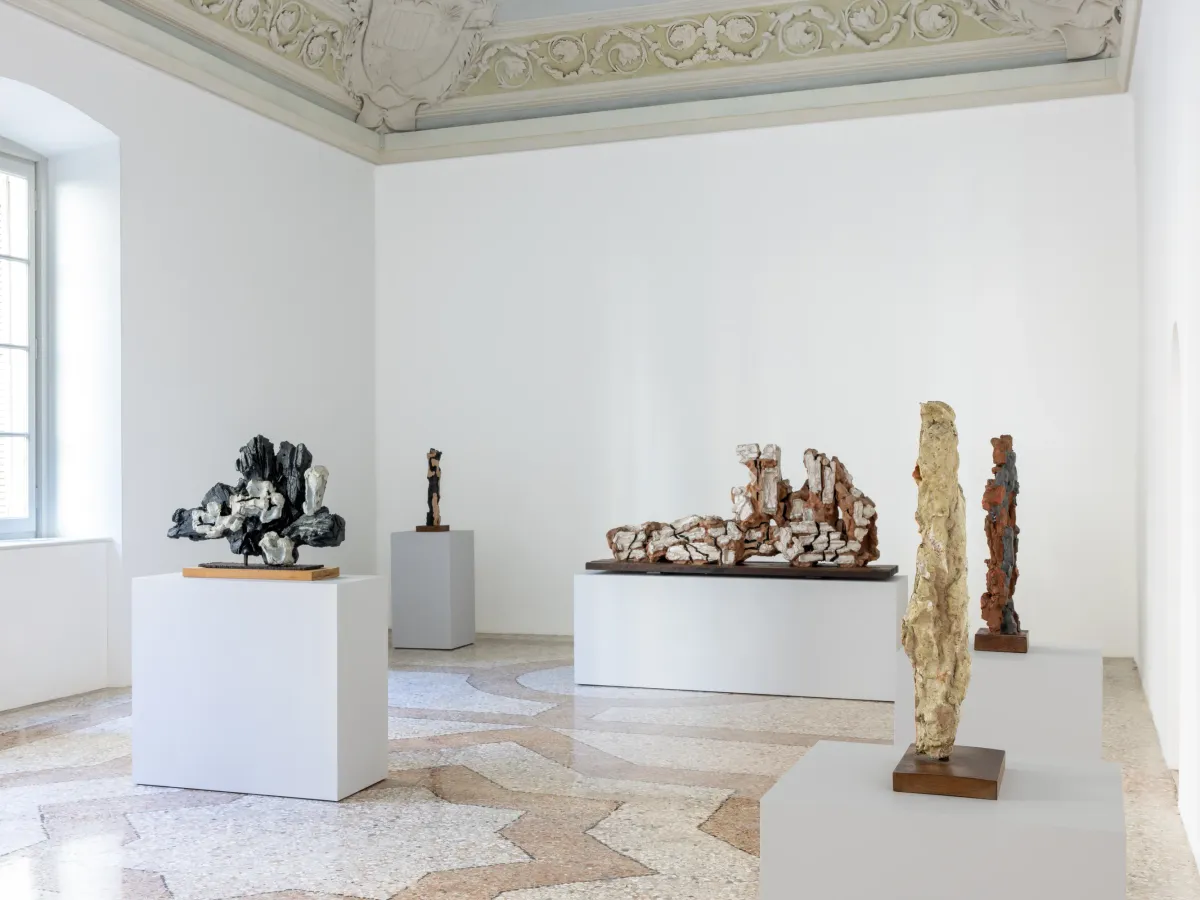
Installation view of Antonio Canova: La bellezza e l'ideale at Pinacoteca di Brera
Installation view, Antonio Canova: La bellezza e l'ideale, Pinacoteca di Brera.

5 / 30French · 1840–1917

Auguste Rodin

Born in Paris; died in Meudon

Works to know: The Thinker, 1880–1904 (Musée Rodin, Paris); The Kiss, 1888–98 (Musée Rodin, Paris)

Rodin was turned down three times by the École des Beaux-Arts, and his first major figure, The Age of Bronze of 1877, was so lifelike that critics accused him of casting it from a living man. In 1880 he was commissioned to make a portal for a museum that was never built, The Gates of Hell, and he worked on it for the rest of his life; The Thinker and The Kiss both began as figures on it. His rough, unfinished surfaces and fragments, and the robed Balzac its own commissioners rejected in 1898, opened the way for modern sculpture. The Musée Rodin, in the house and garden on the rue de Varenne where he had rented rooms, opened in 1919.

6 / 30French · 1864–1943

Camille Claudel

Born in Villeneuve-sur-Fère, Aisne; died at Montdevergues, near Avignon

Works to know: The Mature Age, 1899, cast 1902 (Musée d’Orsay, Paris); The Waltz, 1889–1905 (Musée Rodin, Paris)

Claudel entered Rodin’s studio at nineteen as an assistant and became his collaborator and lover; some of the hands and feet of The Gates of Hell are said to be hers. After their break she worked alone, in a style all her own, from the dancing couple of The Waltz to The Mature Age, in which a young woman on her knees reaches for a man being led away by an old one. In 1913, a week after her father’s death, her family had her committed to an asylum, where she spent her last thirty years and made no more sculpture. A museum of her work opened in Nogent-sur-Seine, where she lived as a girl, in 2017.

Modern sculpture10

The sculptors who took it off the pedestal, between the wars and after: simple forms, open space, moving parts and found wood and steel.

7 / 30Romanian-born French · 1876–1957

Constantin Brâncuși

Born in Hobița, Romania; died in Paris

Works to know: Bird in Space, 1928 (Museum of Modern Art, New York); Endless Column, 1938 (Târgu Jiu, Romania)

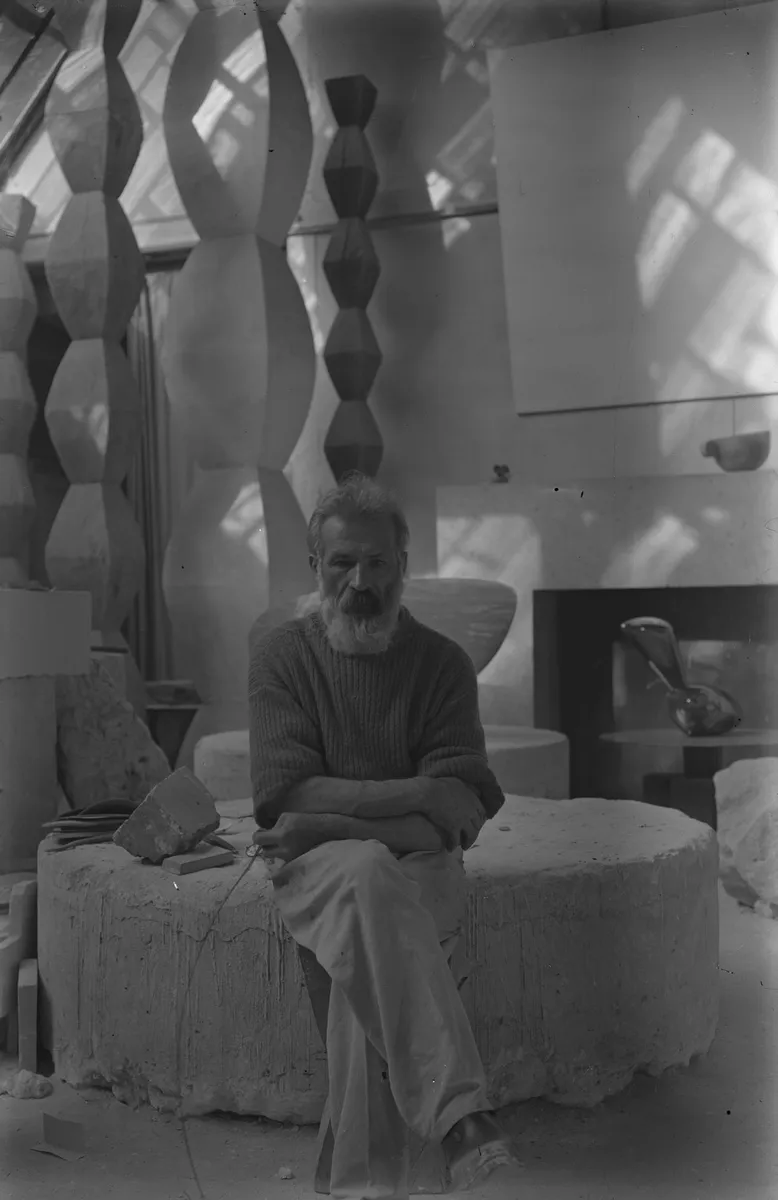
Brâncuși walked much of the way from Bucharest to Paris, where he spent a few weeks as an assistant in Rodin’s studio in 1907 and left, saying nothing grows in the shade of big trees. He spent the next fifty years paring forms down to their essence: an egg-shaped head, a kiss as a single block, a bird in flight as one tapering curve of polished bronze. When American customs taxed a Bird in Space as metal in 1926, a court ruled two years later that it was a work of art. In May 2026 his Danaïde sold for $107.6 million at Christie’s, the second-highest price ever paid at auction for a sculpture. His studio, left to the French state, was rebuilt beside the Centre Pompidou.

Constantin Brancusi, Self-portrait in the studio with Endless Columns I–IV, Fish (1930), Leda (1926), c. 1934
Constantin Brancusi, Self-portrait in the studio with Endless Columns I–IV, Fish (1930), Leda (1926), c. 1934. Glass negative. Centre Pompidou, Paris, Musée national d’art moderne-Centre de création industrielle, Constantin Brancusi Bequest, 1957. PH 854. Digital Image © CNAC/MNAM, Dist. RMN-Grand Palais / Art Resource, NY. © Succession Brancusi – All rights reserved (Adagp) 2026. In Constantin Brancusi: The Artist and His Studio, The Museum of Modern Art, New York.

8 / 30American · 1898–1976

Alexander Calder

Born in Lawnton, Pennsylvania; died in New York

Works to know: Calder’s Circus, 1926–31 (Whitney Museum of American Art, New York); Flamingo, 1973 (Federal Plaza, Chicago)

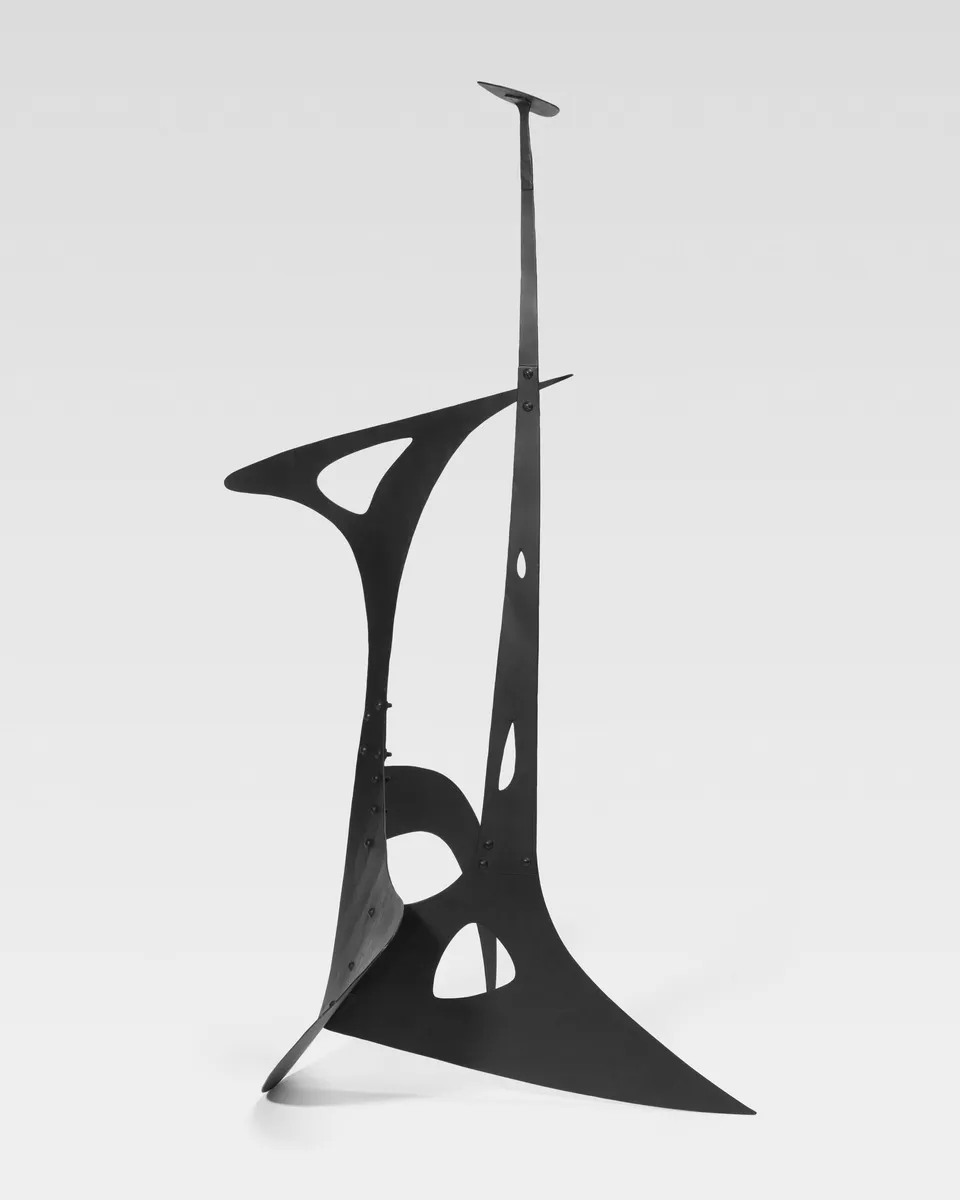
The son and grandson of sculptors, Calder trained as a mechanical engineer before he went to Paris in 1926, where he drew in wire and performed a miniature circus of wire, cork and cloth for the avant-garde. A visit to Mondrian’s studio in 1930 turned him to abstraction, and the next year Marcel Duchamp named his first moving sculptures “mobiles”; Jean Arp called the standing ones “stabiles.” Calder made sculpture move with the air, and in his last decades it grew to the scale of cities, in painted steel. He won the sculpture prize at the 1952 Venice Biennale.

Alexander Calder, Black Stabile, 1941
Alexander Calder, Black Stabile, 1941. Sheet metal and paint. © 2026 Calder Foundation, New York / Artists Rights Society (ARS), New York. Courtesy of Calder Foundation, New York / Art Resource, New York. In Calder | O’Keeffe, Hauser & Wirth, Palo Alto, San Francisco.
9 / 30British · 1898–1986

Henry Moore

Born in Castleford, Yorkshire; died at Perry Green, Hertfordshire

Works to know: Recumbent Figure, 1938 (Tate, London); Knife Edge Two Piece, 1962–65 (College Green, Westminster, London)

A Yorkshire miner’s son, Moore studied at Leeds, alongside Barbara Hepworth, and in London, and found his models less in Greece than in Mexican and African carving and the shapes of pebbles, bones and hills. The reclining figure, hollowed and pierced, was his subject for sixty years. His drawings of Londoners sheltering from the bombs in the Underground in 1940 and 1941 made him famous at home, and the sculpture prize at the 1948 Venice Biennale abroad; his bronzes stand in front of museums, parliaments and universities around the world. His house and studios at Perry Green are open to visitors in summer.

Installation view of Henry Moore: Monumental Nature at Shirley Sherwood Gallery of Botanical Art
Installation view, Henry Moore: Monumental Nature, Shirley Sherwood Gallery of Botanical Art. © Henry Moore Foundation. Photo: Ines Stuart-Davidson.

10 / 30Ukrainian-born American · 1899–1988

Louise Nevelson

Born in Pereiaslav, Ukraine; died in New York

Works to know: Sky Cathedral, 1958 (Museum of Modern Art, New York); Mrs. N’s Palace, 1964–77 (Metropolitan Museum of Art, New York)

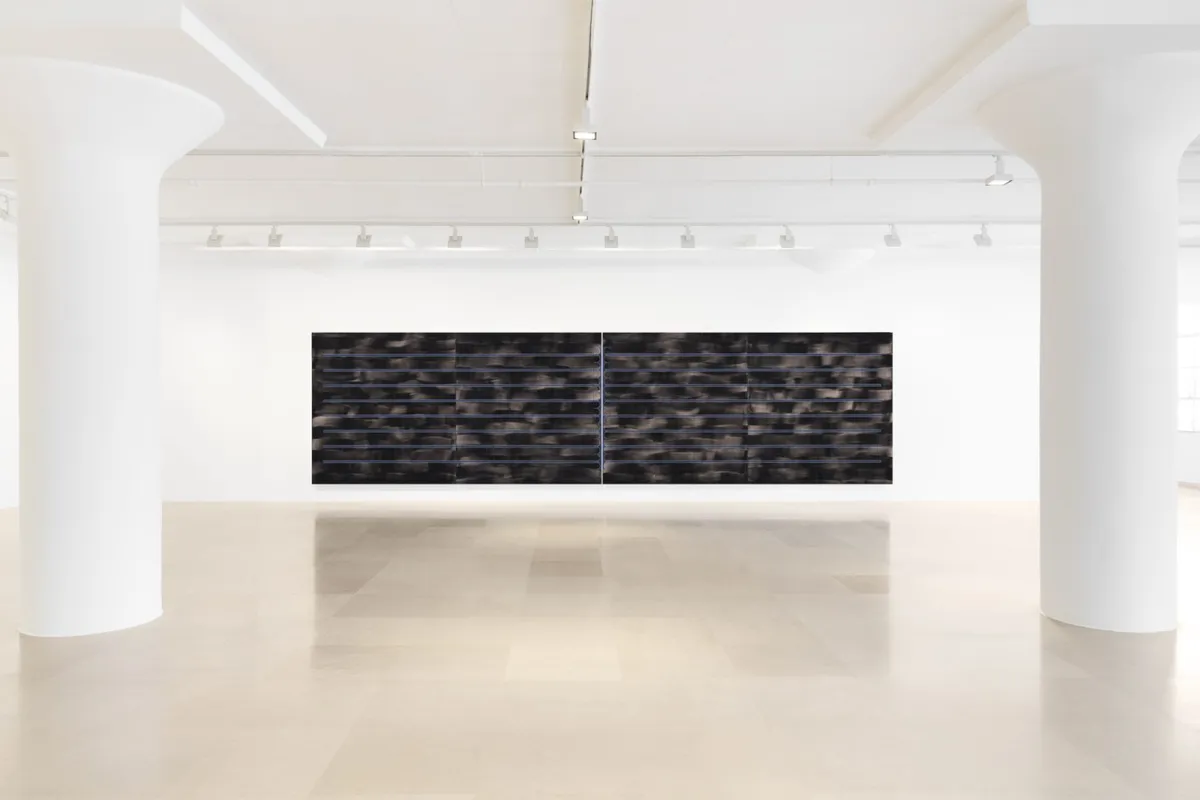
Nevelson came to Rockland, Maine, as a child, studied at the Art Students League in New York and with Hans Hofmann in Munich, and was in her late fifties before her work was taken seriously. It was made from the city’s castoffs, chair legs, crates, banisters and moldings gathered on the street, fitted into boxes stacked into walls and painted a single black, later white or gold, so that the scraps become one shadowy landscape. Her plaza of black steel sculptures in Lower Manhattan, Louise Nevelson Plaza, was the first public space in the city named for a living artist.

Louise Nevelson: Dawn to Dusk at Patricia & Phillip Frost Art Museum
Louise Nevelson: Dawn to Dusk. © 2026 Estate of Louise Nevelson / Artists Rights Society (ARS), New York. In Louise Nevelson: Dawn to Dusk, Patricia & Phillip Frost Art Museum, Miami.

11 / 30Swiss · 1901–1966

Alberto Giacometti

Born in Borgonovo, Switzerland; died in Chur

Works to know: Woman with Her Throat Cut, 1932 (Museum of Modern Art, New York); Walking Man I, 1960 (Fondation Giacometti, Paris)

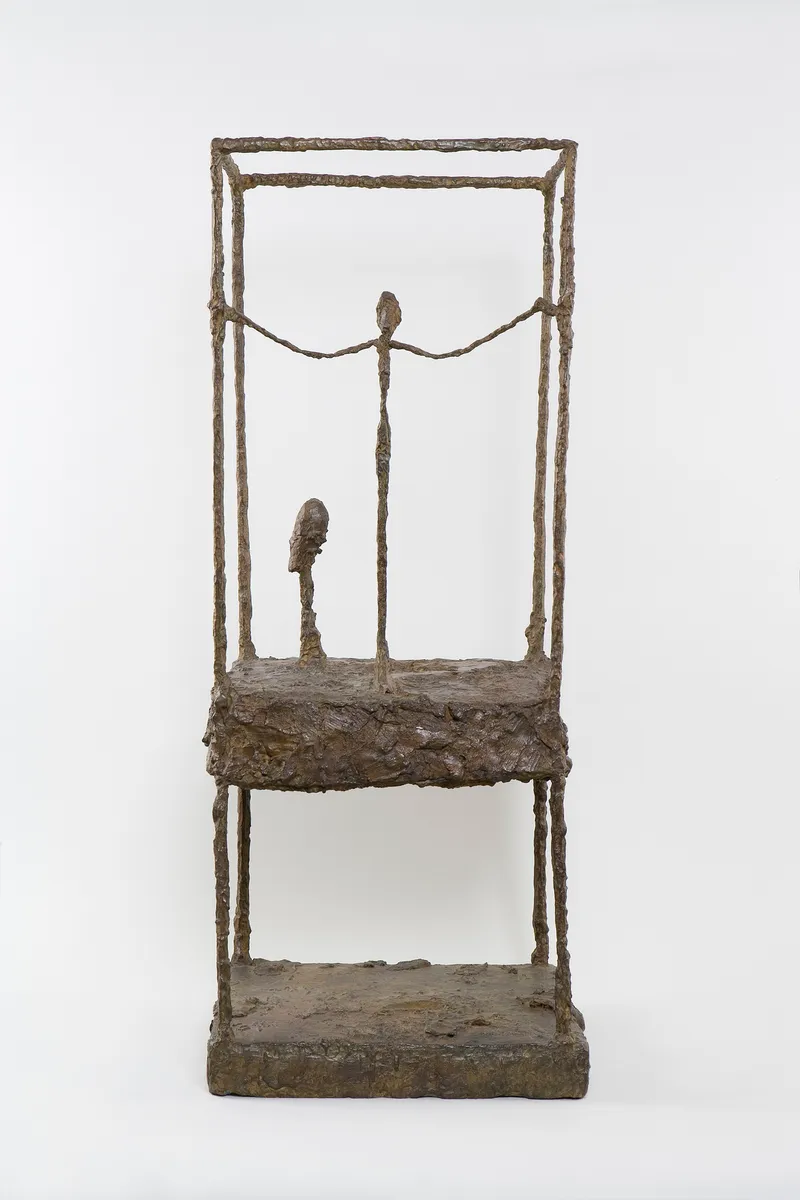
Giacometti came to Paris in 1922 and made some of the strangest objects of Surrealism, until he went back to working from the model in 1935 and the Surrealists threw him out. In his cramped studio in Montparnasse he whittled his figures down until they were as thin as wire and scarred with fingerprints: walking men, standing women and heads seen from far off, the image of the postwar human being. His Pointing Man sold for $141.3 million at Christie’s in 2015, still the most ever paid at auction for a sculpture. His studio is rebuilt in the Institut Giacometti in Paris.

Alberto Giacometti, La cage, première version, 1949–1950
Alberto Giacometti, La cage, première version, 1949–1950. Bronze, 90.5 × 37.5 × 34.3 cm. Private Collection. In Alberto Giacometti and Yves Tanguy: Solitude and Silence, Skarstedt, Paris.

12 / 30British · 1903–1975

Barbara Hepworth

Born in Wakefield, Yorkshire; died in St Ives, Cornwall

Works to know: Pelagos, 1946 (Tate, London); Single Form, 1961–64 (United Nations Headquarters, New York)

Hepworth made her first pierced form in 1931, and Henry Moore later called 1932 the year of the hole; the opening, the space inside the form, became her signature. She carved wood and stone directly, strung some of her forms with taut string, and after moving to St Ives in Cornwall in 1939 drew on the sea, the cliffs and the standing stones of the coast. Single Form, more than six meters of bronze at the United Nations, is a memorial to Dag Hammarskjöld, who had owned her work. Her studio in St Ives, where she died in a fire in 1975, is now a museum run by Tate, and her home town has The Hepworth Wakefield.

13 / 30American · 1904–1988

Isamu Noguchi

Born in Los Angeles; died in New York

Works to know: Red Cube, 1968 (140 Broadway, New York); California Scenario, 1980–82 (Costa Mesa, California)

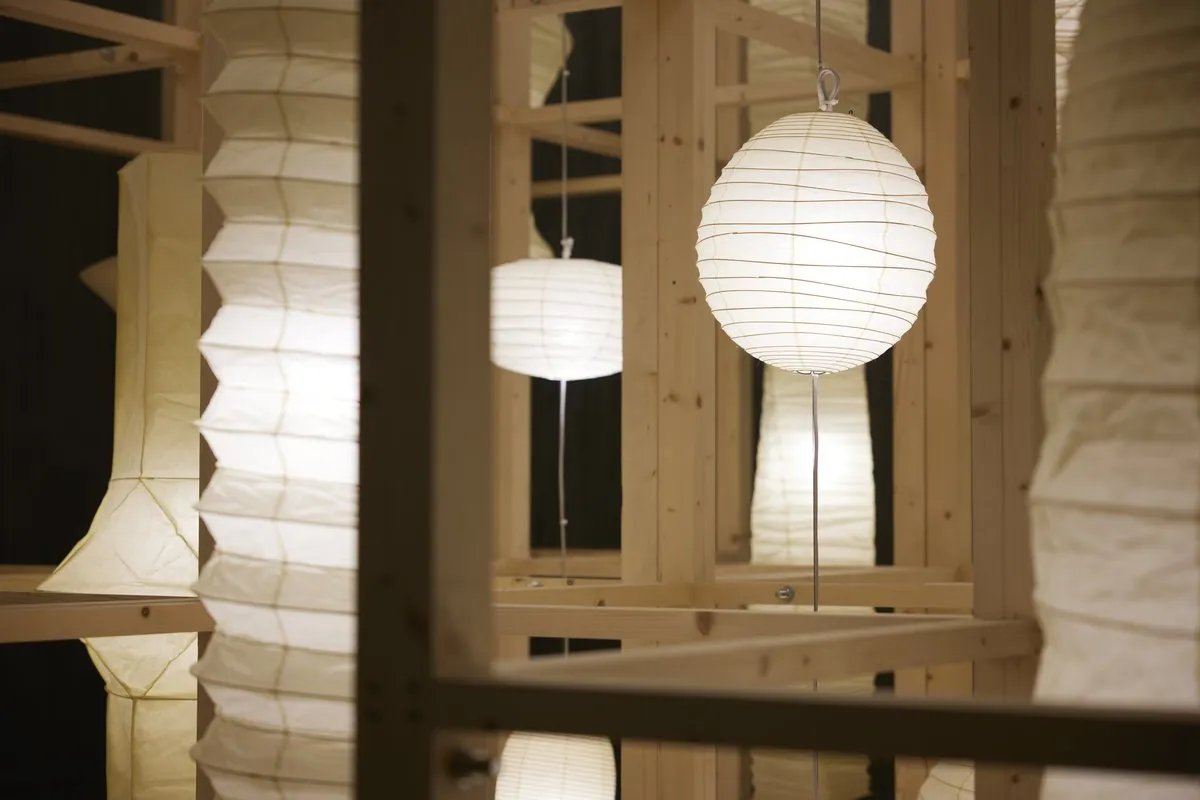
The son of an American writer and a Japanese poet, Noguchi apprenticed himself to Brâncuși in Paris in 1927 and spent the rest of his life between New York and Japan, making sculpture in stone, sets for Martha Graham, playgrounds and gardens, and furniture and lamps. His Akari light sculptures of paper and bamboo, first made in 1951, are still produced in Gifu. In 1942 he went voluntarily into a camp for Japanese Americans in Arizona. The museum he built in a Long Island City factory, the Noguchi Museum, opened in 1985.

Installation view of Danh Vo in Situ: Akari by Noguchi at M+
Installation view, Danh Vo in Situ: Akari by Noguchi, M+. Lok Cheng, M+, Hong Kong.

14 / 30American · 1906–1965

David Smith

Born in Decatur, Indiana; died near Bennington, Vermont

Works to know: Hudson River Landscape, 1951 (Whitney Museum of American Art, New York); Cubi XXVII, 1965 (Solomon R. Guggenheim Museum, New York)

Smith learned to weld on an automobile assembly line, and when he saw the welded iron sculptures of Picasso and Julio González in a magazine he saw how to make sculpture out of the factory. He drew in steel, in open, linear works such as Hudson River Landscape, then built the stacked, burnished stainless-steel boxes of the Cubi series and set them out in the fields of his farm at Bolton Landing, in the Adirondacks, to catch the light. He died in a car crash at fifty-nine, at the height of his powers.

15 / 30French-born American · 1911–2010

Louise Bourgeois

Born in Paris; died in New York

Works to know: Cell (Eyes and Mirrors), 1989–93 (Tate, London); Maman, 1999 (Tate, London, with bronze casts elsewhere)

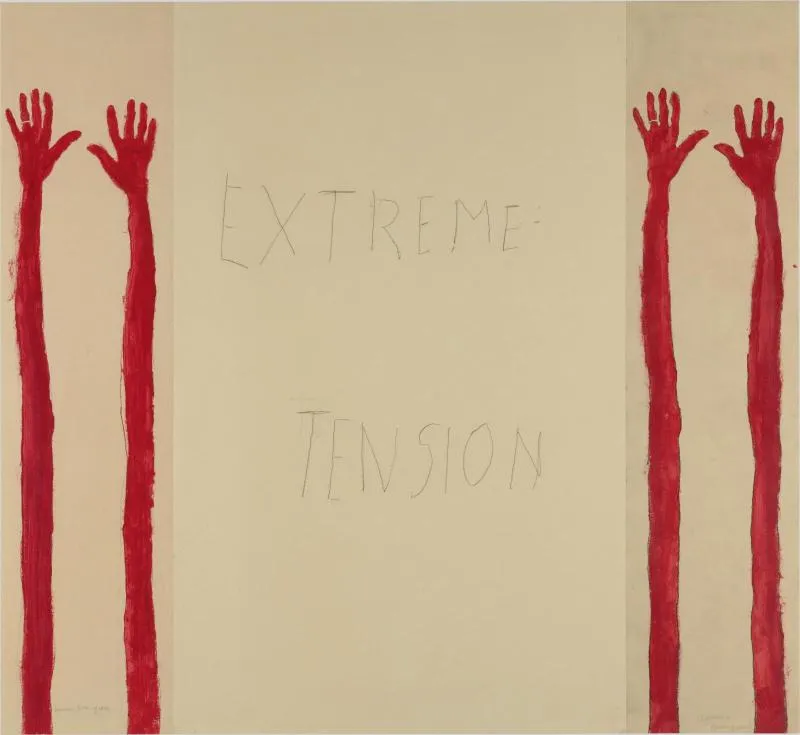
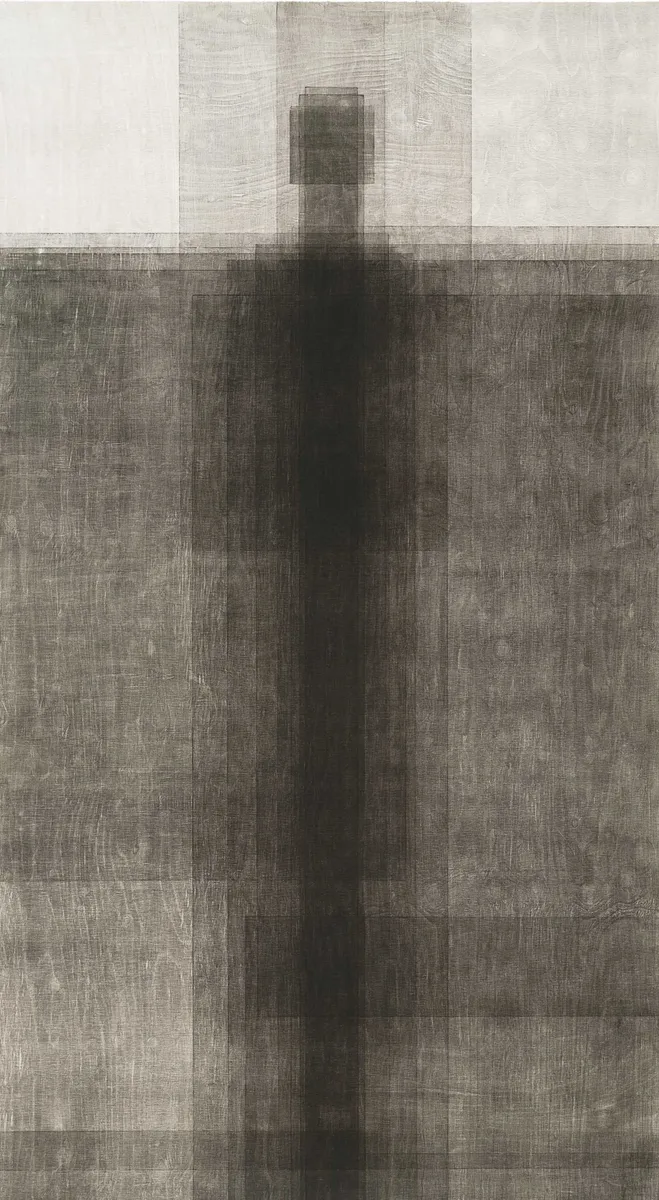
Bourgeois grew up in a family of tapestry restorers outside Paris and moved to New York in 1938, but her real subjects stayed in that childhood: her father’s affair with her governess, her mother’s patience, fear, desire and repair. She worked in wood, marble, latex, cloth and bronze for seventy years and was seventy when the Museum of Modern Art gave her a retrospective, in 1982. Maman, the giant spider she made at eighty-seven for the opening of Tate Modern’s Turbine Hall, is a portrait of her mother as a weaver.

Louise Bourgeois, Extrême tension, 2007
Louise Bourgeois, Extrême tension, 2007. Mine graphite sur papier et estampes rehaussées à l’encre, gouache et mine graphite. Trois feuillets montés côte à côte. © The Easton Foundation / Adagp, Paris. Crédit photographique : Centre Pompidou, MNAM-CCI/Audrey Laurans/Dist. GrandPalaisRmn. In Louise Bourgeois: Extrême tension, Centre Pompidou, Paris.

16 / 30American · 1926–2013

Ruth Asawa

Born in Norwalk, California; died in San Francisco

Works to know: Andrea, 1966–68 (Ghirardelli Square, San Francisco); Hanging looped-wire sculptures, 1950s–60s (de Young Museum, San Francisco)

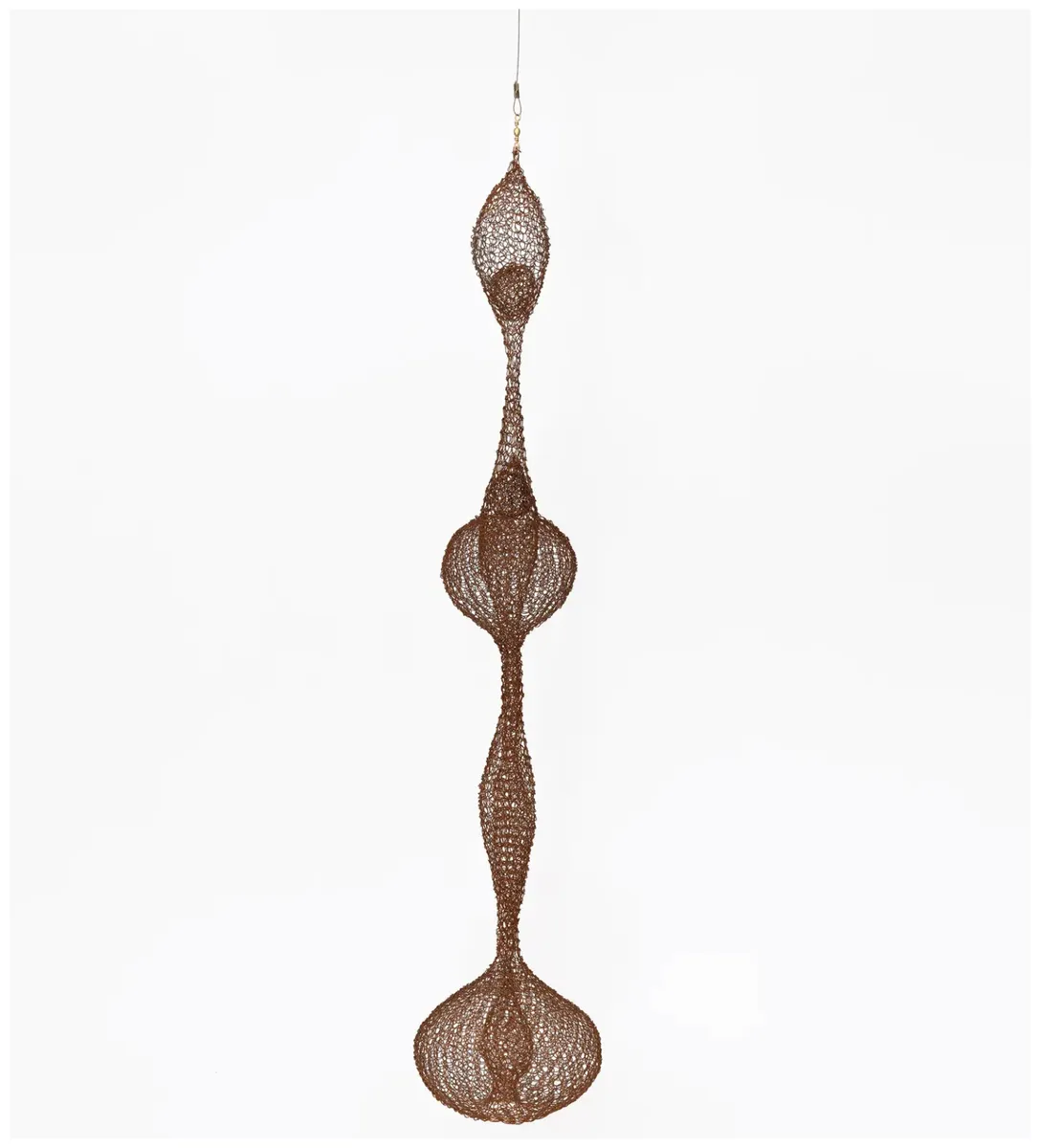
The daughter of Japanese immigrant farmers, Asawa was held in internment camps from 1942 to 1943, then studied at Black Mountain College with Josef Albers and Buckminster Fuller. On a trip to Mexico in 1947 she learned to loop wire from basket makers in Toluca, and she spent decades crocheting it into hanging forms that are inside and outside at once, light enough to turn in the air. She raised six children in San Francisco, made many of its fountains and was the driving force behind its arts high school, now named for her. Her retrospective came to the Museum of Modern Art in 2025.

Untitled (S.783, Hanging Miniature Five-Lobed, Interlocking Continuous Form within a Form with Interior Spheres), c. 1968
Untitled (S.783, Hanging Miniature Five-Lobed, Interlocking Continuous Form within a Form with Interior Spheres), c. 1968. copper wire. Artwork © 2026 Ruth Asawa Lanier, Inc., Courtesy David Zwirner. In Ruth Asawa: Lasting Joy: Asawa Family Selections, Minnesota Street Project, San Francisco.

Since the 1960s14

From Minimalism and Pop to the monuments and counter-monuments of today: sculpture as objects, spaces, materials and memory.

17 / 30American · 1928–1994

Donald Judd

Born in Excelsior Springs, Missouri; died in New York

Works to know: 100 untitled works in mill aluminum, 1982–86 (Chinati Foundation, Marfa, Texas); 15 untitled works in concrete, 1980–84 (Chinati Foundation, Marfa, Texas)

Judd wrote art criticism before he made art, and in his 1965 essay Specific Objects he described a new work that was neither painting nor sculpture. His own were boxes and stacks of galvanized iron, aluminum, plywood and colored Plexiglas, made by fabricators and placed in exact intervals on the floor or the wall; he hated the word Minimalism. He bought a cast-iron building at 101 Spring Street in SoHo in 1968 and, from the 1970s, a town’s worth of buildings in Marfa, Texas, where he installed his work and his friends’ for good. Both are open to visitors.

Tapta & Donald Judd: Tapta meets Judd at Old Masters Museum
Tapta & Donald Judd: Tapta meets Judd. Judd: © Judd Foundation / SABAM Belgium, Royal Museums of Fine Arts of Belgium, photo Photo d'art Speltdoorn & Fils; Tapta: © Maurice Verbaet, photo Cathy Christiaen, LAAC Dunkirk, 2022, Maurice Verbaet Collection. In Tapta & Donald Judd: Tapta meets Judd, Old Masters Museum, Brussels.

18 / 30Swedish-born American · 1929–2022

Claes Oldenburg

Born in Stockholm; died in New York

Works to know: Clothespin, 1976 (Centre Square, Philadelphia); Spoonbridge and Cherry, 1985–88 (Minneapolis Sculpture Garden)

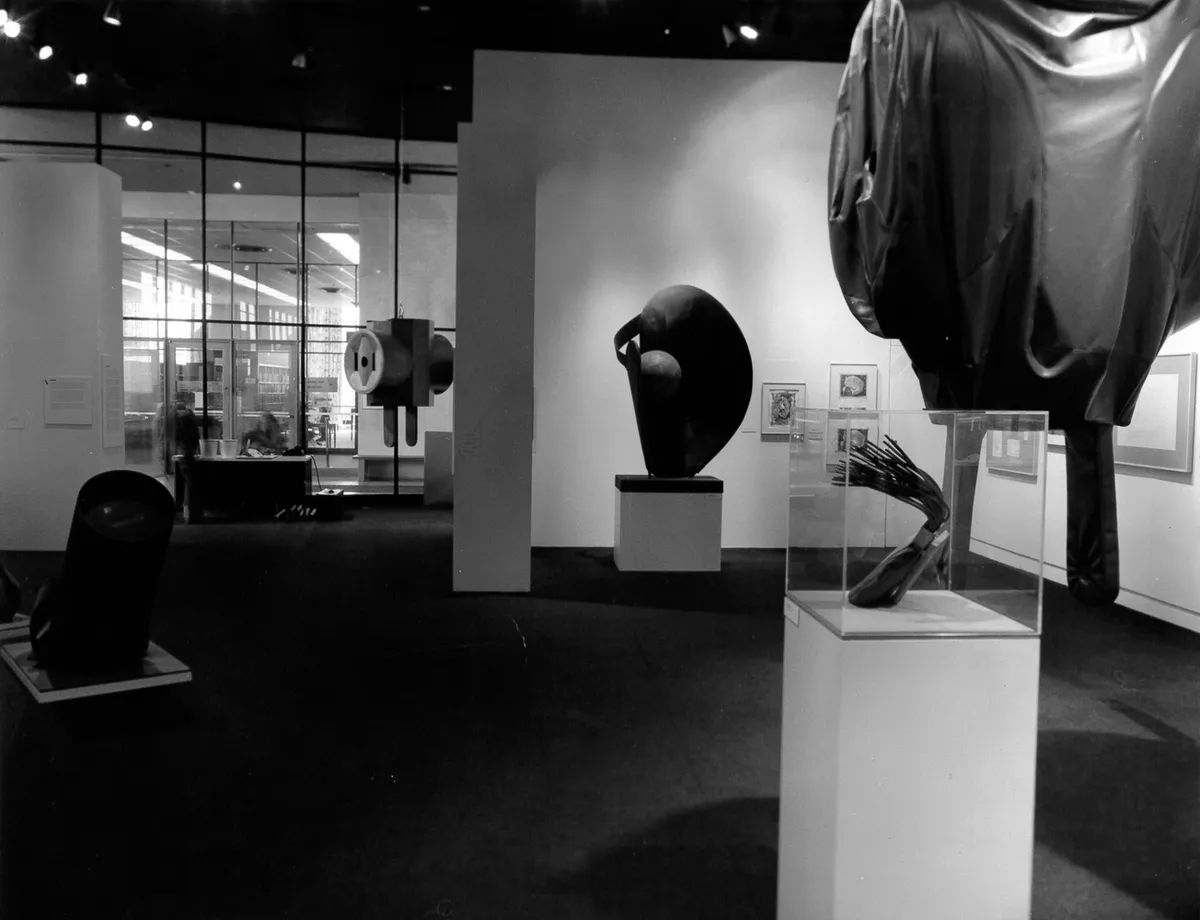
Oldenburg grew up in Chicago and, in 1961, opened The Store on East Second Street on the Lower East Side, selling lumpy plaster cakes, shirts and hamburgers he had painted himself. Then he made them soft, in vinyl and canvas, a giant floppy toilet, a fan and a slice of cake, and Pop sculpture had its comedian. From 1976, with his wife Coosje van Bruggen, he built the everyday at the scale of monuments: a clothespin forty-five feet tall, a spoon bridging a pond, a flashlight, a shuttlecock.

Installation view of Claes Oldenburg: Six Themes at Paula Cooper Gallery
Installation view, Claes Oldenburg: Six Themes, Paula Cooper Gallery. Roger N. Goldstein.

19 / 30German-born American · 1936–1970

Eva Hesse

Born in Hamburg; died in New York

Works to know: Hang Up, 1966 (Art Institute of Chicago); Expanded Expansion, 1969 (Solomon R. Guggenheim Museum, New York)

Hesse escaped Nazi Germany as a two-year-old on a children’s transport to the Netherlands and grew up in New York, where she studied with Josef Albers at Yale. In a few years in the late 1960s she made a body of sculpture unlike anything else, in latex, fiberglass, cheesecloth and rope: drooping, translucent, repetitive and absurd, a softer answer to Minimalism’s boxes. Hang Up is an empty frame with a steel rod looping out of it into the room. She died of a brain tumor at thirty-four, and many of her works are now too fragile to travel.

20 / 30American · 1938–2024

Richard Serra

Born in San Francisco; died in Orient, New York

Works to know: Torqued Ellipses, 1996–97 (Dia Beacon, New York); The Matter of Time, 1994–2005 (Guggenheim Museum Bilbao)

Serra paid for art school by working in steel mills, and steel became his material: flung molten lead in the 1960s, then plates propped against one another by their own weight, and finally curved walls of weathering steel thirteen feet high that you walk into and around, losing your bearings as they lean over you. Tilted Arc, a wall of steel across Federal Plaza in Manhattan, was taken down in 1989 after a public hearing, the most famous fight over public art in America. His Torqued Ellipses are on long-term view at Dia Beacon, an hour and a half up the Hudson from New York. He died in March 2024.

21 / 30American · Born 1941

Martin Puryear

Born in Washington, D.C.; lives in the Hudson Valley, New York

Works to know: Ladder for Booker T. Washington, 1996 (Modern Art Museum of Fort Worth); Big Bling, 2016 (first shown in Madison Square Park, New York)

Puryear learned woodworking from carpenters in Sierra Leone, where he taught with the Peace Corps in the 1960s, and studied printmaking and furniture making in Sweden before Yale. His sculptures, mostly in wood, are shaped and joined by hand into forms that suggest a basket, a boat, a cap or a head without being any of them, and carry the history of the hand trades and of Black America. Ladder for Booker T. Washington, made from a sapling, narrows to a point far above the viewer. He represented the United States at the Venice Biennale in 2019.

22 / 30Ghanaian · Born 1944

El Anatsui

Born in Anyako, Ghana; lives in Nsukka, Nigeria

Works to know: Black Block, 2010 (Brooklyn Museum, New York); Behind the Red Moon, 2023 (shown in the Turbine Hall, Tate Modern, London)

  • On view: Modus Operandi (group show) · Jack Shainman Gallery, Chelsea, New York · Through Nov 28

Anatsui taught sculpture for nearly forty years at the University of Nigeria in Nsukka, carving wood and firing clay, until, around 1998, he picked up a discarded bag of bottle tops. He has since flattened, folded and joined thousands of them with copper wire into vast metal cloths that shimmer like kente and fall into new folds each time they are hung; they hold in them the history of the liquor trade between Africa, Europe and the Americas. He won the Golden Lion for lifetime achievement at the 2015 Venice Biennale and filled Tate Modern’s Turbine Hall in 2023.

23 / 30British · Born 1950

Antony Gormley

Born in London; lives in London

Works to know: Another Place, 1997 (Crosby Beach, Merseyside, since 2005); Angel of the North, 1998 (Gateshead, England)

Gormley studied archaeology, anthropology and art history at Cambridge and spent three years in India and Sri Lanka studying Buddhist meditation before art school in London. Nearly all his work starts from the space his own body takes up, cast in lead, iron or steel, or rebuilt in blocks and wire: a hundred iron men gazing out to sea from Crosby Beach, and the Angel of the North, its wings fifty-four meters wide, beside the A1 at Gateshead. He won the Turner Prize in 1994 and was knighted in 2014.

Antony Gormley: Where at Cristea Roberts Gallery
Antony Gormley: Where. In Antony Gormley: Where, Cristea Roberts Gallery, London.

24 / 30Palestinian-British · Born 1952

Mona Hatoum

Born in Beirut; lives in London

Works to know: Corps étranger, 1994 (Centre Pompidou, Paris); Homebound, 2000 (shown at Tate Modern, London, in 2016)

Born in Beirut to a Palestinian family, Hatoum was on a visit to London in 1975 when civil war broke out in Lebanon, and stayed. She began in performance and video, then turned household things against their users: a kitchen grater enlarged into a room divider, a crib of steel, furniture wired with live electric current, a globe of red neon. Corps étranger is an endoscopic film of the inside of her own body, projected on the floor of a narrow room.

25 / 30American · Born 1954

Kiki Smith

Born in Nuremberg, Germany; lives in New York and the Hudson Valley

Works to know: Tale, 1992 (shown in her survey A Gathering, 2005–06); Rapture, 2001 (a bronze, shown in her surveys)

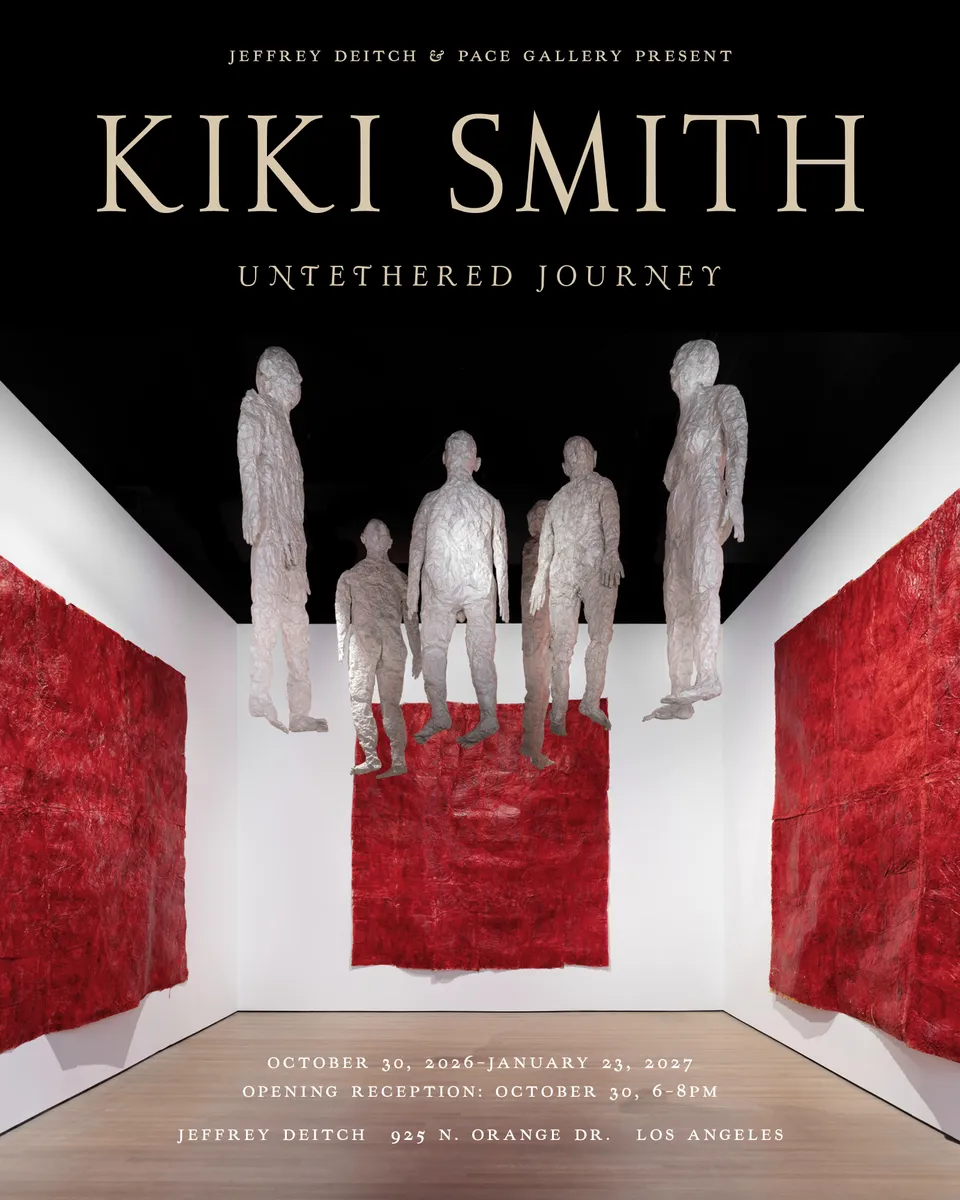
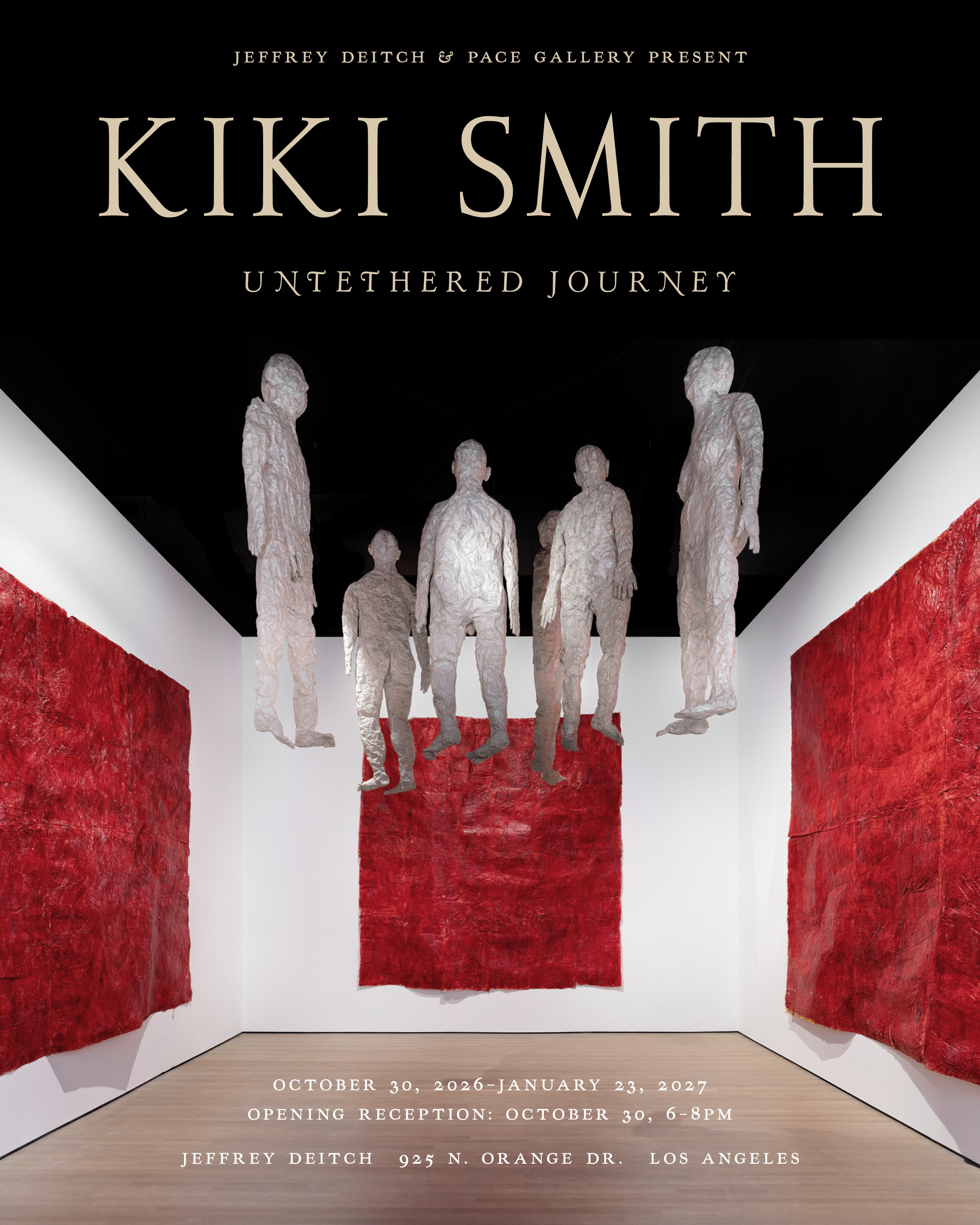
The daughter of the sculptor Tony Smith and the opera singer Jane Lawrence, Smith grew up in New Jersey and came up through the artists’ collective Colab and the Times Square Show of 1980. In the AIDS years she made the body’s insides and fluids into sculpture, in wax, paper, glass and bronze: a woman crawling with a long tail behind her, a woman stepping whole out of a wolf. Since then her figures have joined animals, stars and fairy tales, in sculpture, prints and tapestries.

Untitled, 1995
Untitled, 1995. © Kiki Smith. In Kiki Smith: Untethered Journey, Jeffrey Deitch, Los Angeles.

26 / 30Indian-born British · Born 1954

Anish Kapoor

Born in Mumbai; lives in London

Works to know: Cloud Gate, 2004–06 (Millennium Park, Chicago); ArcelorMittal Orbit, 2012 (Queen Elizabeth Olympic Park, London)

  • On view: Anish Kapoor · Mennour, 6 rue du Pont de Lodi, Paris · Through Dec 12

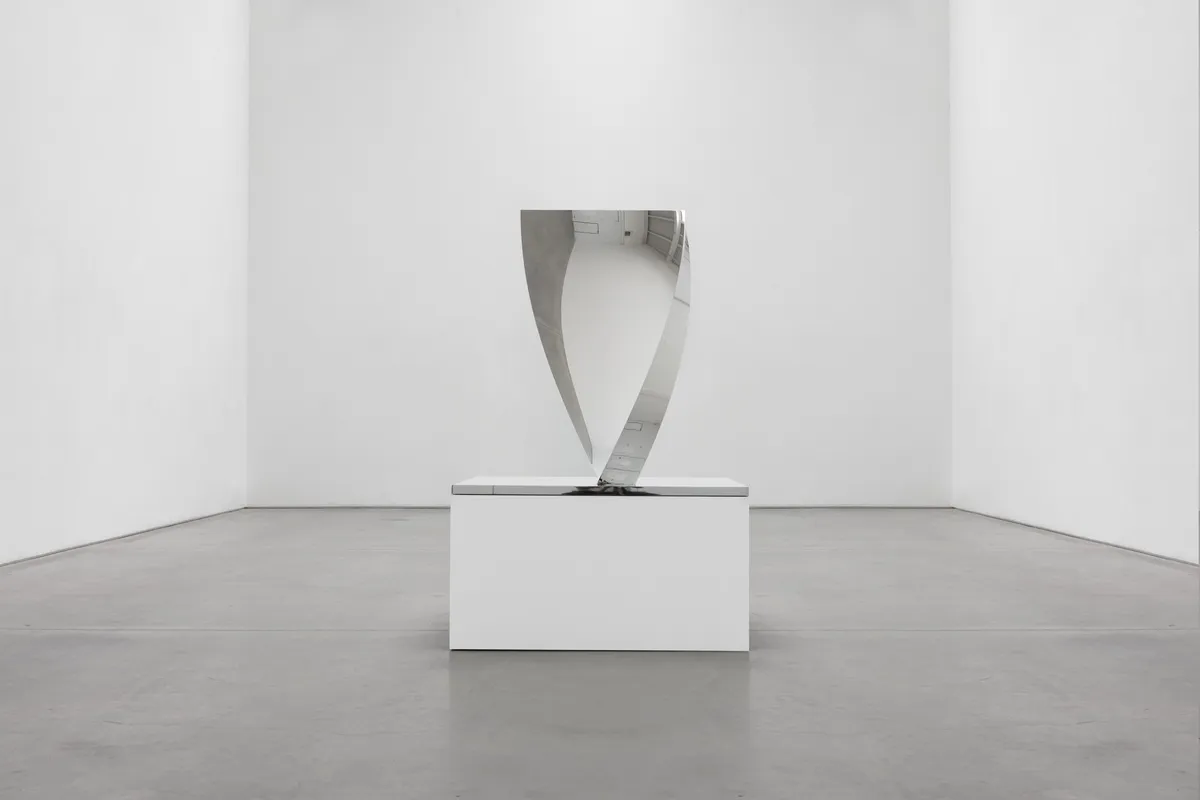
Kapoor moved to London in 1973 to study art, and first showed sculptures heaped in raw pigment, as if made of pure color. He went on to voids, dark hollows and mirrors that swallow or flip the space around them, and then to enormous public works: Cloud Gate, the polished steel “bean” in Chicago that reflects the skyline and the crowds under it, Marsyas, a red membrane stretched the length of Tate Modern’s Turbine Hall, and the twisted red tower at the London Olympic Park. He won the Turner Prize in 1991 and was knighted in 2013.

Bridge Twist, 2019
Bridge Twist, 2019. In Anish Kapoor, Mennour, 6 rue du Pont de Lodi, Paris.

27 / 30American · Born 1955

Jeff Koons

Born in York, Pennsylvania; lives in New York

Works to know: Rabbit, 1986 (The Broad, Los Angeles, and other collections); Puppy, 1992 (Guggenheim Museum Bilbao)

Koons sold commodities on Wall Street to pay for his early work: new vacuum cleaners sealed in Plexiglas cases, basketballs floating in tanks of water, an inflatable rabbit cast in mirror-polished steel. He has made the cheap and the kitsch into luxury objects ever since, in porcelain figurines, giant balloon animals and flowers, with a large studio of assistants to make them perfect. Rabbit sold for $91.1 million at Christie’s in 2019, a record at the time for a work by a living artist, and Puppy, a West Highland terrier forty feet tall planted with flowers, has stood outside the Guggenheim Bilbao since 1997.

28 / 30Colombian · Born 1958

Doris Salcedo

Born in Bogotá; lives in Bogotá

Works to know: Shibboleth, 2007 (shown in the Turbine Hall, Tate Modern, London); Fragmentos, 2018 (Bogotá)

  • On view: Doris Salcedo · White Cube, New York · Through Feb 6, 2027

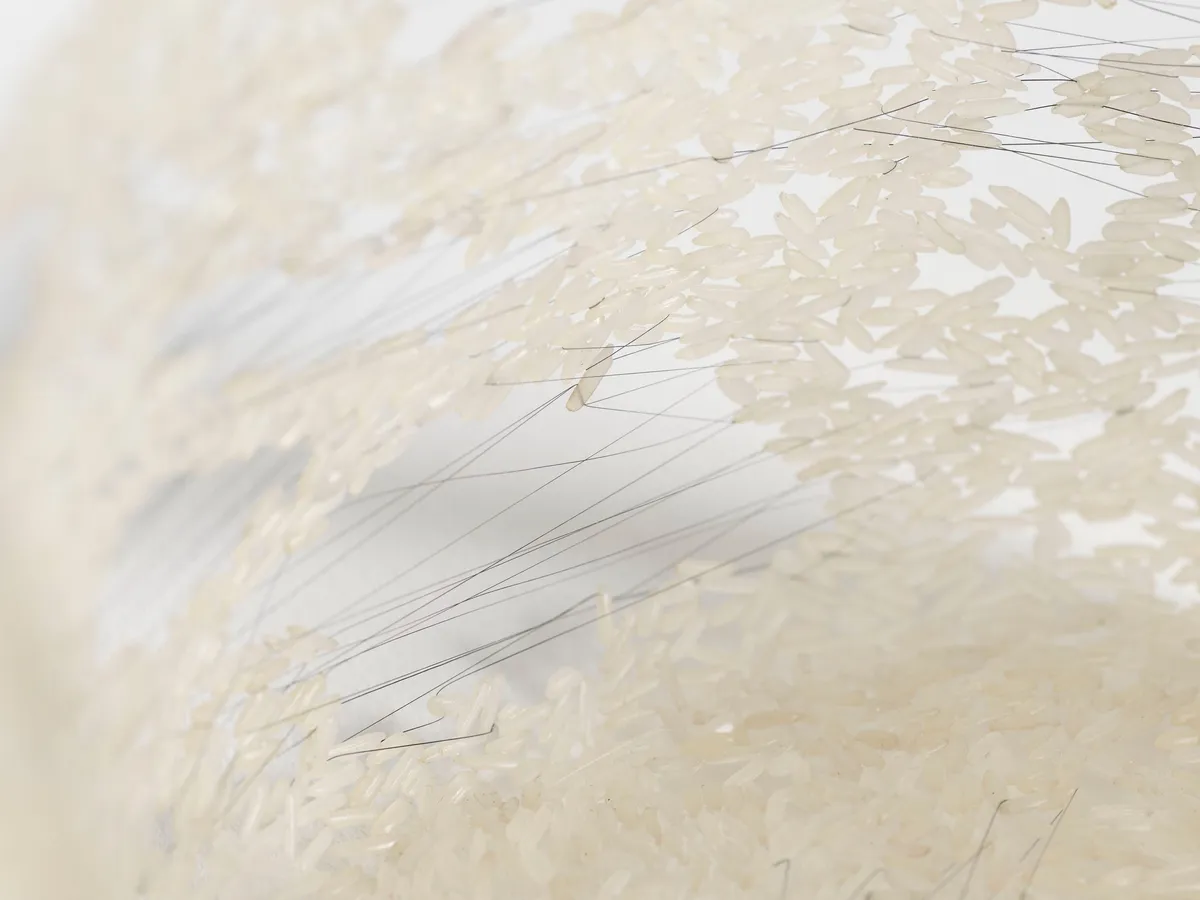
Salcedo makes sculpture as an act of mourning for the victims of Colombia’s decades of political violence: wardrobes and chairs filled with concrete, the shoes of the disappeared sealed into walls, 280 wooden chairs lowered down the façade of the Palace of Justice in Bogotá on the anniversary of its siege in 1985. Shibboleth was a crack running the length of the floor of Tate Modern’s Turbine Hall. Fragmentos, in Bogotá, is a counter-monument whose floor was hammered out of guns handed in by the FARC guerrillas after the peace agreement.

Grains of Sorrow, 2023–26
Grains of Sorrow, 2023–26. Rice, hair, resin and fluorocarbon coated thread. © Doris Salcedo. In Doris Salcedo, White Cube, New York.

29 / 30British · Born 1963

Rachel Whiteread

Born in London; lives in London

Works to know: Ghost, 1990 (National Gallery of Art, Washington); Holocaust Memorial, 2000 (Judenplatz, Vienna)

Whiteread casts the space in and under things rather than the things themselves: the air under a bed, the inside of a bath or a hot-water bottle, and in Ghost a whole Victorian living room in plaster, so that the room becomes a solid block and the viewer stands outside it. House, the concrete cast of the inside of a terraced house in East London, won her the Turner Prize in 1993, the first woman to win it, and was demolished the next year. Her Holocaust memorial in Vienna is a library turned inside out, its books facing inward and its doors sealed.

30 / 30American · Born 1967

Simone Leigh

Born in Chicago; lives in New York

Works to know: Brick House, 2019 (first shown on the High Line, New York); Sovereignty, 2022 (shown at the United States Pavilion, Venice Biennale)

Leigh, the daughter of Jamaican missionaries, works in ceramic and bronze to center Black women: busts and towering figures whose bodies merge with jugs, skirts and the clay houses of West and Central Africa, often with no eyes, glazed in black or the color of raffia. Brick House, a sixteen-foot bronze bust of a woman whose torso is a house and a skirt at once, inaugurated the High Line’s Plinth in 2019. In 2022 she was the first Black woman to represent the United States at the Venice Biennale and won the Golden Lion for best participant in the main exhibition, and her retrospective toured America from 2023.

Frequently asked questions

  • Who are the most famous sculptors of all time?

    Michelangelo, for the Pietà and the David; Donatello, who revived the art of antiquity in Florence; Bernini, the sculptor of Baroque Rome; Antonio Canova, of Neoclassicism; and Auguste Rodin, for The Thinker and The Kiss. In the twentieth century, Constantin Brâncuși, Alberto Giacometti, Henry Moore, Barbara Hepworth, Alexander Calder and Louise Bourgeois; since the 1960s, Donald Judd, Richard Serra, Jeff Koons, Anish Kapoor and Rachel Whiteread.

  • Who are the most famous female sculptors?

    Camille Claudel, Rodin’s student and rival; Barbara Hepworth, who pierced the solid form; Louise Nevelson, of the black wooden walls; Louise Bourgeois, of the spiders and the Cells; Ruth Asawa, of the looped-wire forms; Eva Hesse, of latex and fiberglass; and, working today, Mona Hatoum, Kiki Smith, Doris Salcedo, Rachel Whiteread, the first woman to win the Turner Prize, and Simone Leigh, the first Black woman to represent the United States at the Venice Biennale.

  • Who are the most famous living sculptors?

    Among those alive in November 2026: Martin Puryear (born 1941), El Anatsui (1944), Antony Gormley (1950), Mona Hatoum (1952), Kiki Smith and Anish Kapoor (both 1954), Jeff Koons (1955), Doris Salcedo (1958), Rachel Whiteread (1963) and Simone Leigh (1967). Richard Serra died in 2024 and Claes Oldenburg in 2022.

  • What is the most expensive sculpture ever sold at auction?

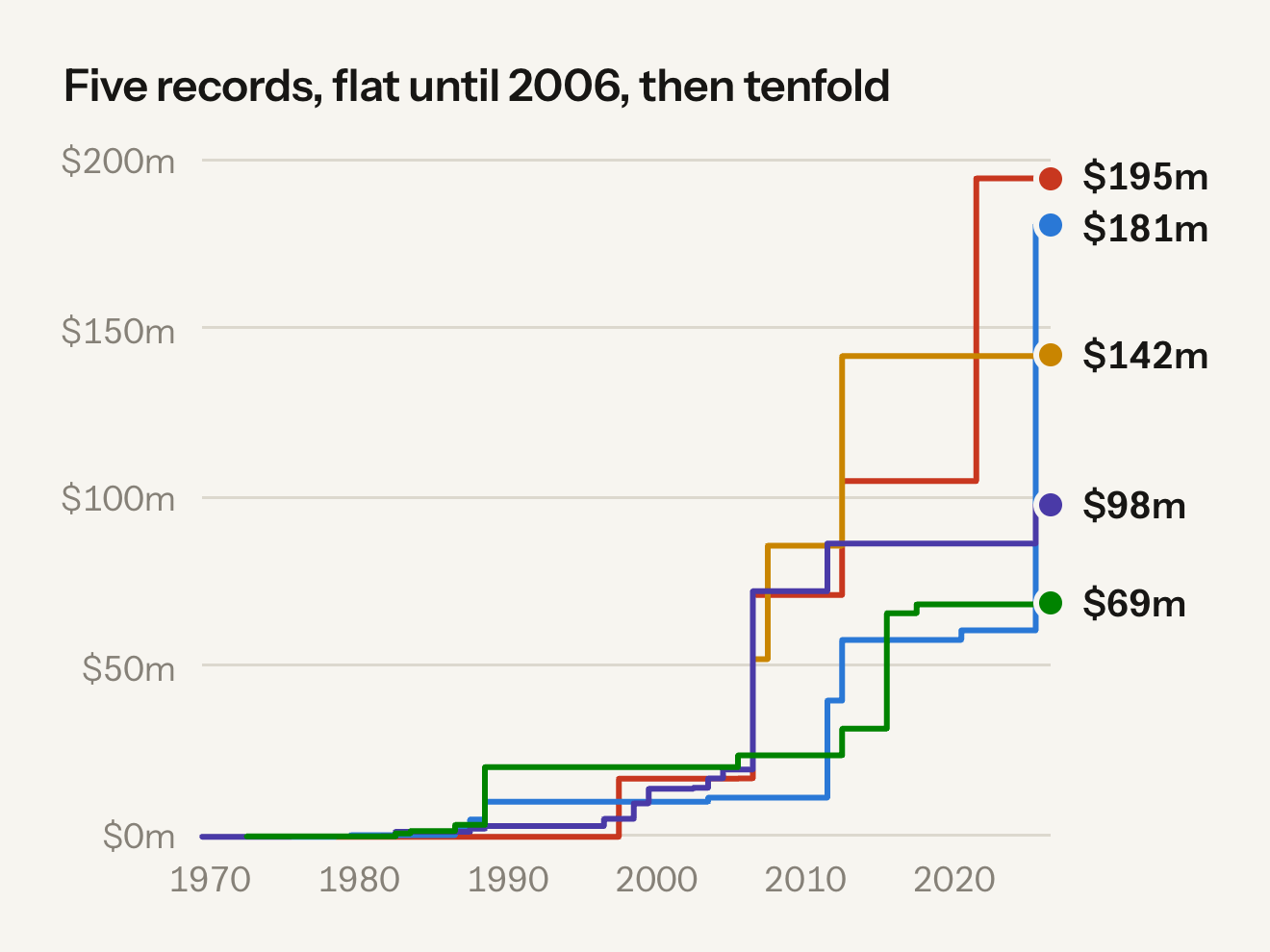
    Alberto Giacometti’s Pointing Man (L’homme au doigt, 1947) sold for $141.3 million at Christie’s in New York in May 2015, and no sculpture has passed it since. Next come Constantin Brâncuși’s Danaïde, $107.6 million at Christie’s in May 2026, and Giacometti’s Walking Man I, £65 million ($104.3 million) at Sotheby’s in London in 2010. The highest for a living artist’s sculpture is Jeff Koons’s Rabbit, $91.1 million at Christie’s in 2019.

  • Where can you see famous sculpture?

    In Florence, the Bargello (Donatello) and the Accademia (Michelangelo’s David); in Rome, St. Peter’s and the Galleria Borghese (Bernini and Canova); in Paris, the Louvre, the Musée Rodin, the Musée d’Orsay and the Institut Giacometti; in London, Tate Modern and Tate Britain; in New York, the Museum of Modern Art, the Whitney, the Guggenheim, the Noguchi Museum and, up the Hudson, Dia Beacon; and outdoors at Storm King Art Center, Yorkshire Sculpture Park and the Minneapolis Sculpture Garden. Shows on now are under each entry above.

For what is on at the museums, read the guides to the best museum shows in New York, London, Paris and Milan. For painters, see famous female painters, famous abstract artists and famous living artists.

How this list was made

Thirty sculptors, chosen for their place in the history of sculpture and for how widely their work is known and shown today, eleven of them women; sculptors known mainly as painters, such as Picasso and Degas, are left to other lists. Dates and places of birth and death are those Wikidata gives on November 5, 2026, with the year only where the day is uncertain or the sources disagree. The works and facts were checked that day against museums’ and institutions’ own pages where they could be read, and otherwise against Wikipedia. A work in a museum’s collection is not always on view, so check before you go; one that is in no collection we could confirm is said to have been shown.

Sources

Published ; the text was last revised on , from the sources listed above. The shows named as on view, and their pictures, are those in On View’s listings as the page was built.