Selling art · For artists
How to price your art
The formula galleries use, a calculator, and the rules for raising prices, pricing prints and pricing commissions.
Start from size, check the price covers your time, compare it with what similar work sells for, then charge it everywhere. Raise it as work sells; don’t cut it.
Start from size
Galleries price an artist’s new work by size, at one rate. By linear inch, the price is (height + width) × a rate; by square inch, height × width × a rate. The linear inch keeps small works from being too cheap and large ones too dear: at $20 a linear inch, a 4-by-4-inch painting is $160 and a 32-by-32 is $1,280; at $2.50 a square inch they would be $40 and $2,560.
Your rate is what similar artists charge. One painter charged $2 to $3 a square inch at outdoor festivals, raised it when she began showing with galleries, and now charges $6.
Price by size
(24 + 36) × $20 =
$1,200
About $600 to you if a gallery sells it at a 50% commission.
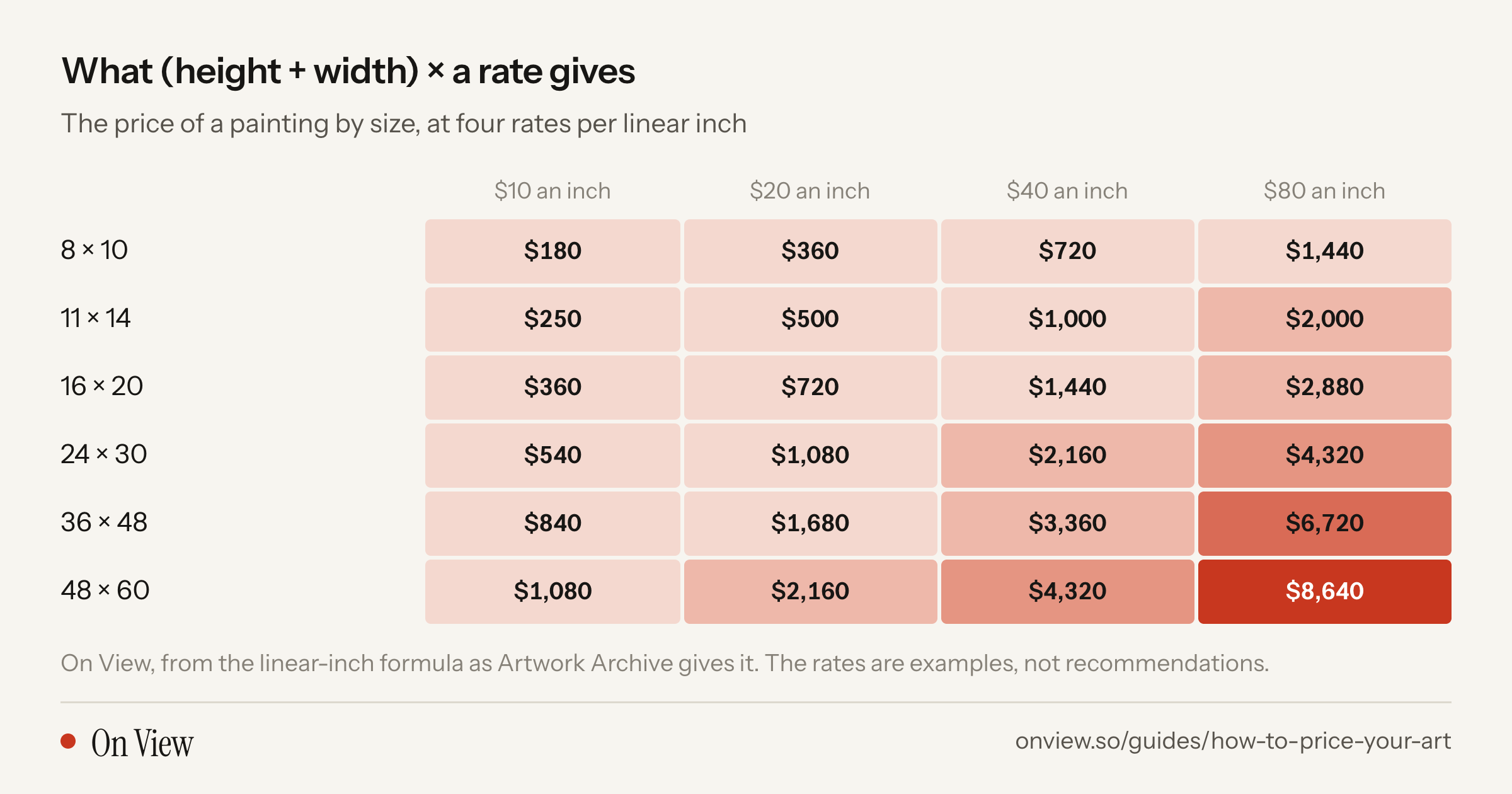
What (height + width) × a rate gives
The price of a painting by size, at four rates per linear inch
The numbers
| Size (inches) | $10 an inch | $20 an inch | $40 an inch | $80 an inch |
|---|---|---|---|---|
| 8 × 10 | $180 | $360 | $720 | $1,440 |
| 11 × 14 | $250 | $500 | $1,000 | $2,000 |
| 16 × 20 | $360 | $720 | $1,440 | $2,880 |
| 24 × 30 | $540 | $1,080 | $2,160 | $4,320 |
| 36 × 48 | $840 | $1,680 | $3,360 | $6,720 |
| 48 × 60 | $1,080 | $2,160 | $4,320 | $8,640 |
On View, from the linear-inch formula as Artwork Archive gives it. The rates are examples, not recommendations.
Check it covers your time
The other formula: hours × an hourly rate, plus materials, which some double. At $20 an hour, 20 hours and $50 of materials come to $500 with the materials doubled. The median wage for US craft and fine artists was $26.58 an hour in May 2025. Count only hours at a skilled pace, not weeks of experiment, and if the result comes out far above your peers’ prices, lower the rate.
Compare it with what sells
Look at works that sold, not asking prices, by artists at your stage, in your medium and at your size. Most galleries don’t hang prices: ask at the front desk for the price list. Openings, group shows, open studios and fairs are where to look, and On View’s listings show what’s on near you. Only 44% of galleries show every price online.
One price, everywhere
Charge the same in your studio, online and at your gallery. A gallery that sells your painting for $2,000 keeps about half; sell it from your studio for $2,000 too, not $1,000. Galleries drop artists who undercut them, and collectors can find every price you’ve set in a few clicks.
Raise slowly; never cut
Raise prices when about half of what you make sells within six months, or after a show that sells half: by 10% to 15% at a time, and 10% to 20% a year. Don’t cut them. Once a work has sold at a price, lowering it is unfair to the buyer, and a discount tells the market the work is worth less.
Paper, prints and editions
A work on paper usually costs less than a painting of the same size, and an editioned print less than a unique work. Raise an edition’s price in steps as it sells, and keep artist’s proofs to about a tenth of the run.
Pricing commissions
A commission can cost more than work already in your studio: it takes longer, and the client makes some of the choices. Start from your price for the size, and put the rest in writing:
- A deposit: half up front is common, or a non-refundable 25% to 40%.
- Changes: how many rounds are included, with sign-off on a sketch first.
- Rights: you keep the copyright unless you sign it away; charge more if the client wants it.
- Use: personal or commercial, and extras (another figure, a rush) priced as add-ons.
Frequently asked questions
How do I price my art as a beginner?
Price by size, at a rate per inch you can defend against comparable artists; check the result covers your time and materials; and start modestly, since it’s easier to raise prices than to cut them.
What’s a good price per square inch?
There is no standard rate. One painter Artwork Archive cites charged $2 to $3 a square inch at outdoor festivals and now, showing with galleries, charges $6. Set yours from artists like you.
Should my price include the gallery’s commission?
Yes. Your price is what the collector pays; through a gallery you get about half of it (gallery commission rates), and you charge the same price in your studio.
How do I price art commissions?
Start from your usual price for the size, add for the extra work, take a deposit of 25% to 50% up front, and agree changes, copyright and use in writing.
What do emerging artists’ works sell for?
61% of the collectors Artsy surveyed in 2025 consider works under $5,000, and one dealer puts emerging artists’ work at $2,000 to $15,000.
Sources
- How to price consistently for art sales success Artwork Archive: the size formulas, the $2.50 and $20 examples, the painter’s rates.
- The secrets of art pricing Artsy, 2015: galleries price by size.
- How to price your artwork Saatchi Art: cost and time, comparables, one price.
- Craft and fine artists US Bureau of Labor Statistics: median pay, May 2025.
- I have no idea how to price my artwork Artwork Archive, 2025.
- The price is right Artsy: asking for prices.
- Art market trends 2025 Artsy: what collectors spend, prices online.
- Dos and don’ts of pricing your artwork Artwork Archive: studio and gallery prices.
- How to price artwork Singulart Magazine, 2020.
- More on pricing Alan Bamberger: when and how much to raise.
- How to price your artwork for profit Artwork Archive: 10% to 20% a year.
- How young artists set prices Artsy, 2016.
- Understanding art pricing Artsy, 2017: paper and prints.
- Limited editions and artist multiples SPACE (London).
- Commission contracts for artists Artwork Archive: deposits and rights.
- 10 questions to ask before accepting an art commission Artwork Archive: non-refundable deposits.
- Commissioning original works Artwork Archive, 2023.
- Works made for hire (Circular 30) US Copyright Office.
- Commission tips Lois van Baarle (Loish): rounds of changes.
- Commissions on Ko-fi Ko-fi: add-ons and terms.
- Negotiating art prices with galleries Artsy, 2023: a dealer’s range for emerging artists.
Published ; last revised on . The methods and numbers are as each source gives them; the calculator’s rates are examples, not recommendations.
More guides61
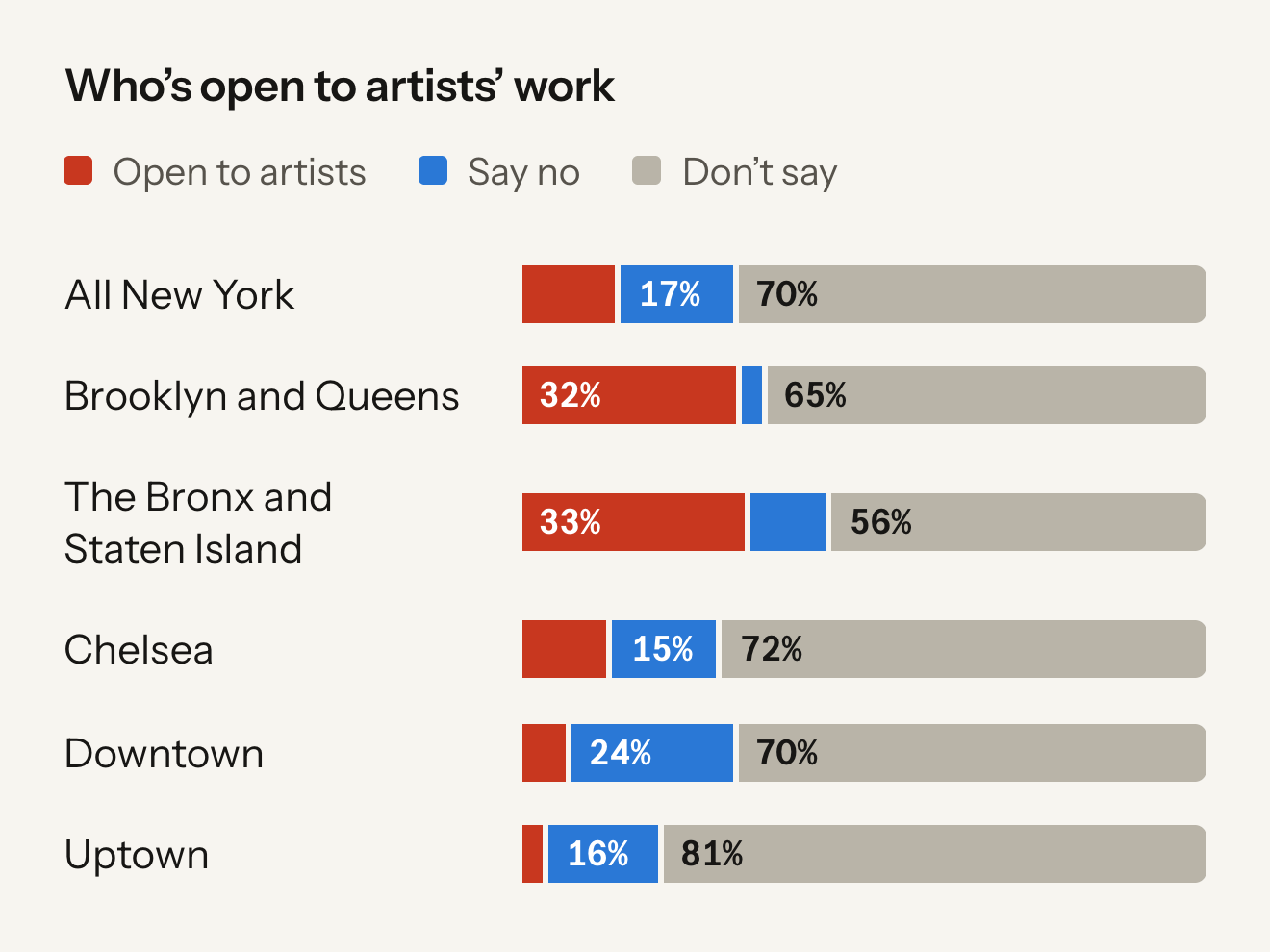 New York · For artistsNew York galleries accepting submissionsThe New York galleries that take artists’ work, how to send it, and the ones that say no.
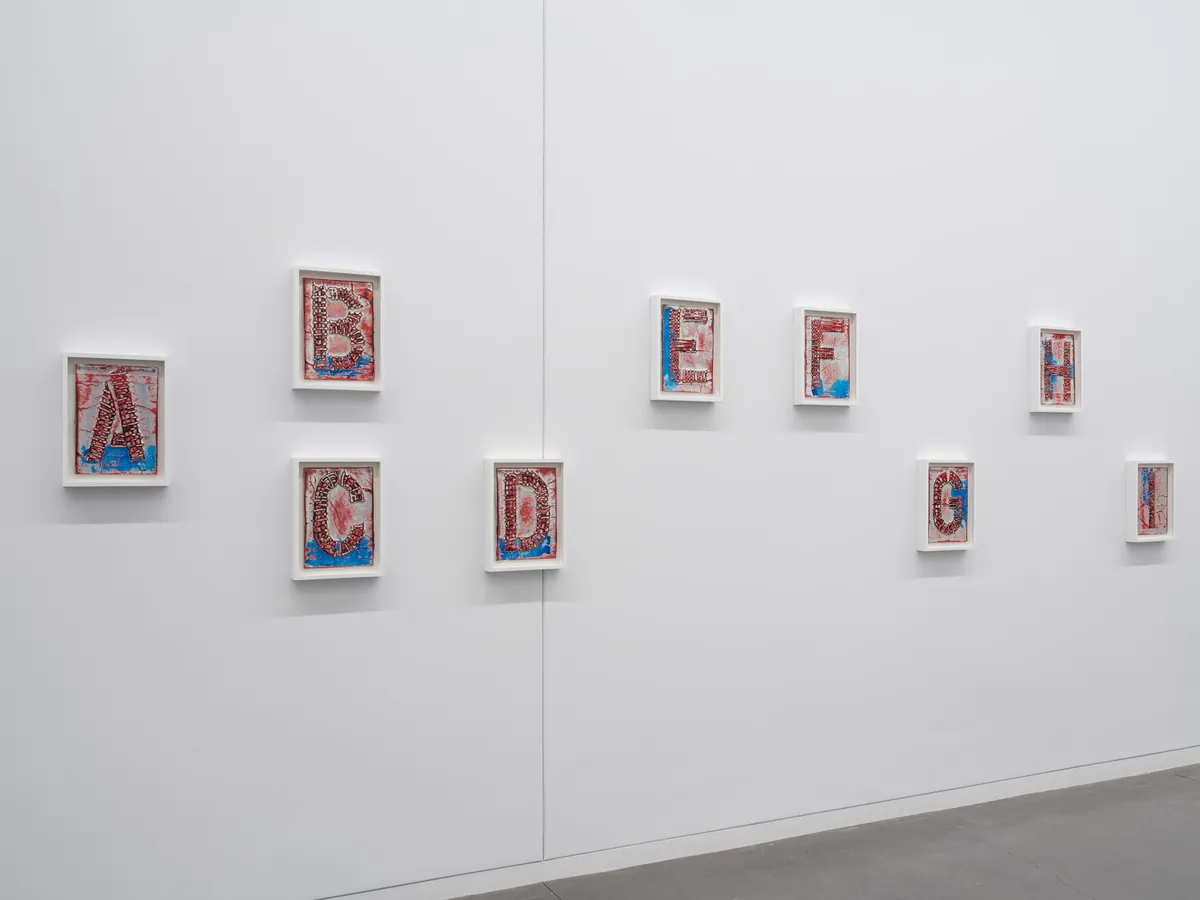 New York · For artistsArtist residencies in New York CityStudios, stipends and fellowships in the city and upstate, with what each costs and when to apply.
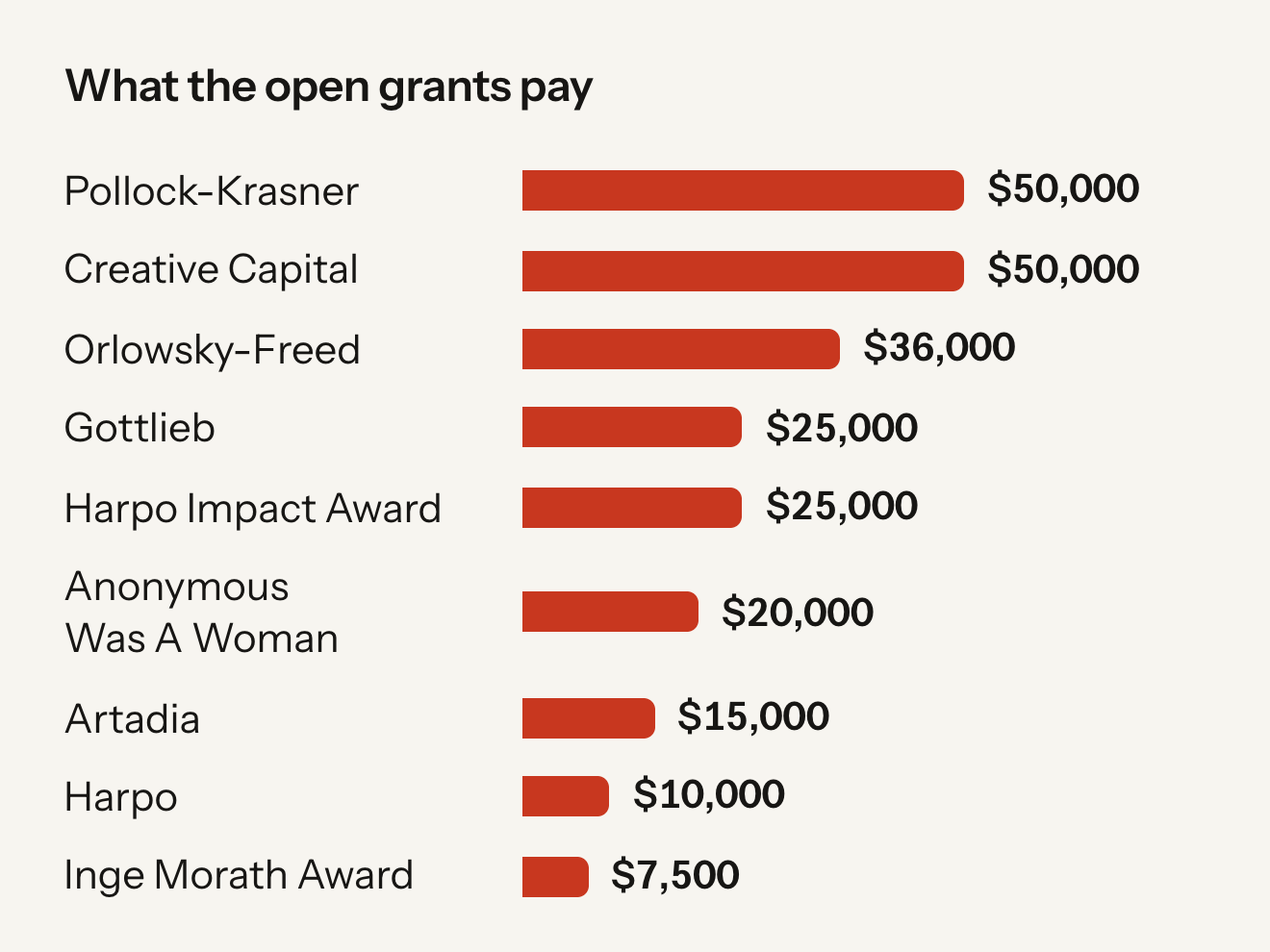 United States · For artistsGrants for artistsWho gives money to individual artists, how much, and when to apply.
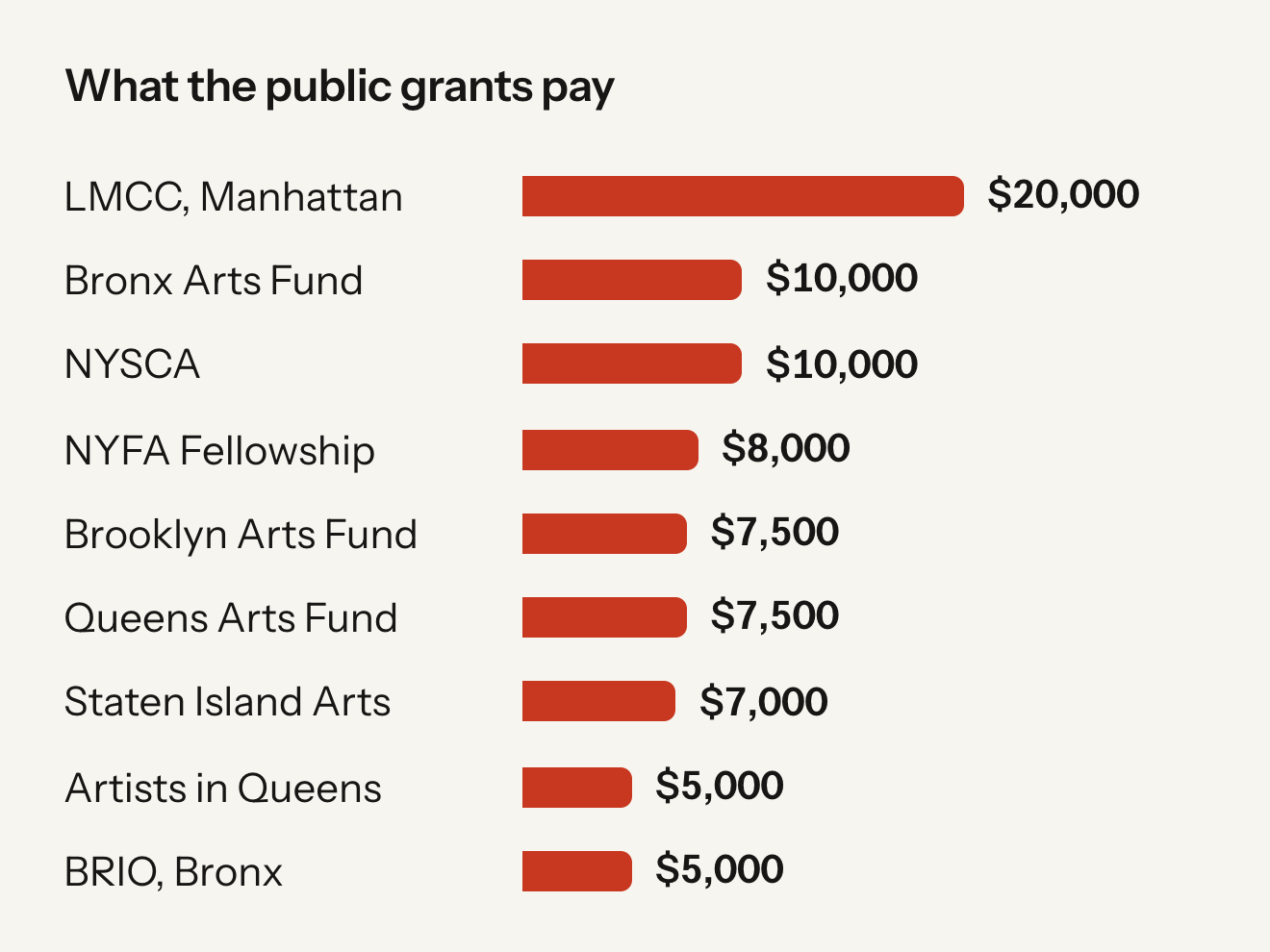 New York · For artistsGrants for artists in New York CityMoney for New York artists from the boroughs, the state and foundations, and when to apply.
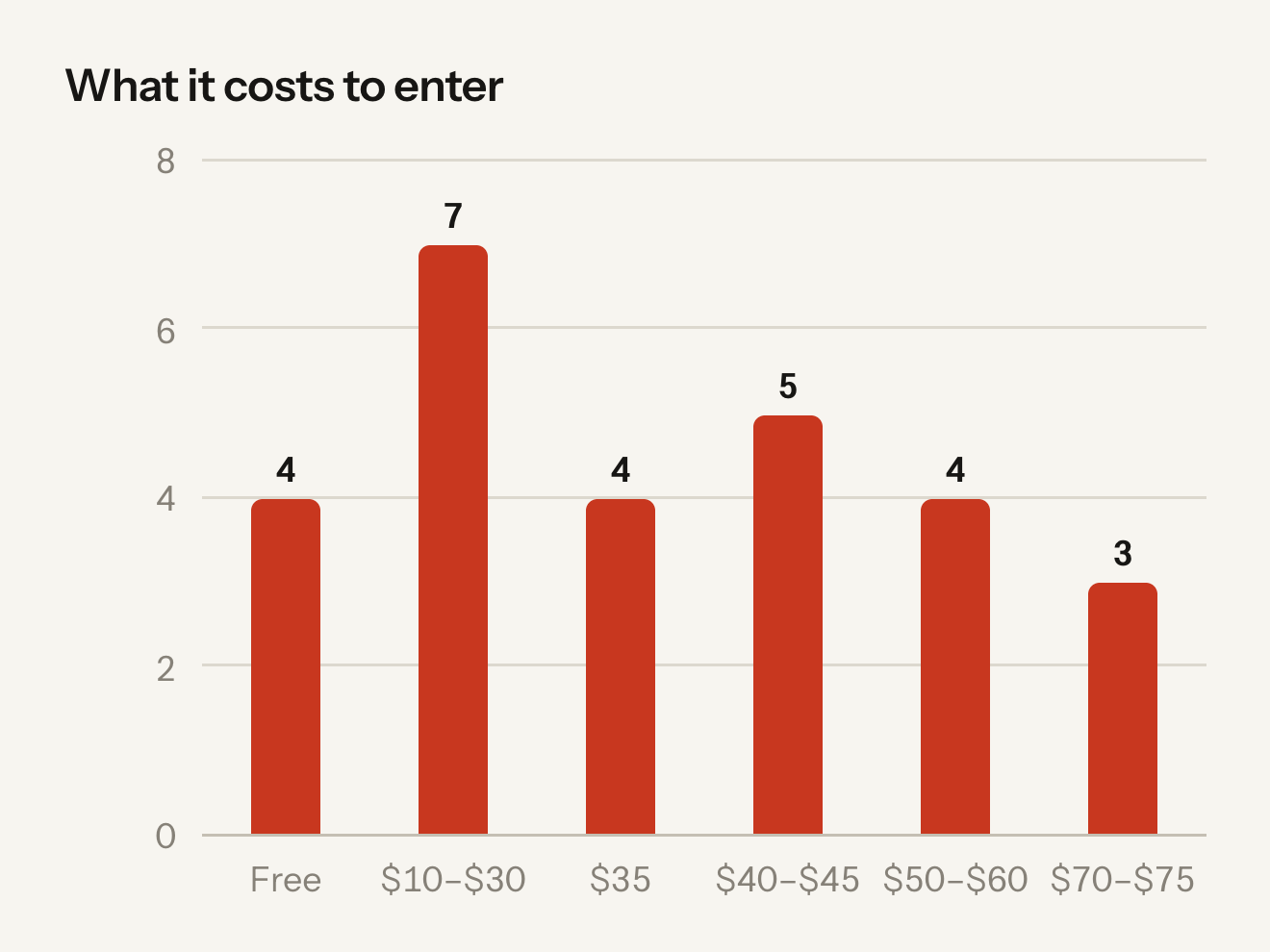 New York · For artistsOpen calls for artists in New York CityCalls for artists across the five boroughs: what each pays, what it costs and when to apply.
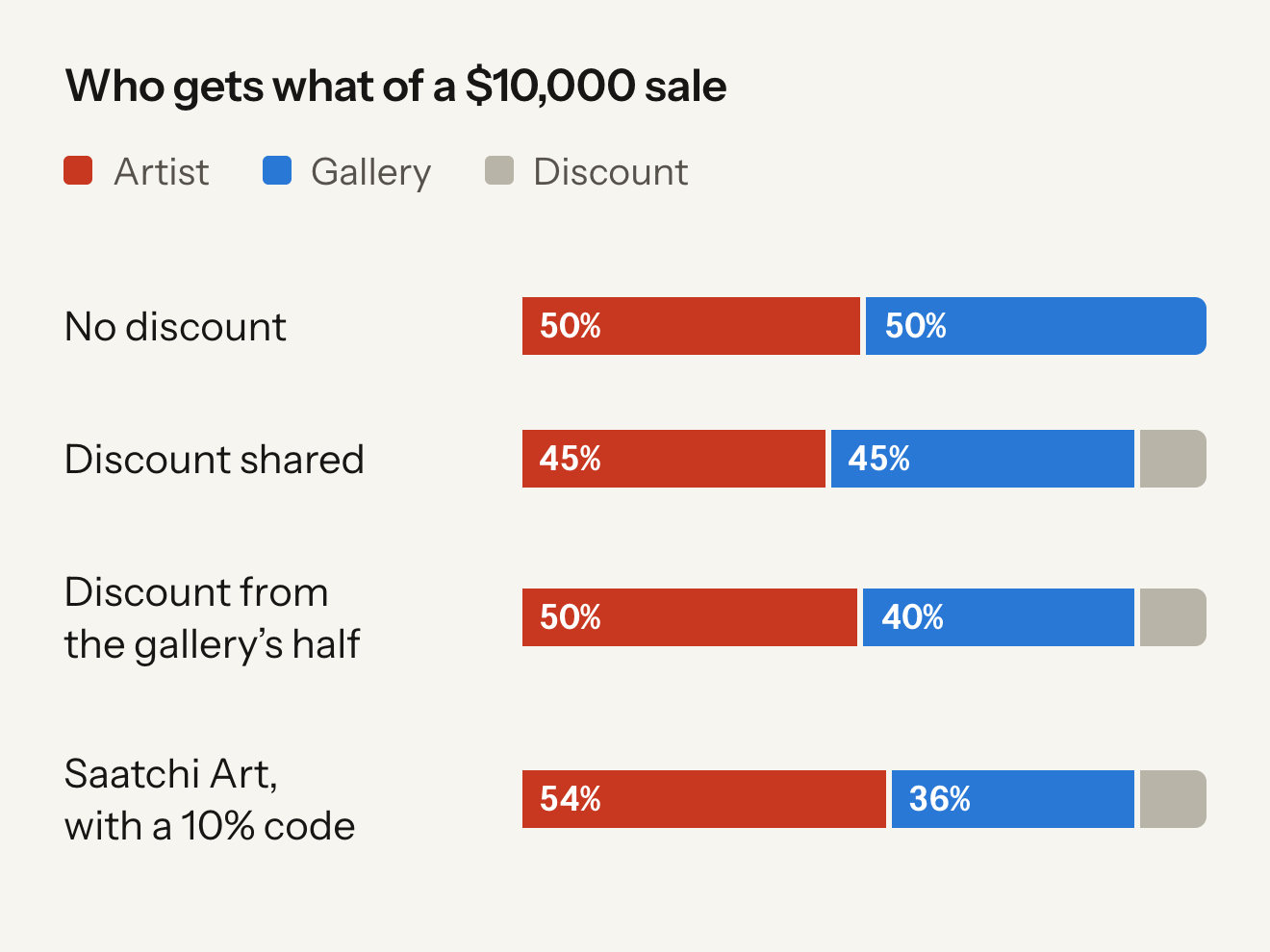 Selling art · For artistsThe standard gallery commission, and what it pays forMost galleries keep half of a sale: what that pays for, how discounts are shared, and what to agree.
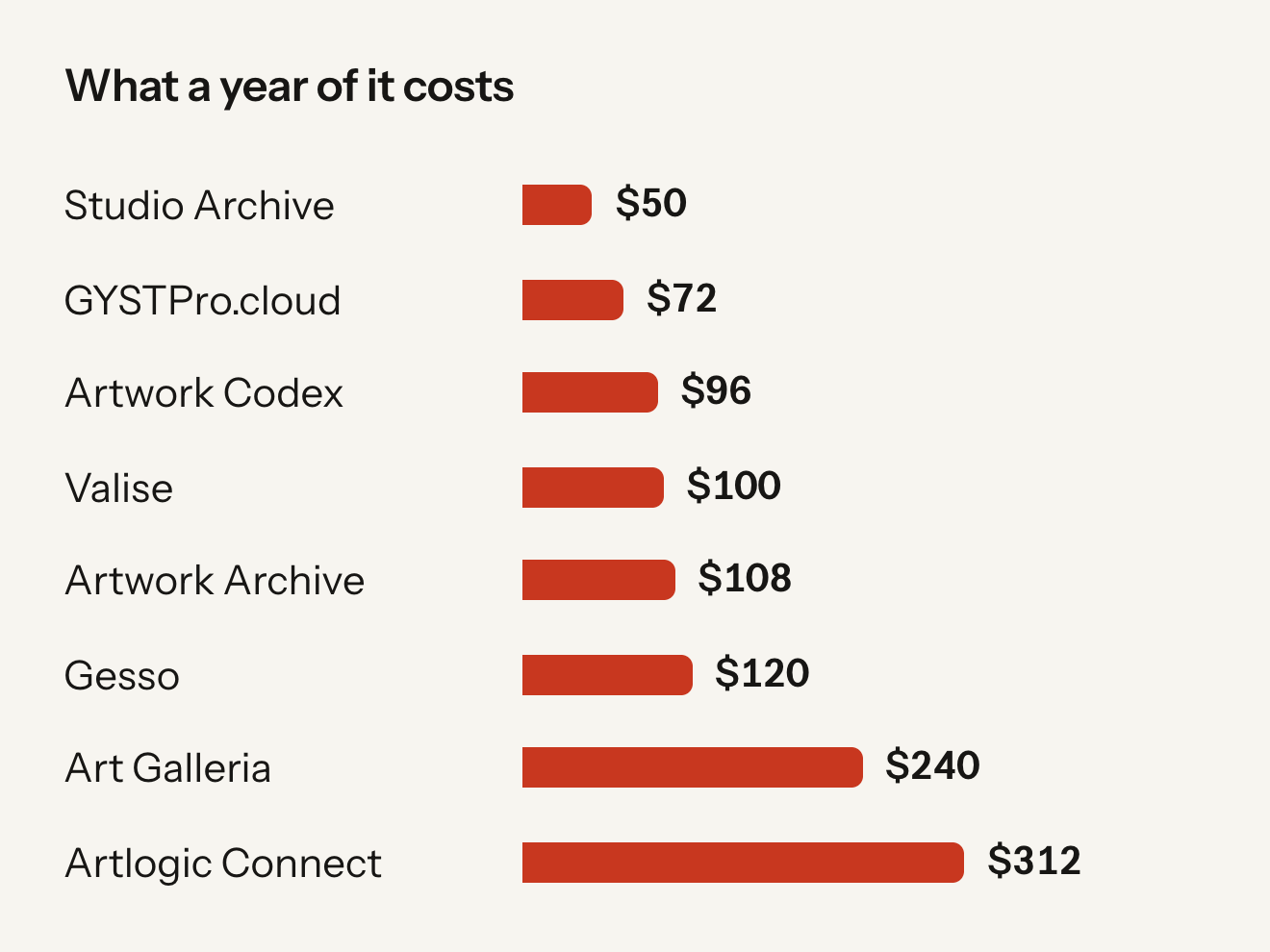 Running a studio · For artistsThe best art inventory software for artists, rankedThirty-six ways to keep track of your work, the best thirteen ranked: what each records, costs and does best.
 Los Angeles · ReportsThe rise of the Los Angeles art scene, in chartsHow the city became an art capital: seventy-five years of galleries, museums and prices, counted.
 Five cities · ReportsFive art cities, compared in chartsGalleries, museums, fairs and auctions in five cities, measured against each other.
 Art market · ReportsFrom first show to mega-gallery, in chartsWho finds the artists the mega-galleries sign, how long the climb takes, and what it does to prices.
 Art market · ReportsThe modern blue chips at auction, in chartsPollock, Rothko, de Kooning, Hockney, Richter: the record for each, the work, the room and the night.
 San Francisco · Top galleriesThe 8 best art galleries in San FranciscoFrom 49 Geary to the Dogpatch: the galleries that set the pace, and what is on view at each.
 New York · Top galleriesThe 12 best art galleries in New York CityChelsea, Tribeca and the Upper East Side: the galleries worth building a day around.
 New York · Top galleriesThe 20 best art galleries in Chelsea, New York’s gallery districtFrom Karma on West 26th Street to Zwirner on 19th: twenty galleries, in walking order.
 Paris · Top galleriesThe 12 best art galleries in ParisThe Marais, Saint-Germain-des-Prés and avenue Matignon: the twelve galleries to know.
 Los Angeles · Top galleriesThe 12 best art galleries in Los AngelesHollywood, Mid-City and the Arts District: the galleries worth crossing town for.
 Berlin · Top galleriesThe 12 best art galleries in BerlinMitte, Potsdamer Straße, Charlottenburg and Kreuzberg: the twelve galleries to know.
 Rome · Top galleriesThe 10 best contemporary art galleries in RomeA ninth-century church, a bank with an oval hall, the stables of a palace: ten galleries to know.
 London · Top galleriesThe 12 best art galleries in LondonMayfair, St James’s, Bermondsey and the East End: the twelve galleries to know.
 Hong Kong · Top galleriesThe 12 best art galleries in Hong KongCentral, Wong Chuk Hang and Aberdeen: the twelve Hong Kong galleries to know right now.
 Seoul · Top galleriesThe 12 best art galleries in SeoulSamcheong, Hannam, Itaewon and Gangnam: the twelve galleries to know in Seoul.
 Miami · Top galleriesThe 12 best art galleries in MiamiAllapattah, Little Haiti and the Design District: the twelve Miami galleries to know now.
 Miami · Art weekMiami Art Week 2026Art Basel and the fairs, with dates and places, and what’s on at the galleries that week.
 New York · Best showsThe 13 best gallery shows in New York City in November 2026Yoshitomo Nara at Zwirner, Bacon and de Kooning together and Georg Baselitz’s last paintings.
 San Francisco · Best showsThe 8 best gallery shows in San Francisco in November 2026Robert Adams at Fraenkel, Ruth Asawa in the Dogpatch and Karla Knight at Wendi Norris.
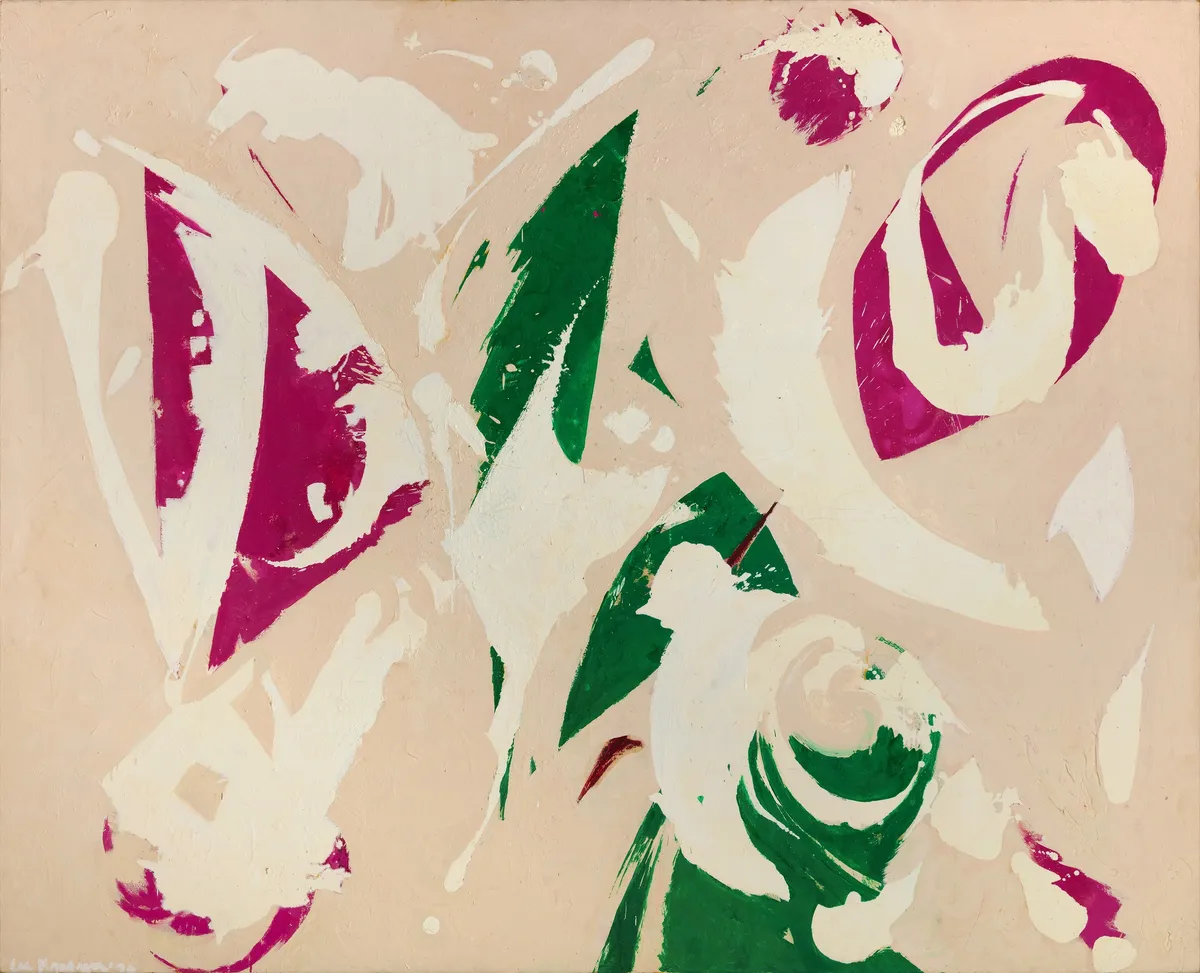 Paris · Best showsThe 12 best gallery shows in Paris in November 2026Lee Krasner, Irving Penn’s portraits, a modern group show at Mennour, and Paris Photo month.
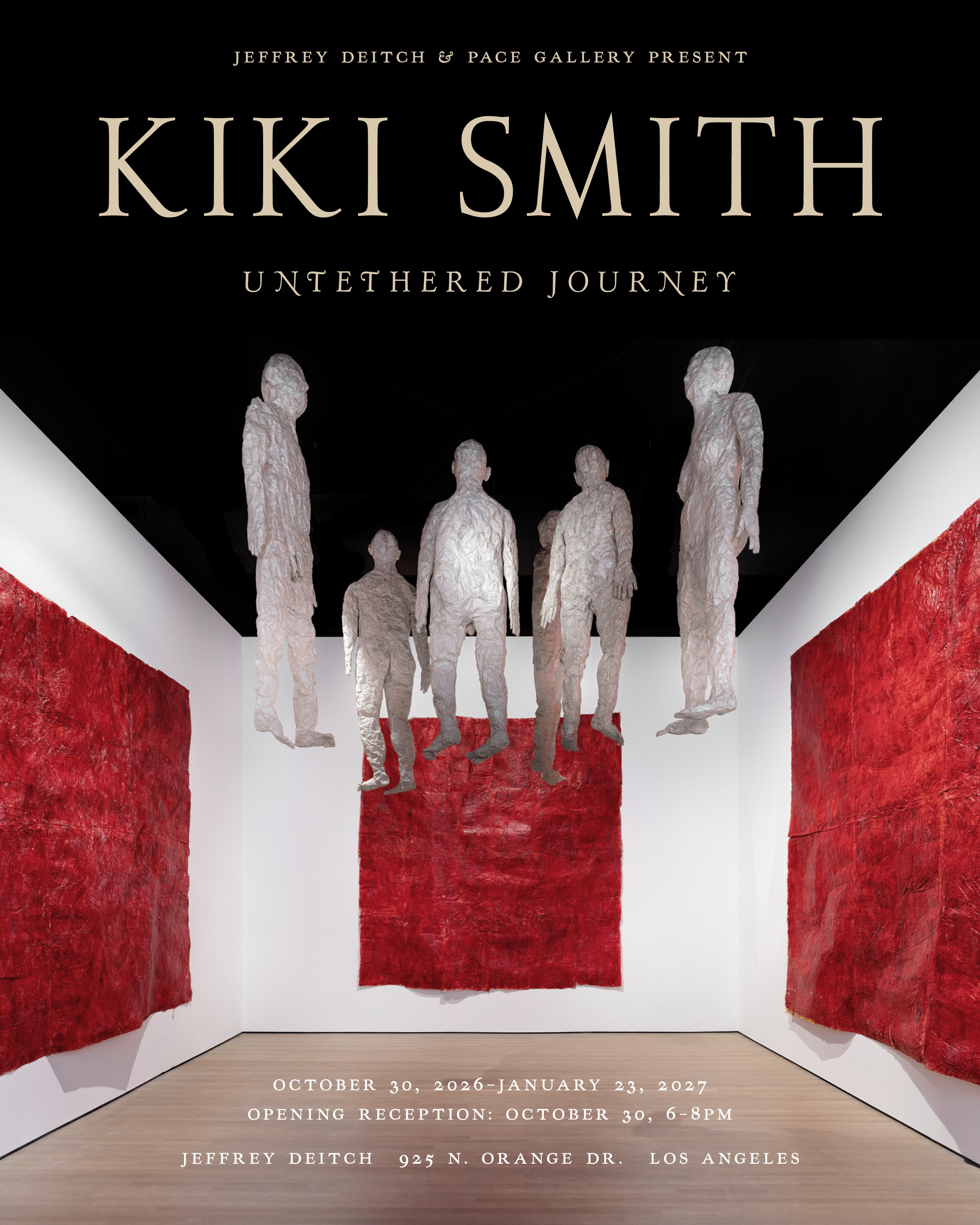 Los Angeles · Best showsThe 12 best gallery shows in Los Angeles in November 2026Kiki Smith at Jeffrey Deitch, Richard Avedon at Gagosian and Thomas Ruff at David Zwirner.
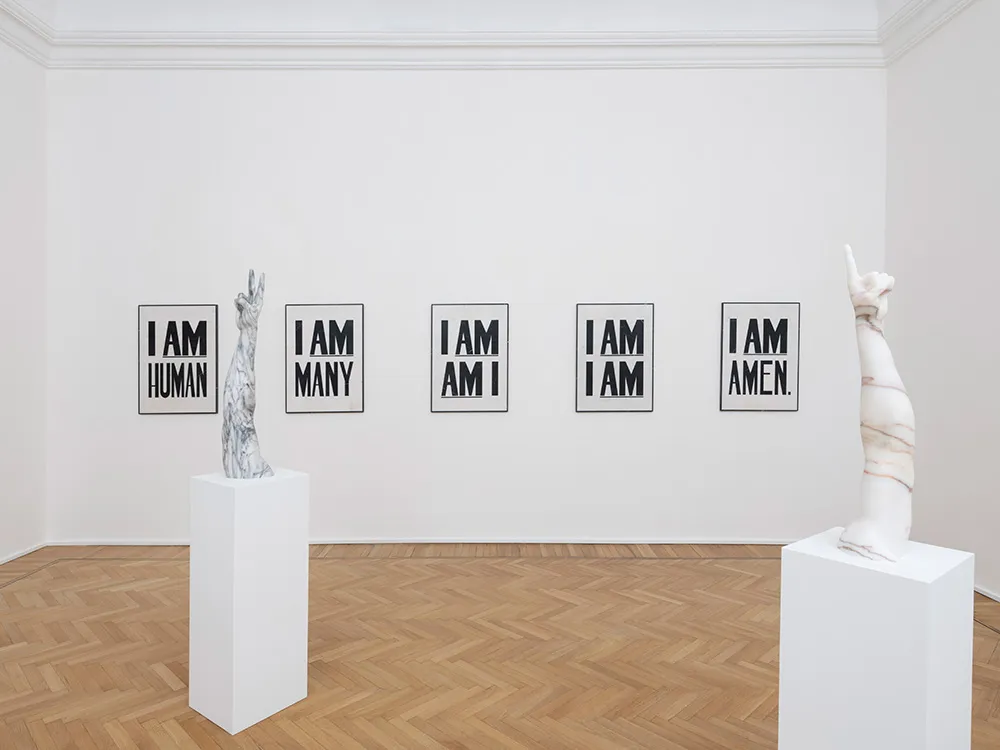 Rome · Best showsThe 8 best gallery shows in Rome in November 2026Svenja Deininger at Federica Schiavo, and Ella Littwitz’s first show in Rome at Sala 1.
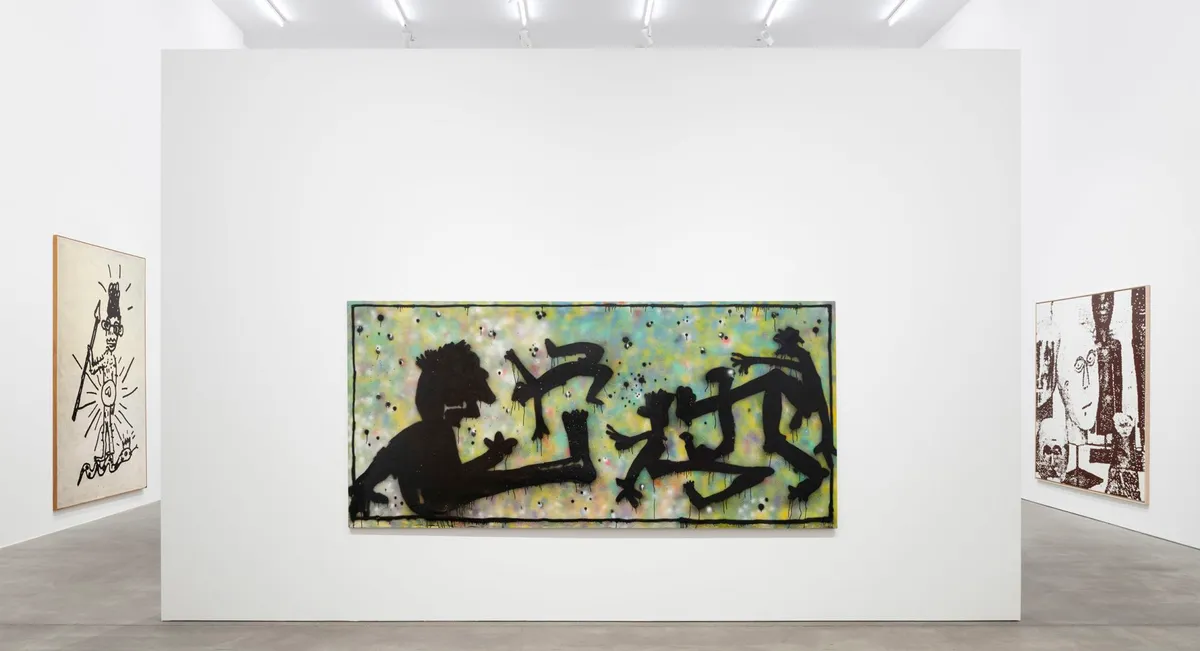 Berlin · Best showsThe 12 best gallery shows in Berlin in November 2026Sean Scully at Max Hetzler, Walter Dahn at Sprüth Magers and Karl Horst Hödicke at König.
 London · Best showsThe 12 best gallery shows in London in November 2026Soulages at Timothy Taylor, Kossoff’s stations, and what opens in London after Frieze.
 Milan · Best showsThe 10 best gallery shows in Milan in November 2026Ettore Spalletti at Lia Rumma, Leoncillo at Thaddaeus Ropac and Max Bill at Lorenzelli Arte.
 Brussels · Best showsThe 10 best gallery shows in Brussels in November 2026Lesley Vance at Xavier Hufkens, Ai Weiwei at Patrick Derom and Wet Conceptualism at Levey Kwok.
 Hong Kong · Best showsThe 10 best gallery shows in Hong Kong in November 2026Lucio Fontana at Hauser & Wirth, Kim Lim at Axel Vervoordt and Fan Ho at Blue Lotus Gallery.
 Seoul · Best showsThe 12 best gallery shows in Seoul in November 2026Kim Yun Shin at Lehmann Maupin, Theaster Gates at White Cube and Georg Baselitz at Ropac.
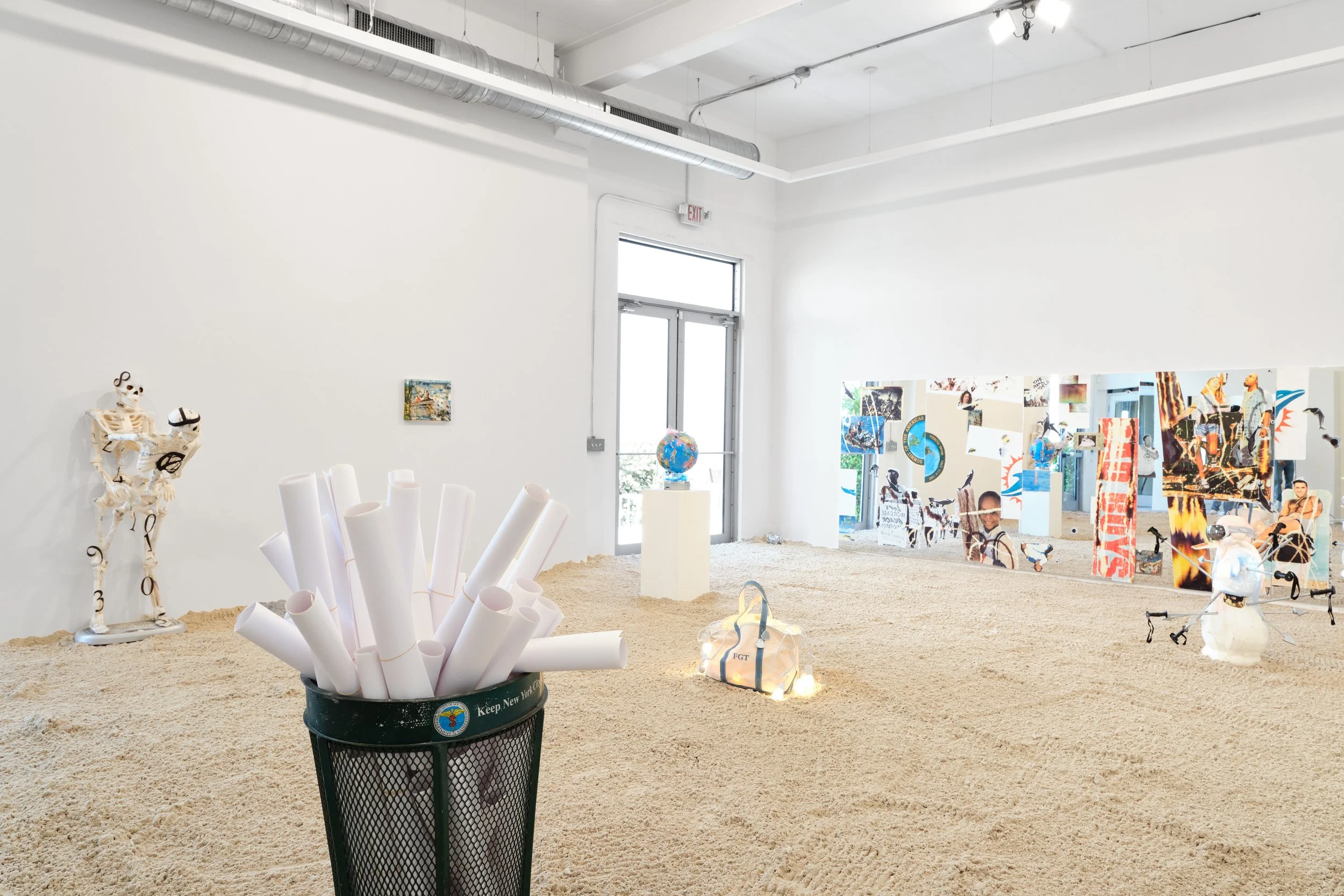 Miami · Best showsThe 10 best gallery shows in Miami in November 2026Monsieur Zohore at KDR, Edison Peñafiel at Locust Projects and Jen Clay at Baker—Hall.
 San Francisco · Best showsThe 8 best museum shows in San Francisco this fallTreasures of the Pharaohs, Graciela Iturbide at SFMOMA and Ha Chong-Hyun at the Asian Art Museum.
 New York · Best showsThe 12 best museum shows in New York City this fallBrancusi at MoMA, Krasner and Pollock at the Met and Lichtenstein at the Whitney.
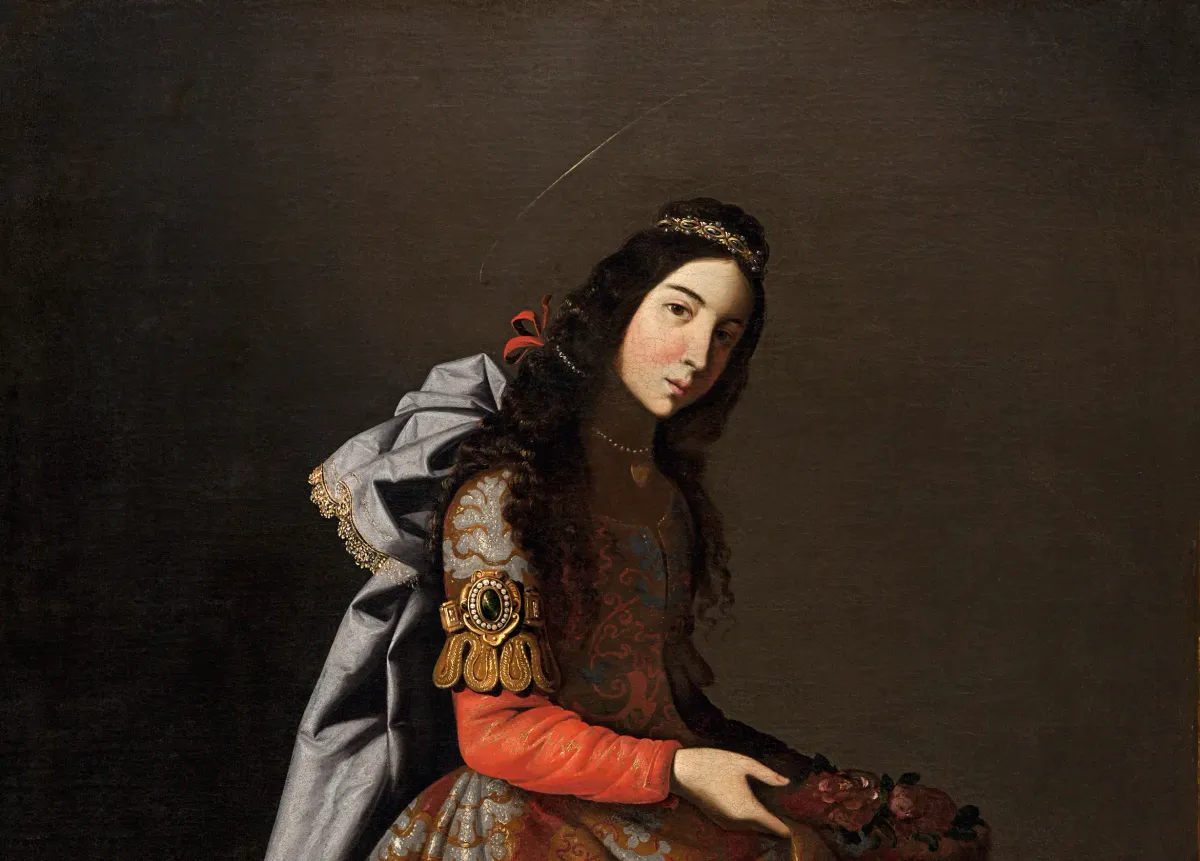 Paris · Best showsThe 12 best museum shows in Paris this autumnZurbarán at the Louvre, Van Gogh and Gauguin at Louis Vuitton, Mary Cassatt at the Orsay.
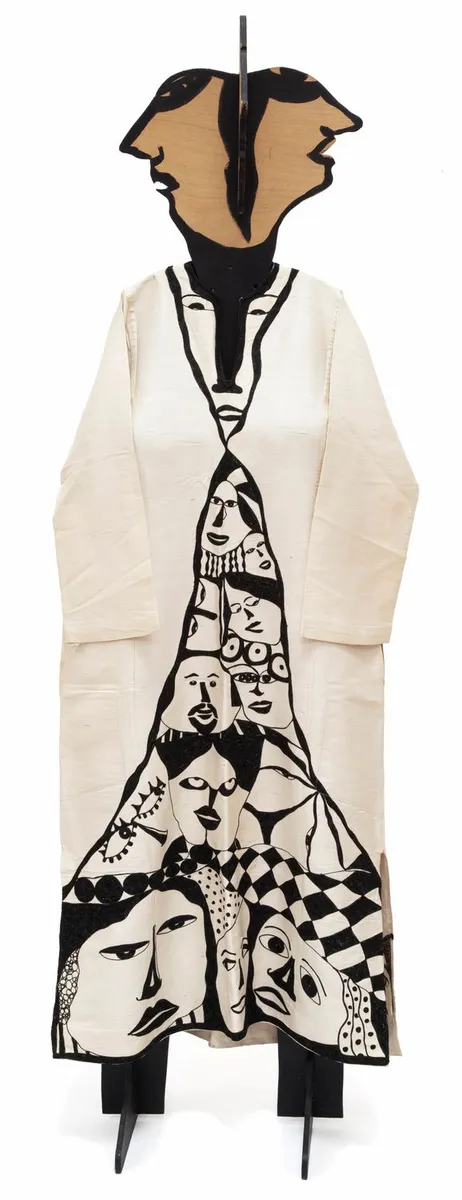 Los Angeles · Best showsThe 10 best museum shows in Los Angeles this fallHuguette Caland at the Hammer, the Brockman Gallery at LACMA and Wright of Derby at the Getty.
 Berlin · Best showsThe 12 best museum shows in Berlin this autumnBotticelli to Lempicka at the Gemäldegalerie, Ryuichi Sakamoto and Maurizio Cattelan.
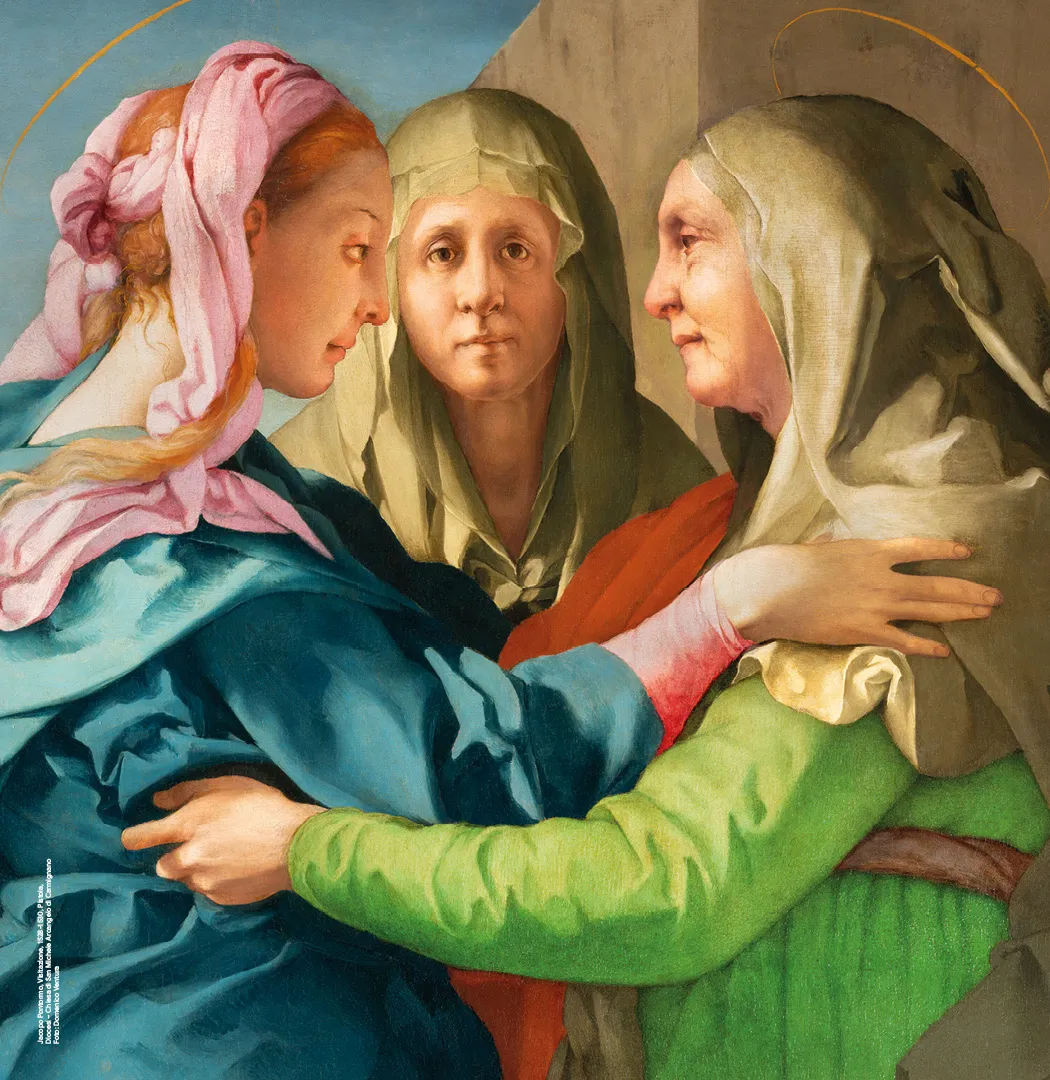 Rome · Best showsThe 10 best museum shows in Rome this autumnPontormo at the Scuderie, the Tomba François at Villa Giulia, and Kandinsky from the Pompidou.
 London · Best showsThe 12 best museum shows in London this autumnAll nine van Eyck portraits, Renoir, Mendieta and Ryman, and what opens in November.
 Milan · Best showsThe 8 best museum shows in Milan this autumnLuciano Fabro at HangarBicocca, Picabia at Palazzo Reale, and Global Antiquity at Prada.
 Brussels · Best showsThe 8 best museum shows in Brussels this autumnThe opening of KANAL – Centre Pompidou, William Kentridge at Bozar and Ali Cherri at WIELS.
Hong Kong · Best showsThe 8 best museum shows in Hong Kong this autumnMyths and Monsters at M+, Anne Imhof at Tai Kwun and Heavenly Horses at the Palace Museum.
 Seoul · Best showsThe 12 best museum shows in Seoul this autumnInside Other Spaces at Leeum, Do Ho Suh at MMCA and Lynn Hershman Leeson, free, at SeMA.
 Miami · Best showsThe 10 best museum shows in Miami this fallManoucher Yektai at ICA Miami, Picasso–Klee–Matisse at PAMM and Yuko Mohri at the Bass.
- New York · Art pressArt magazines in New York, and the critics who write for themThe critics, magazines and newsletters covering New York art now, and what each covers.
 Art history · ArtistsThe Abstract Expressionist artists: 24 painters of the New York SchoolThe New York School in two generations: who each painter was, and where to see the work now.
 Art history · ArtistsFamous female painters: 26 women who changed paintingFrom Artemisia Gentileschi to Joan Mitchell and Julie Mehretu: the women who changed painting.
 Art history · ArtistsFamous abstract artists: 25 painters who defined abstractionFrom Hilma af Klint and Kandinsky to Rothko, Riley and Richter: abstraction in 25 painters.
 Contemporary art · ArtistsFamous living artists, and where to see their work nowJasper Johns to Julie Mehretu: the best-known artists alive today, and their shows on now.
- Contemporary art · ArtistsGen Z artists: eight rising stars of the art worldSasha Gordon, Joanna van Son, Pol Taburet and five more born since 1997, and their shows on now.
 Art market · ArtistsThe 25 most expensive paintings ever soldSalvator Mundi, Interchange, The Card Players, and the Klimt and the Pollock that sold since 2025.
 Germany · ArtistsFamous German painters, from Dürer to RichterDürer, Friedrich, Kirchner, Beckmann, Richter and Kiefer: five centuries in eighteen painters.
 Art history · ArtistsFamous sculptors, from Donatello to Simone LeighMichelangelo, Rodin, Brâncuși, Calder, Bourgeois and Serra: six centuries in thirty sculptors.
 Korea and Japan · ArtistsDansaekhwa and Mono-ha: the artists to knowPark Seo-bo, Ha Chong-hyun, Lee Ufan and Nobuo Sekine: Korean monochrome and the School of Things.
 Art market · ArtistsBlue-chip artists: what blue-chip art means, and who it coversWhat makes an artist blue-chip, and twenty who are, with their auction records.
- Paris · Gallery mapsThe best Paris gallery mapsFifteen Paris gallery maps side by side: what each covers, and what it does best.
- New York · Gallery mapsThe best NYC gallery mapsFifteen New York gallery maps side by side: what each covers, what it costs, what it does best.
- San Francisco · For collectorsArt consultants and art advisors in San FranciscoWho advises collectors, who fills offices and hotels, who belongs to the APAA, and what it costs.