Showing the guide Famous abstract artists: 25 painters who defined abstraction

View MapMapArtistsEditorial

Art history · Artists

Famous abstract artists: 25 painters who defined abstraction

From Hilma af Klint’s paintings for a temple in 1906 to Mark Bradford’s maps of Los Angeles: the abstract painters who mattered most, how each came to abstraction, the works to know and where to see them now.

By On View · Updated · 25 artists

  • Famous abstract artists
  • Abstract art
  • Abstract painters
  • Abstraction
  • Abstract Expressionism
  • Color field painting
  • Op art
  • Minimalism
  • Art history

Abstract art is art that does not set out to picture anything in the world: its subject is color, line, shape, texture and the way a painting is made. It arrived in the years around 1910, when several painters in different countries crossed into it at almost the same time, each for reasons of their own, from spiritualism to music to the search for a universal order. In the century since it has taken in the drips of Jackson Pollock, the fields of Mark Rothko, the grids of Agnes Martin, the stripes of Bridget Riley and the scraped layers of Gerhard Richter.

Here are twenty-five abstract painters who made it what it is, in four parts and in order of birth within each. Each entry gives the painter’s years, how they came to abstraction, the works to know and where they hang, and any shows of their work on view now or opening soon in On View’s listings, which change as shows open and close. For the New York painters of the 1940s and 1950s in full, see the Abstract Expressionist artists.

The pioneers6

The painters who made the first abstract pictures, between 1906 and the end of the First World War, and the Bauhaus teacher who made color itself the subject.

1 / 25Swedish · 1862–1944

Hilma af Klint

Born at Karlberg Palace, Solna; died in Djursholm, near Stockholm

Works to know: The Ten Largest, 1907 (Hilma af Klint Foundation, Stockholm); Group X, No. 1, Altarpiece, 1915 (Hilma af Klint Foundation, Stockholm)

In November 1906, at 44, af Klint began the Paintings for the Temple, a cycle of 193 works she finished in 1915, years before most of the men who are usually credited with inventing abstraction. The Ten Largest, each about 2.4 by 3.2 meters, trace a life from childhood to old age in spirals, petals and pastel loops. She asked that her abstract work stay unseen until twenty years after her death; it was first shown in Los Angeles in 1986 and has since redrawn the history of abstract art.

2 / 25Russian · 1866–1944

Wassily Kandinsky

Born in Moscow; died in Neuilly-sur-Seine, near Paris

Works to know: Untitled (First Abstract Watercolor), c. 1913 (Centre Pompidou, Paris); Composition VII, 1913 (Tretyakov Gallery, Moscow)

Kandinsky argued in Concerning the Spiritual in Art, published in Munich in 1911, the year he founded Der Blaue Reiter, that color and form could act on the soul as music does, and sorted his paintings into Impressions, Improvisations and Compositions. The small watercolor long called the first abstract work is inscribed 1910, but the Centre Pompidou, which owns it, now dates it to 1913, probably a study for Composition VII. He taught at the Bauhaus from 1922 until the Nazis closed it in 1933.
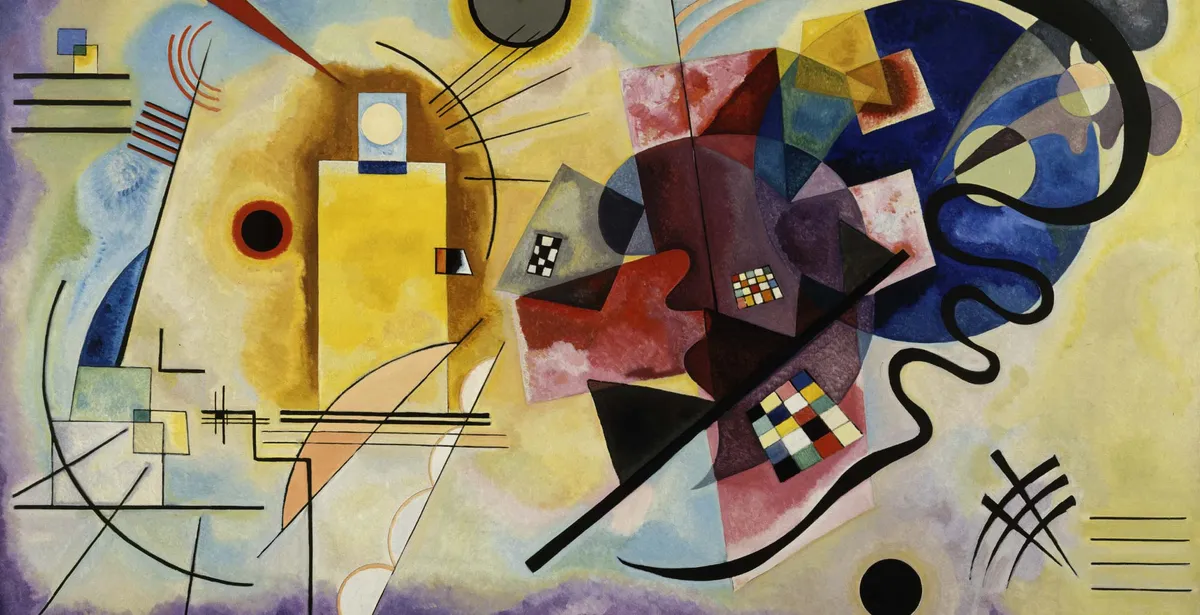
Vassily Kandinsky, Gelb-Rot-Blau (Jaune-rouge-bleu), 1925
Vassily Kandinsky, Gelb-Rot-Blau (Jaune-rouge-bleu), 1925. Oil on canvas, 128 × 201.5 cm. Gift of Nina Kandinsky, 1976. Centre Pompidou, Paris, Musée national d’art moderne – Centre de création industrielle. In Kandinsky, Palazzo Bonaparte, Rome.

3 / 25Dutch · 1872–1944

Piet Mondrian

Born in Amersfoort; died in New York

Works to know: Broadway Boogie Woogie, 1942–43 (Museum of Modern Art, New York); Victory Boogie Woogie, 1942–44, unfinished (Kunstmuseum Den Haag)

  • On view: Cezanne et nous (group show) · Grand Palais – Galeries nationales, Paris · Through Jan 17, 2027

Mondrian came to abstraction slowly, through trees, dunes and a Cubist phase begun in Paris in 1912. With Theo van Doesburg he founded De Stijl, and from late 1919 painted the grids of black lines and rectangles of primary color he called Neoplasticism. He sailed for New York in 1940, and the city loosened his last paintings into rows of small colored blocks: Broadway Boogie Woogie, which the sculptor Maria Martins bought for $800 and gave to the Museum of Modern Art, and Victory Boogie Woogie, unfinished at his death in 1944.

4 / 25Born in Kyiv · 1879–1935

Kazimir Malevich

Born in Kyiv, to a Polish family; died in Leningrad (now Saint Petersburg)

Works to know: Black Square, 1915 (Tretyakov Gallery, Moscow); Suprematist Composition: White on White, 1918 (Museum of Modern Art, New York)

Malevich launched Suprematism at the Last Futurist Exhibition, 0,10, in Petrograd in December 1915, hanging Black Square high across a corner of the room, where icons hang in Russian homes. He had first painted a black square on white two years earlier, for the sets of the opera Victory over the Sun. He made four versions of it; the first is in the Tretyakov in Moscow. Long called Russian, he is now described as Ukrainian by the Metropolitan Museum and the Stedelijk, which owns more of his paintings than any museum outside Russia.

5 / 25Ukrainian-born French · 1885–1979

Sonia Delaunay

Born in Ukraine, then in the Russian Empire; died in Paris

Works to know: Le Bal Bullier, 1913 (Centre Pompidou, Paris); Prismes électriques, 1914 (Centre Pompidou, Paris)

Delaunay counted a patchwork quilt she sewed for her son’s crib in 1911 as her first abstract work. With her husband, Robert Delaunay, she built paintings from “simultaneous” contrasts of color, which Guillaume Apollinaire named Orphism in 1913: Le Bal Bullier turns a Paris dance hall into wheels of color, and Prismes électriques the play of the new electric light on color. She carried the same art into fabrics, fashion and books, and in 1964 became the first living woman artist given a retrospective at the Louvre.

6 / 25German-born American · 1888–1976

Josef Albers

Born in Bottrop, Germany; died in New Haven, Connecticut

Work to know: Homage to the Square, 1959 (Centre Pompidou, Paris)

A student at the Bauhaus from 1920 and a teacher there from 1922, Albers left Germany when the Nazis closed it, taught at Black Mountain College and from 1950 headed design at Yale. That year he began Homage to the Square, which he kept painting until his death: three or four squares of flat color nested inside each other, laid on with a palette knife, each a demonstration of how one color changes another. His book Interaction of Color (1963) is still taught, and in 1971 he became the first living artist given a solo show at the Metropolitan Museum.

New York and Paris after 19457

The Abstract Expressionists in New York, who made abstraction the leading art of the postwar world, and the painters in Paris who worked toward it from other directions.

7 / 25Latvian-born American · 1903–1970

Mark Rothko

Born in Dvinsk (now Daugavpils, Latvia); died in New York

Works to know: Black on Maroon (Seagram mural), 1958 (Tate, London); No. 14 (Browns over Dark), 1963 (Centre Pompidou, Paris)

Rothko refused to be called an abstract painter or a colorist; he said his paintings were about basic human emotions. From 1946 he painted the soft, floating shapes critics later called multiforms, and from 1949 the stacked rectangles of color, with blurred edges, that he kept for the rest of his life, darkening toward the maroons and blacks of the Seagram murals and the fourteen canvases of the Rothko Chapel in Houston.

8 / 25Dutch-born American · 1904–1997

Willem de Kooning

Born in Rotterdam; died in East Hampton, New York

Works to know: Excavation, 1950 (Art Institute of Chicago); Untitled XX, 1976 (Centre Pompidou, Paris)

  • On view: Bacon / de Kooning · Lévy Gorvy Dayan, New York · Through Dec 19
  • On view: Faces & Figures (group show) · Skarstedt, Upper East Side, New York · On view
  • On view: 101 Drawings (group show) · Matthew Marks Gallery, West 24th Street, New York · Through Jan 23, 2027

De Kooning never let go of the figure for long, but his abstractions are among the movement’s peaks: the black-and-white paintings of 1946 to 1949, shown at his first solo exhibition, at the Charles Egan Gallery in 1948; Excavation, a dense web of interlocking forms; and, from the mid-1970s, broad, wet, open compositions in which the figure dissolves altogether.

9 / 25American · 1912–1956

Jackson Pollock

Born in Cody, Wyoming; died in Springs, East Hampton, New York

Works to know: Number 26 A, Black and White, 1948 (Centre Pompidou, Paris); Autumn Rhythm (Number 30), 1950 (Metropolitan Museum of Art, New York)

From 1947 Pollock laid unstretched canvas on the floor and dripped and poured house paint onto it, working, in his words, with “sticks, trowels, knives and dripping fluid paint.” The drip paintings of 1947 to 1950, which he numbered rather than titled, have no center and no edge; they are among the most famous abstract paintings ever made.

10 / 25French · 1919–2022

Pierre Soulages

Born in Rodez; died in Nîmes

Work to know: Peinture 324 x 362 cm, 1985 (Polyptyque C), 1985 (Centre Pompidou, Paris)

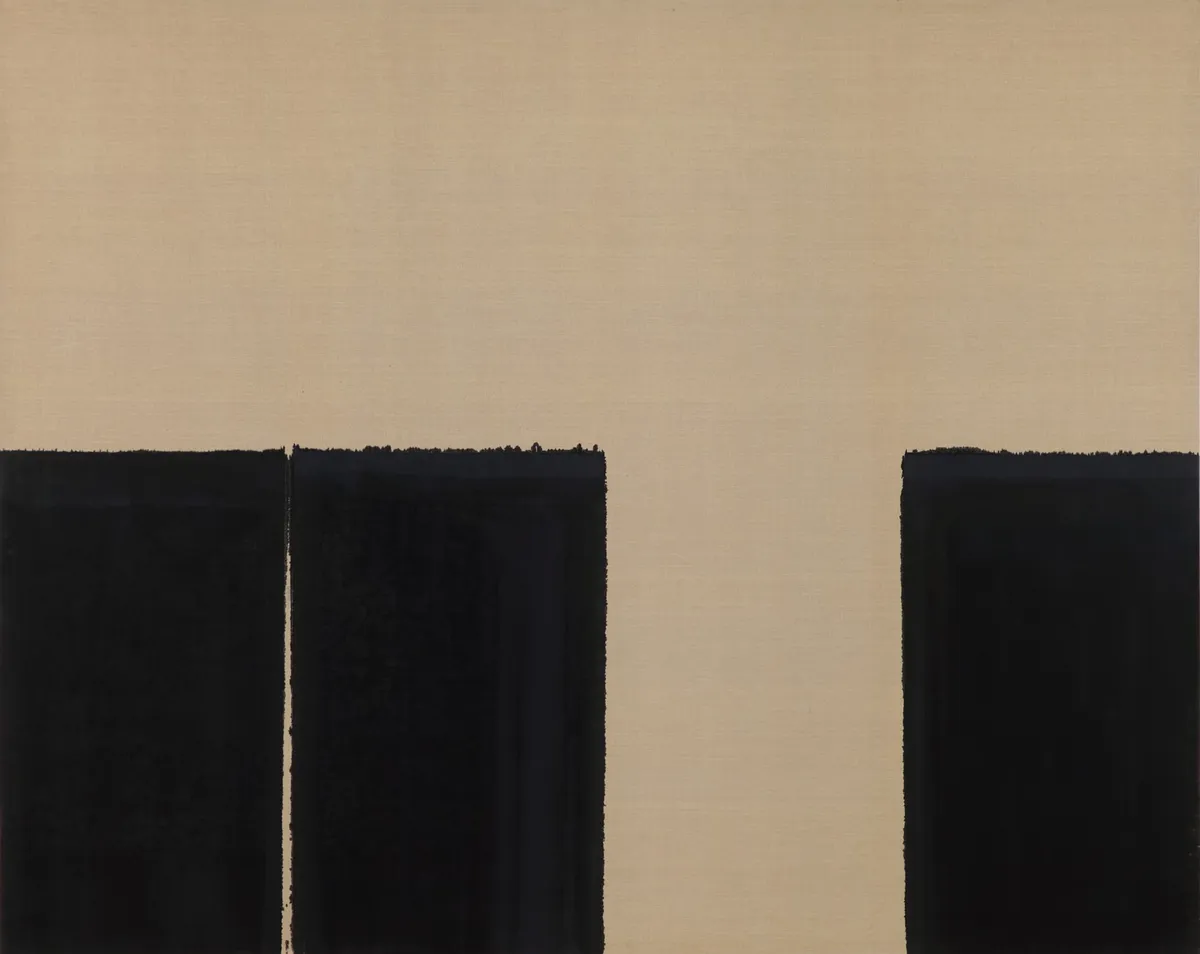
The painter of black. Soulages showed his first dark abstractions in Paris in 1947, and from 1979 painted what he called Outrenoir, “beyond black”: canvases covered in black paint ridged and furrowed so that what you see is light reflected from the black. He titled every painting Peinture, with its size and date. He also made the 104 windows of the Romanesque abbey church of Conques, and the Musée Soulages opened in his birthplace, Rodez, in 2014.

11 / 25Chinese-born French · 1920–2013

Zao Wou-Ki

Born in Beijing; died in Nyon, Switzerland

Works to know: Vent, 1954 (Centre Pompidou, Paris); 18.10.59 – 15.02.60, 1959–60 (Centre Pompidou, Paris)

Zao trained at the China Academy of Art and moved to Paris in 1948, where Paul Klee led him away from depiction; the Centre Pompidou calls Vent, of 1954, his first abstract painting. From 1958 he titled his paintings only with the dates he began and finished them. His friendship with the poet Henri Michaux brought him back to Chinese ink, and his big, weather-like canvases joined the two traditions. Juin–Octobre 1985 sold for HK$510 million in Hong Kong in 2018.

12 / 25American · 1925–1992

Joan Mitchell

Born in Chicago; died in Neuilly-sur-Seine, near Paris

Works to know: Hemlock, 1956 (Whitney Museum of American Art, New York); La Grande Vallée XIV, 1983 (Centre Pompidou, Paris)

Mitchell disliked every label, Abstract Expressionist included, and called her paintings feelings about landscape: “I carry my landscapes around with me.” Her La Grande Vallée, sixteen paintings of 1983–84, evoke a valley where a friend had taken refuge as a child, a place Mitchell never saw.

13 / 25American · 1928–2011

Helen Frankenthaler

Born in New York; died in Darien, Connecticut

Work to know: Mountains and Sea, 1952 (National Gallery of Art, Washington, on loan from the Helen Frankenthaler Foundation)

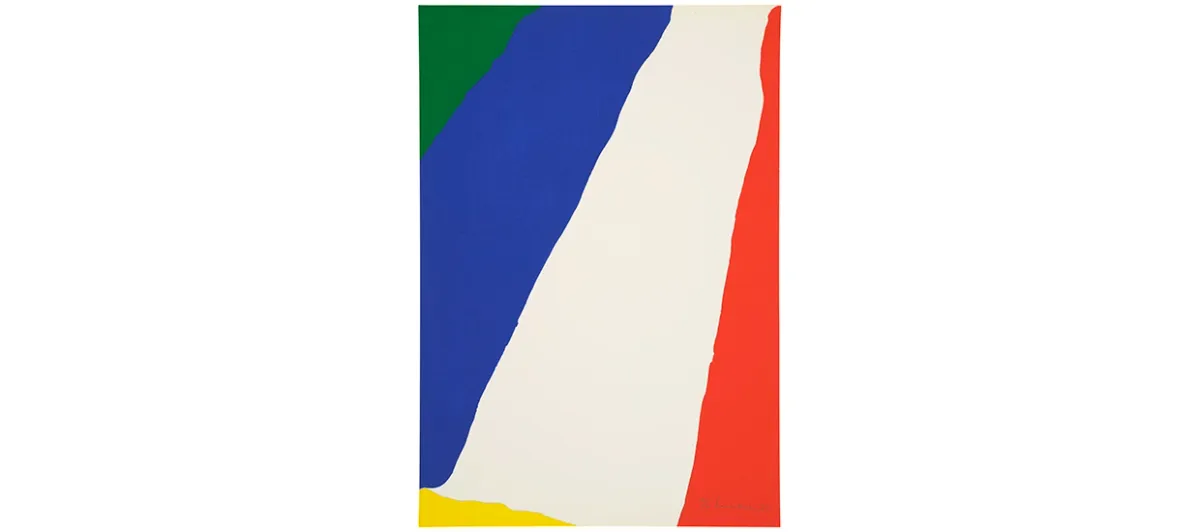
In Mountains and Sea, in 1952, Frankenthaler stained unprimed canvas with oil paint thinned with turpentine, so that color and canvas became one. Through Morris Louis and Kenneth Noland her soak-stain method started color field painting. From 1963 she worked in acrylic, and from 1976 in woodcut as well.

Let The Picture Lead: Helen Frankenthaler and Her Circle at Lowe Art Museum
Let The Picture Lead: Helen Frankenthaler and Her Circle. Gift of the Helen Frankenthaler Foundation. In Let The Picture Lead: Helen Frankenthaler and Her Circle, Lowe Art Museum, Miami.

Color, line and the grid8

The painters who, from the late 1950s, pared abstraction down to stripes, grids, fields of color and hand-drawn lines, or let the canvas off the stretcher.

14 / 25American · 1891–1978

Alma Thomas

Born in Columbus, Georgia; died in Washington, D.C.

Works to know: Resurrection, 1966 (White House, Washington); Starry Night and the Astronauts, 1972 (Art Institute of Chicago)

  • On view: Geometries (group show) · The Studio Museum in Harlem, New York · Through Feb 7, 2027

Thomas was the first graduate of Howard University’s fine arts program, in 1924, and taught art at a Washington junior high school for decades; she became a full-time painter only after retiring, in 1960. Her mosaic-like fields of short colored strokes, inspired by the patterns a holly tree made against her window, and later by the Moon landing, put her in the Washington Color School. In 1972, at 81, she was the first African American woman to have a solo show at the Whitney.

15 / 25Canadian-born American · 1912–2004

Agnes Martin

Born in Macklin, Saskatchewan; died in Taos, New Mexico

Works to know: The Islands, 1979 (Whitney Museum of American Art, New York); Untitled, 2002 (Centre Pompidou, Paris)

Martin came to New York in 1957 at Betty Parsons’s invitation and, in a studio at Coenties Slip, began the six-foot-square canvases covered with soft graphite grids that became her signature. She left the city abruptly in 1967 and did not make art again until 1973; in New Mexico she turned to bands of pale color. Often called a Minimalist, she thought of herself as an Abstract Expressionist.

16 / 25American · 1923–2015

Ellsworth Kelly

Born in Newburgh, New York; died in Spencertown, New York

Works to know: Window, Museum of Modern Art, Paris, 1949 (Centre Pompidou, Paris); Spectrum Colors Arranged by Chance, 1951–53 (San Francisco Museum of Modern Art)

Kelly found abstraction in Paris, where he lived from 1948: in 1949 he turned a window of the city’s modern art museum into a painting, and said that after it painting as he had known it was over. He went on to hard-edged single colors and shaped canvases, shapes taken from shadows, fields and buildings and stripped to their outline. Austin, a chapel-like building with colored glass windows that he designed for the Blanton Museum, opened in 2018, after his death.

17 / 25American · 1928–2011

Cy Twombly

Born in Lexington, Virginia; died in Rome

Works to know: Achilles Mourning the Death of Patroclus, 1962 (Centre Pompidou, Paris); Fifty Days at Iliam, 1978 (Philadelphia Museum of Art)

Twombly went to Black Mountain College with Robert Rauschenberg and in 1957 moved to Rome, where he spent most of his life. His paintings are scribbled, looping, written-on fields, like graffiti or school blackboards, full of names from Homer and Virgil; the grey paintings of 1967–71 loop white lines across grey grounds, like writing on a blackboard. In 2010 the Louvre unveiled his painted ceiling in its Salle des Bronzes.

18 / 25British · Born 1931

Bridget Riley

Born in London; lives in London, Cornwall and the Vaucluse

Works to know: Fall, 1963 (Tate, London); Ascent 2 Dark Colour (wall painting), 2024 (Centre Pompidou, Paris)

  • On view: Bridget Riley · Hazlitt Holland-Hibbert, London · Through Nov 27
  • On view: Cezanne et nous (group show) · Grand Palais – Galeries nationales, Paris · Through Jan 17, 2027

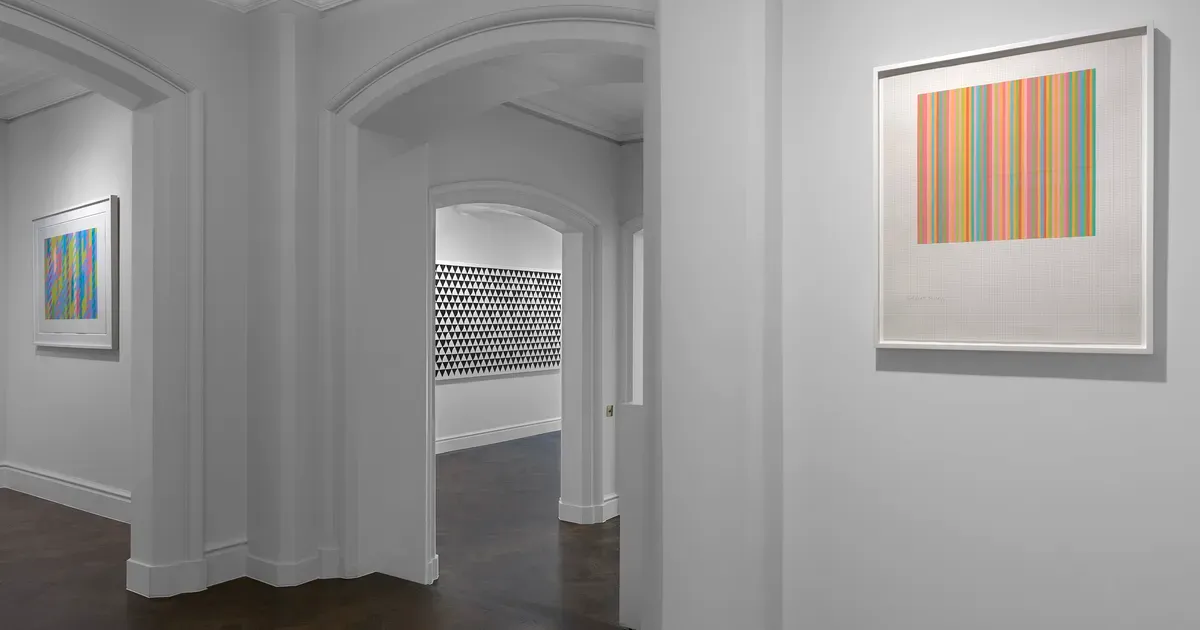
Riley’s black-and-white paintings of 1961 to 1965, whose lines and curves seem to bulge and shimmer, made her the leading painter of Op Art. She turned to color in 1967, the year of her first stripe paintings, and after a visit to Egypt in 1980–81 worked with what she called her Egyptian palette. She is 95, and the Centre Pompidou acquired one of her wall paintings in 2026.

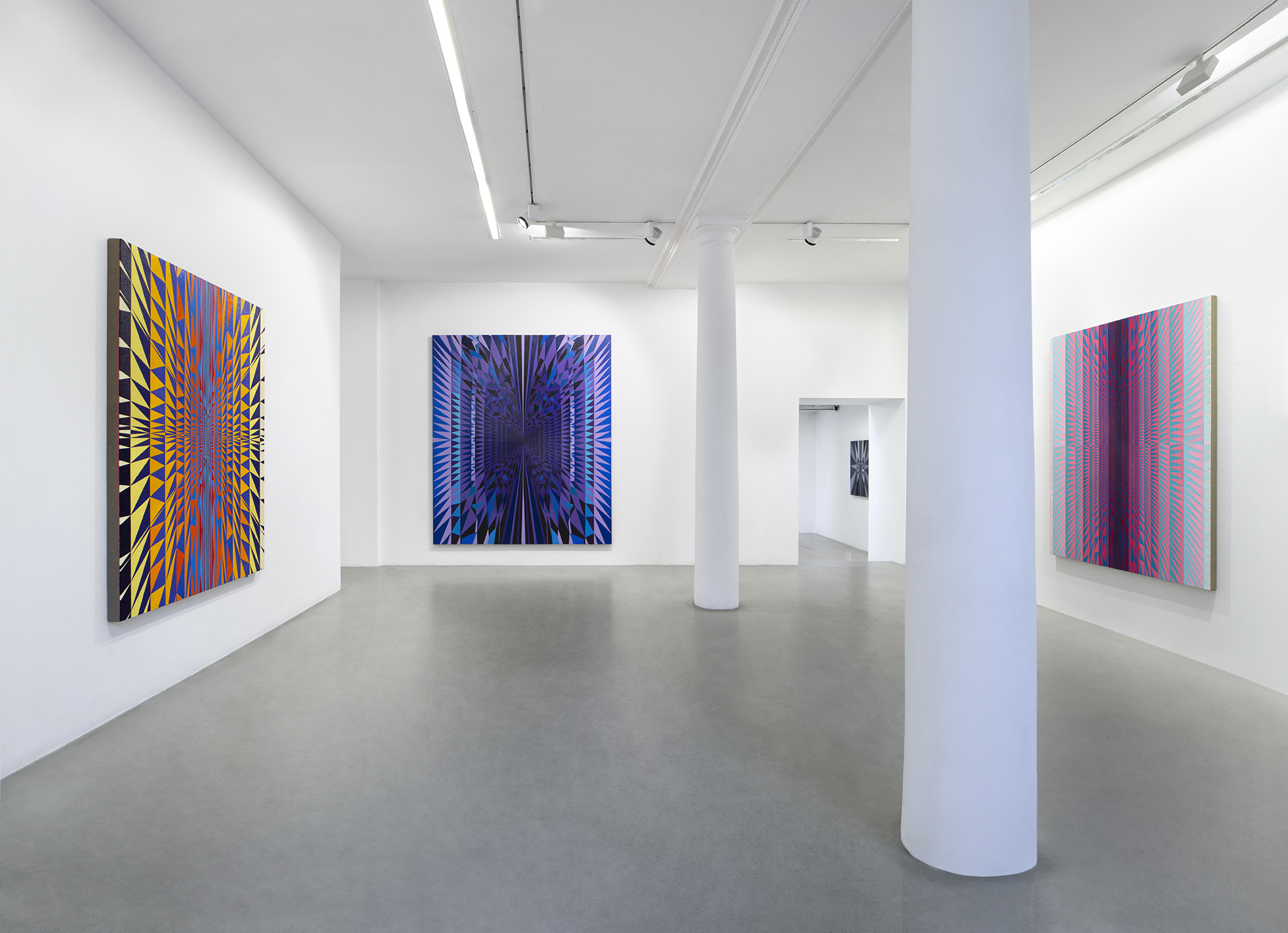
Installation view of Bridget Riley at Hazlitt Holland-Hibbert
Installation view, Bridget Riley, Hazlitt Holland-Hibbert.

19 / 25American · 1933–2022

Sam Gilliam

Born in Tupelo, Mississippi; died in Washington, D.C.

Works to know: Red Petals, 1967 (Phillips Collection, Washington); Swing, 1969 (Smithsonian American Art Museum, Washington)

Gilliam spent his working life in Washington, where he began among the Color School painters, and in 1968 took the canvas off the stretcher: his Drape paintings are stained, unstretched lengths of canvas hung and folded from walls and ceilings. He denied the much-repeated story that laundry on a clothesline gave him the idea. He represented the United States at the Venice Biennale in 1972.

20 / 25American · 1936–2024

Frank Stella

Born in Malden, Massachusetts; died in New York

Work to know: Die Fahne hoch!, 1959 (Whitney Museum of American Art, New York)

Stella’s Black Paintings of 1958–60, stripes of black house paint applied with a house painter’s brush, with thin lines of bare canvas between, were shown at the Museum of Modern Art when he was 23 and helped end the era of Abstract Expressionism. “What you see is what you see,” he said. He moved on to shaped canvases, the Irregular Polygons and the vast, colorful Protractor series, and in 1970 became the youngest artist given a retrospective at MoMA. He died in 2024.

21 / 25American · 1938–2023

Brice Marden

Born in Bronxville, New York; died in Tivoli, New York

Works to know: Fave, 1969 (Blanton Museum of Art, Austin); Lethykos (for Tonto), 1976 (Museum of Modern Art, New York)

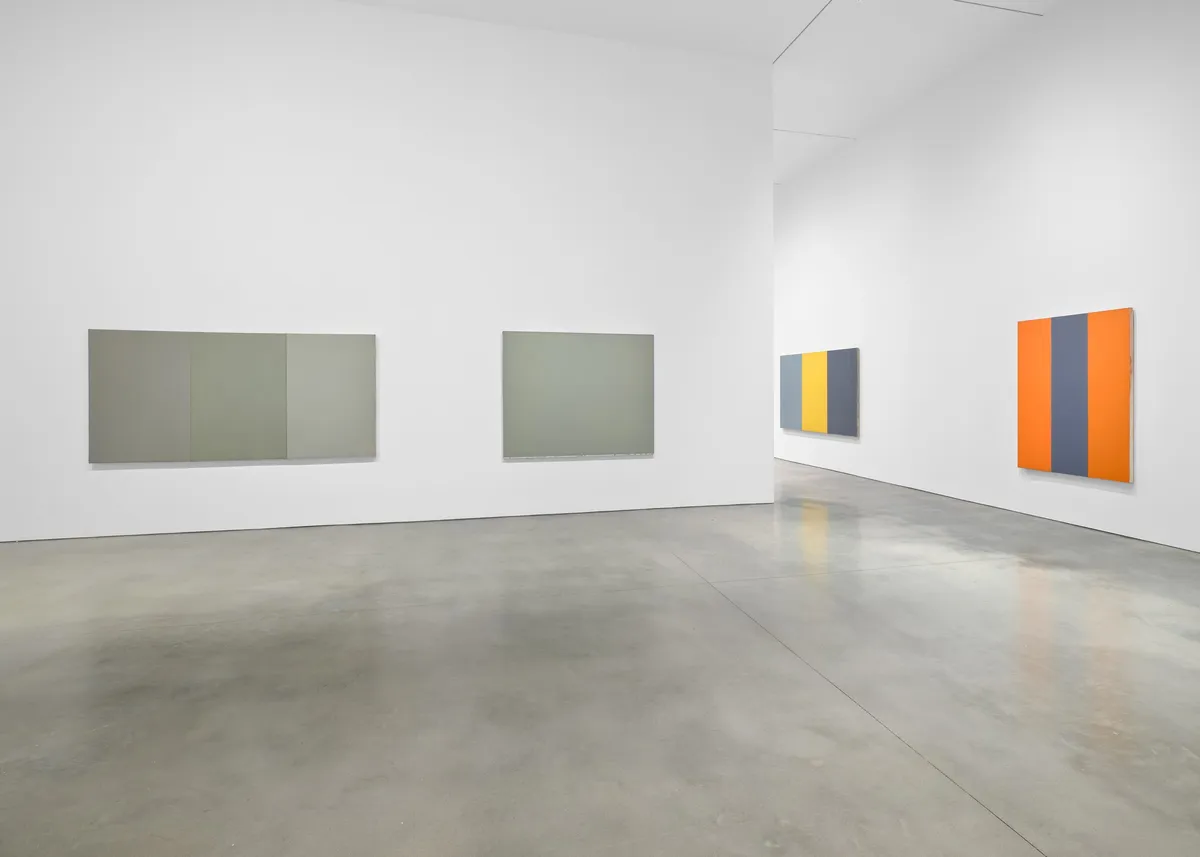
Marden’s early paintings are single panels of muted color, oil mixed with beeswax so that the surface has the soft density of skin, joined into diptychs and triptychs. A visit in 1984 to an exhibition of Japanese calligraphy, and his love of Chinese poetry, turned him toward line: the Cold Mountain paintings of 1989–91, named for a Tang-dynasty hermit poet, are skeins of looping, ink-like strokes.

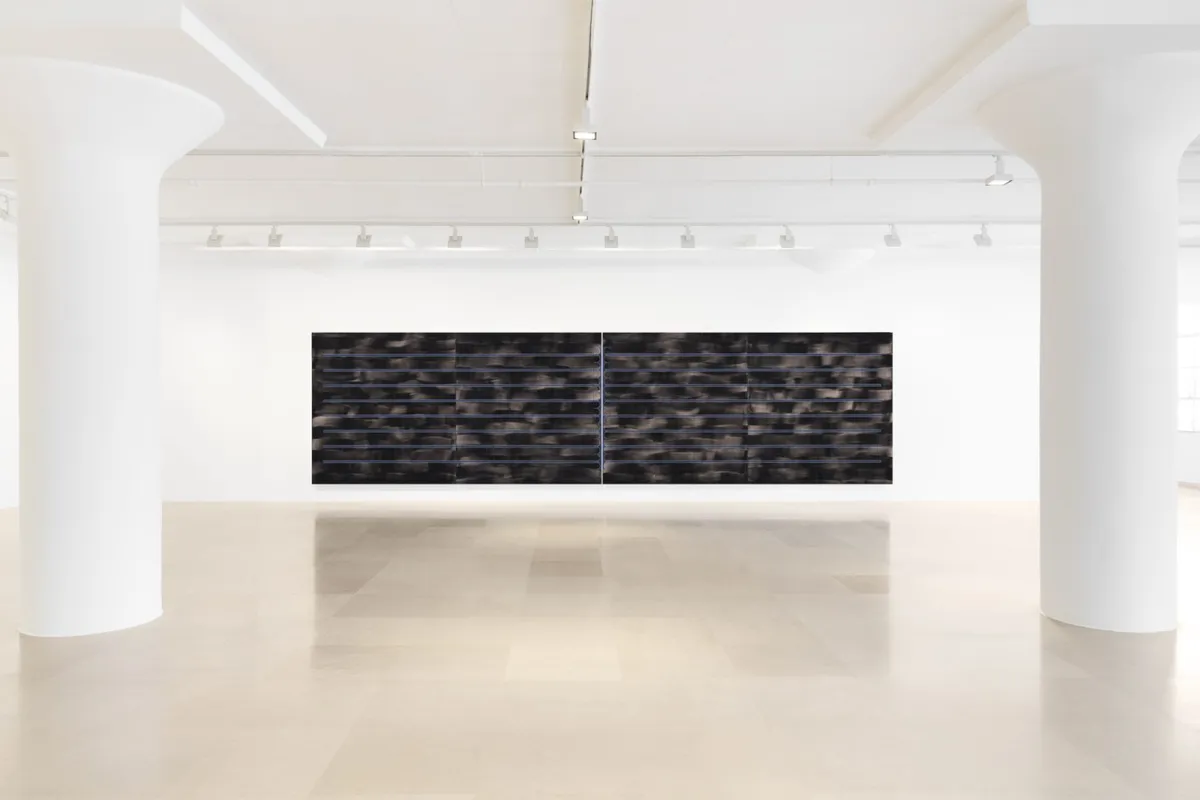
Installation view of Brice Marden: I Am Plane Image at Gagosian, West 21st Street
Installation view, Brice Marden: I Am Plane Image, Gagosian, West 21st Street. Artwork © 2026 Estate of Brice Marden/Artists Rights Society (ARS), New York. Photo: Owen Conway.

Abstraction now4

Four painters, alive and working, who have kept abstraction central to painting.

22 / 25German · Born 1932

Gerhard Richter

Born in Dresden; lives in Cologne

Work to know: Abstraktes Bild (444), 1979 (Centre Pompidou, Paris)

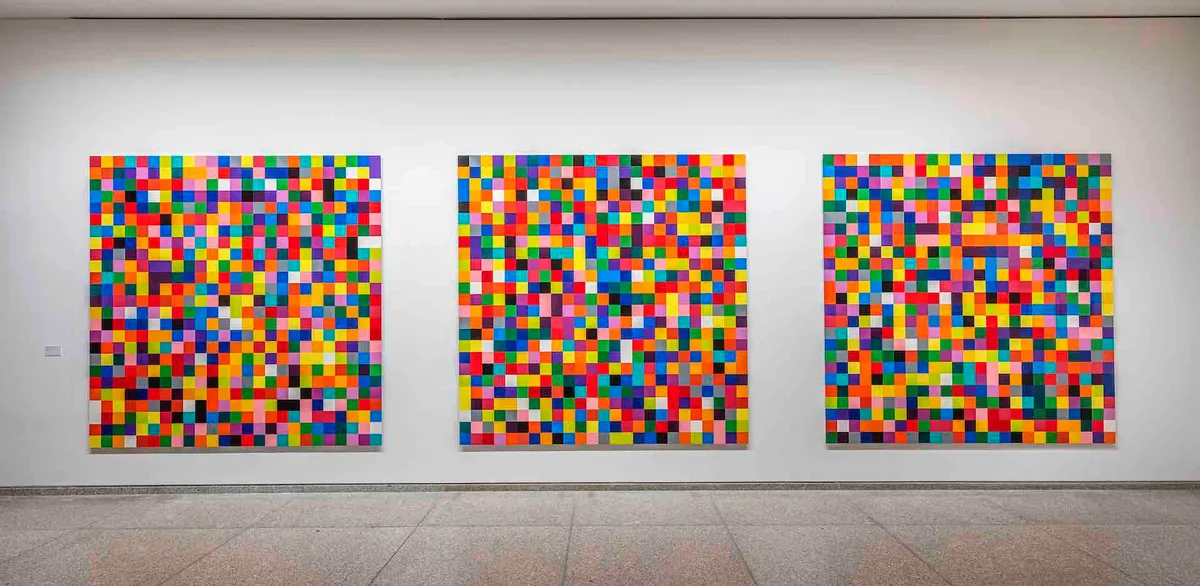
Richter left East Germany for the West in 1961, two months before the Berlin Wall went up, and has painted abstraction and photographs side by side ever since: color charts from 1966, grey monochromes from 1969, and from 1976 the paintings he calls Abstraktes Bild. Since the mid-1980s he has made them by dragging paint across the canvas with a homemade squeegee, burying and revealing layer after layer. He called his windows of 2020 for Tholey Abbey his last major work.

Installation view of Gerhard Richter: 100 Works for Berlin at Neue Nationalgalerie
Installation view, Gerhard Richter: 100 Works for Berlin, Neue Nationalgalerie. © Gerhard Richter 2023 / Foto: David von Becker.

23 / 25South Korean · Born 1936

Lee Ufan

Born in South Gyeongsang, Korea; lives in Kamakura, Japan, and Paris

Works to know: Relatum (formerly System), 1969 (Dia Beacon, New York); Correspondance, 1994 (Centre Pompidou, Paris)

Lee went to Japan in 1956, studied philosophy and became the thinker of Mono-ha, the School of Things. His painting began with From Point and From Line (1972–84), rows of strokes in ground mineral pigment, each fading as the brush runs dry; then came Correspondence, from 1991, and Dialogue, from about 2006, a few grey marks on a white field. He has museums of his own on Naoshima, designed by Tadao Ando, since 2010, and in Arles since 2022. See Dansaekhwa and Mono-ha.

24 / 25American · Born 1961

Mark Bradford

Born in Los Angeles; lives and works there

Work to know: Scorched Earth, 2006 (The Broad, Los Angeles)

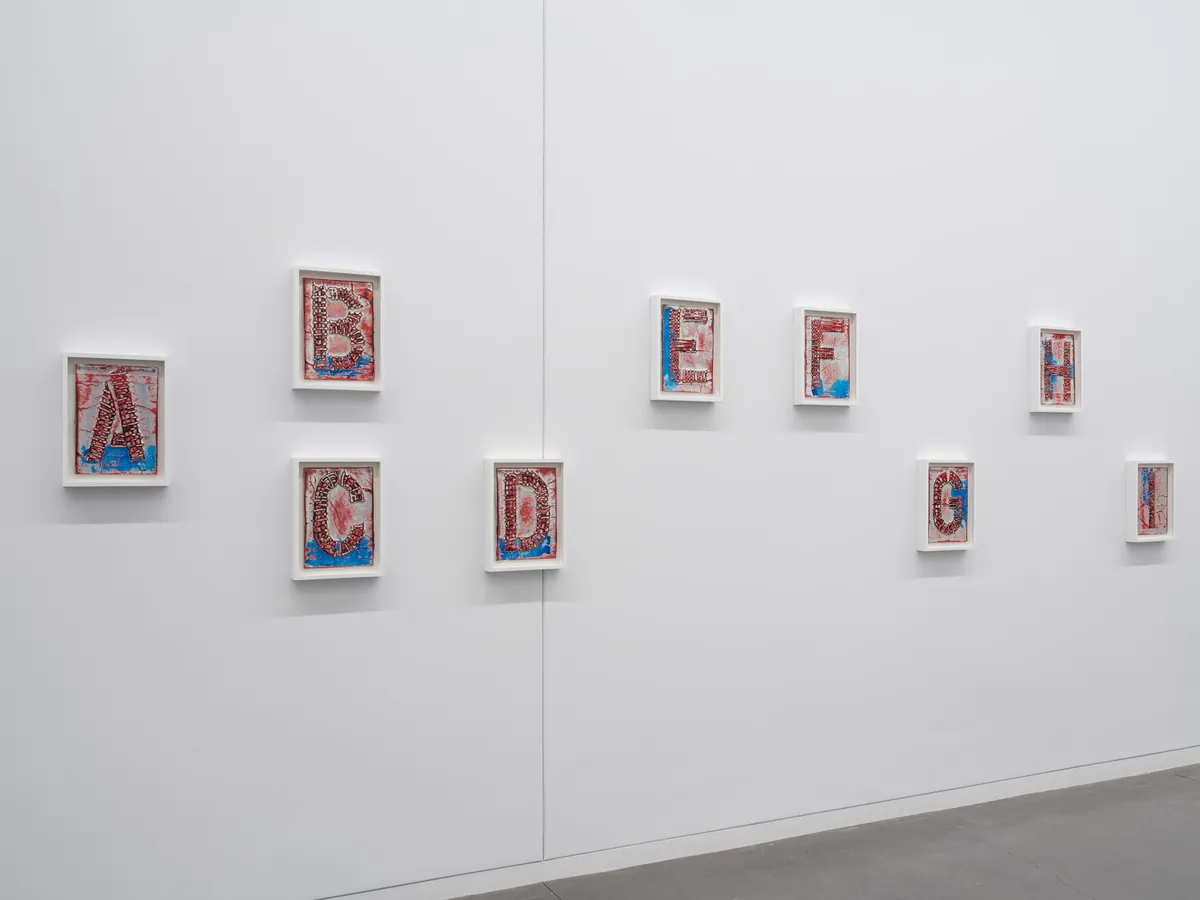
Bradford builds his abstractions from paper rather than paint: endpapers from the hair salon where he once worked, posters torn from the streets of Los Angeles, layered, glued, sanded, power-washed and cut into until the surface reads like an aerial map. Scorched Earth, which The Broad ties to the 1921 Tulsa massacre, is one. He represented the United States at the 2017 Venice Biennale.

Installation view of Mark Bradford: Untitled (A–Z), 2010 at The Studio Museum in Harlem
Installation view, Mark Bradford: Untitled (A–Z), 2010, The Studio Museum in Harlem. Photo: Kris Graves.

25 / 25Ethiopian-born American · Born 1970

Julie Mehretu

Born in Addis Ababa; lives in New York

Works to know: Mogamma, A Painting in Four Parts: Part 3, 2012 (Tate Modern, London); Hineni (E. 3:4), 2018 (Centre Pompidou, Paris)

Mehretu layers technical drawings of buildings and city plans under storms of ink and acrylic marks, in paintings about cities, crowds and political upheaval. In Hineni (E. 3:4) she blurred photographs of the fires set in the attacks on the Rohingya in 2017 and of the California wildfires of 2018 beneath the marks. The Whitney gave a floor to her retrospective in 2021.

Frequently asked questions

  • Who are the most famous abstract artists?

    Wassily Kandinsky, Piet Mondrian, Kazimir Malevich, Jackson Pollock and Mark Rothko are the best known. Hilma af Klint, whose abstract paintings of 1906 were shown only in the 1980s, now stands with them. After them come Josef Albers, Willem de Kooning, Joan Mitchell, Helen Frankenthaler, Pierre Soulages, Agnes Martin, Ellsworth Kelly, Frank Stella, Bridget Riley and Cy Twombly, and, working today, Gerhard Richter, Lee Ufan, Julie Mehretu and Mark Bradford.

  • Who painted the first abstract painting?

    There is no single answer. Hilma af Klint painted her first abstract series in 1906, but kept it from view. Kandinsky’s watercolor long called the first abstract work is inscribed 1910, but the Centre Pompidou, which owns it, now dates it to 1913. František Kupka showed abstract paintings at the Salon d’Automne in Paris in 1912, and Sonia Delaunay counted a quilt she made in 1911 as her first abstract work. The Pompidou describes eight pioneers, af Klint, Kandinsky, Kupka, Mondrian, Malevich, Delaunay, Olga Rozanova and Sophie Taeuber-Arp, crossing into abstraction independently between 1911 and 1917.
  • What is abstract art?

    Art that does not try to depict people, places or things, and works instead through color, line, shape, texture and the way it is made. Some abstract painters started from nature and simplified it away, as Mondrian did with trees; others began from nothing visible at all, as Malevich did with his Black Square.

  • What is the difference between abstract art and Abstract Expressionism?

    Abstract art is the whole field, from 1906 to now. Abstract Expressionism was one movement within it: the New York painters of the 1940s and 1950s, Pollock, de Kooning, Rothko, Kline, Newman, Krasner, Mitchell, Frankenthaler and others, who made large abstractions out of gesture or fields of color. See the Abstract Expressionist artists.

  • Who are the best-known abstract painters alive today?

    Gerhard Richter, born in 1932, and Bridget Riley, born in 1931, are the senior figures; Lee Ufan, born in 1936, is the leading abstract artist from Asia; and Julie Mehretu and Mark Bradford lead the generation born in the 1960s and 1970s. More are in famous living artists.

  • Where can you see abstract art?

    The Centre Pompidou in Paris holds major works by most of the painters here. In New York, the Museum of Modern Art, the Guggenheim and the Whitney; in London, Tate Modern; in Amsterdam, the Stedelijk, which has more paintings by Malevich than any museum outside Russia. For a single artist: the Rothko Chapel in Houston, Mondrian’s Victory Boogie Woogie in The Hague, Agnes Martin and Lee Ufan at Dia Beacon, Soulages in Rodez and Twombly’s Fifty Days at Iliam in Philadelphia. Shows on now are under each entry above.

For the painters of the New York School, see the Abstract Expressionist artists; for the Korean and Japanese abstraction of the 1970s, Dansaekhwa and Mono-ha; and for the women among them and beyond, famous female painters.

How this list was made

Twenty-five painters, chosen for what they did for abstraction and for how widely their work is known and shown today, kept to painters (sculptors such as Brancusi are not here). Dates and places of birth and death are those Wikipedia gives on October 22, 2026, and the living were checked against it that day. The works named are in the collections given, from the museums’ own records where they could be opened (most often the Centre Pompidou’s, the Whitney’s and Tate’s).

Sources

Published ; the text was last revised on , from the sources listed above. The shows named as on view, and their pictures, are those in On View’s listings as the page was built.