Showing the guide Famous German painters, from Dürer to Richter

View MapMapArtistsEditorial

Germany · Artists

Famous German painters, from Dürer to Richter

Five centuries of German painting in eighteen artists: Dürer, Cranach and Holbein, Caspar David Friedrich, the Expressionists of Die Brücke and Der Blaue Reiter, Beckmann and Dix, and the painters who put Germany at the center of art after 1960.

By On View · Updated · 18 artists

  • Famous German painters
  • German artists
  • German art
  • Expressionism
  • Die Brücke
  • Der Blaue Reiter
  • New Objectivity
  • Gerhard Richter
  • Anselm Kiefer
  • Berlin

German painting has led European art three times: in the Renaissance, when Albrecht Dürer, Lucas Cranach and Hans Holbein made Nuremberg, Wittenberg and Basel rivals to Italy; in the early twentieth century, when the Expressionists of Die Brücke and Der Blaue Reiter and then the painters of the Weimar years remade the figure and color; and after 1960, when Gerhard Richter, Sigmar Polke, Georg Baselitz and Anselm Kiefer turned the country’s history and its images into the most closely watched painting in the world.

Here are eighteen German painters, in three parts and in order of birth within each: what each painted, the works to know and where they hang, and any shows of their work on view now or opening soon in On View’s listings, which change as shows open and close. Wassily Kandinsky, who did much of his groundbreaking work in Munich, was Russian, and is in famous abstract artists.

From Dürer to Friedrich4

Three painters of the Renaissance and Reformation, and the Romantic who gave German landscape its soul.

1 / 18German · 1471–1528

Albrecht Dürer

Born and died in Nuremberg

Works to know: Self-Portrait, 1500 (Alte Pinakothek, Munich); Young Hare, 1502 (Albertina, Vienna)

The German Renaissance in one man. Dürer trained as a goldsmith with his father and as a painter and woodcut designer in Nuremberg, crossed the Alps to Venice twice and brought back the Italians’ proportion and perspective. His woodcuts and engravings, sold across Europe, made him the first artist famous across the continent in his own lifetime. The self-portrait of 1500, frontal and Christ-like, is one of the boldest claims for the artist’s standing ever painted.

2 / 18German · 1472–1553

Lucas Cranach the Elder

Born in Kronach, Franconia; died in Weimar

Works to know: The Martyrdom of Saint Barbara, 1510 (Metropolitan Museum of Art, New York); The Fountain of Youth, 1546 (Gemäldegalerie, Berlin)

Court painter to the Electors of Saxony at Wittenberg for almost half a century, from 1505, Cranach ran one of the most productive workshops of his time and became the painter of the Reformation: eleven of his portraits of his friend Martin Luther survive, and they fixed the reformer’s face for posterity. The same workshop turned out slender, knowing nudes, Venus, Lucretia and Eve, signed with the winged serpent the Elector granted him. He was twice mayor of Wittenberg and held the town’s monopoly on selling medicines.

3 / 18German · 1497–1543

Hans Holbein the Younger

Born in Augsburg; died in London

Works to know: Portrait of Sir Thomas More, 1527 (Frick Collection, New York); The Ambassadors, 1533 (National Gallery, London)

The greatest portraitist of the northern Renaissance made his name in Basel with portraits of the humanist Erasmus, who sent him to England in 1526 with a recommendation to Thomas More. By 1535 he was King’s Painter to Henry VIII, and his portraits of the Tudor court are still how we picture it. In The Ambassadors, two Frenchmen stand among globes and instruments over a smeared shape that, seen from the side, becomes a skull.

4 / 18German · 1774–1840

Caspar David Friedrich

Born in Greifswald; died in Dresden

Works to know: The Monk by the Sea, 1808–10 (Alte Nationalgalerie, Berlin); Wanderer above the Sea of Fog, c. 1818 (Hamburger Kunsthalle)

The painter of German Romanticism trained at the Copenhagen Academy and settled in Dresden in 1798. He set small figures, often seen from behind, before fog, sea, mountains and ruined churches, and made landscape a vehicle for awe, longing and faith. Neglected for decades after his death, he was brought back to view by the Berlin Nationalgalerie’s centenary exhibition of 1906; for his 250th birthday, in 2024, the Alte Nationalgalerie showed more than sixty of his paintings, and the Metropolitan Museum gave him his first major American show in 2025.

Modern Germany, 1870 to 19338

From German Impressionism to the Expressionists of Die Brücke, founded in Dresden in 1905, and Der Blaue Reiter, in Munich in 1911, and the hard-eyed painters of the Weimar Republic. In 1937 the Nazis stripped thousands of their works from German museums as “degenerate art.”

5 / 18German · 1847–1935

Max Liebermann

Born and died in Berlin

Works to know: Women Plucking Geese, 1872 (Alte Nationalgalerie, Berlin); Free Period in the Amsterdam Orphanage, 1881–82 (Städel Museum, Frankfurt)

The son of a Jewish banker, Liebermann became the leading German Impressionist, painting Dutch orphanages, beer gardens and, for his last twenty years, the garden of his villa at Wannsee. He led the Berlin Secession from its start in 1898 until 1911 and became president of the Prussian Academy of Arts in 1920. In 1933 he resigned when the Academy decided to stop showing Jewish artists, and he died two years later; his widow, Martha, took her own life in 1943 when she learned she was to be deported to Theresienstadt.

6 / 18German · 1867–1956

Emil Nolde

Born near Nolde, in Schleswig (now in Denmark); died in Seebüll

Works to know: The Last Supper, 1909 (SMK – National Gallery of Denmark, Copenhagen); Dance Around the Golden Calf, 1910 (Pinakothek der Moderne, Munich)

Born Hans Emil Hansen, he took the name of his home village in 1902 and belonged to Die Brücke in 1906–07; his blazing flowers, seas and religious scenes are among the most vivid color in German painting. He was also a supporter of the Nazi party from the early 1920s and voiced antisemitic views, yet the regime removed 1,052 of his works from German museums as “degenerate” and from 1941 barred him from painting, when he made the small watercolors he called Unpainted Pictures. After the war he was cast as a persecuted artist; the record caught up with him in 2019, when Angela Merkel sent back the two Noldes in her office as Berlin opened an exhibition on the artist under National Socialism.

7 / 18German · 1876–1907

Paula Modersohn-Becker

Born in Dresden; died in Worpswede

Work to know: Self-Portrait on Her Sixth Wedding Anniversary, 1906 (Paula Modersohn-Becker Museum, Bremen)

Modersohn-Becker joined the artists’ colony of Worpswede, near Bremen, in 1898, and studied in Paris from 1900, where she looked hard at Cézanne and Gauguin. Her simplified, monumental figures of peasant women, children and herself are among the first modern paintings in Germany, and she is recognized as the first woman to paint nude self-portraits. She died in 1907, at 31, after giving birth to her daughter, leaving more than 700 paintings; the museum opened in Bremen in 1927 was the first devoted to a woman artist.

8 / 18German · 1877–1962

Gabriele Münter

Born in Berlin; died in Murnau, Bavaria

Work to know: Staffelsee in Autumn, 1923 (National Museum of Women in the Arts, Washington)

Münter met Wassily Kandinsky as his student in Munich and lived with him for more than a decade; in 1911 she, Kandinsky and Franz Marc founded Der Blaue Reiter, and her landscapes and portraits of Murnau, in flat, outlined color, are among its finest pictures. Through the Nazi years she hid her own, Kandinsky’s and the group’s other works in her house in Murnau, where several searches never found them, and on her eightieth birthday she gave about a thousand of them to the Lenbachhaus in Munich, which is why it has the world’s great Blaue Reiter collection.

9 / 18German · 1880–1938

Ernst Ludwig Kirchner

Born in Aschaffenburg; died in Frauenkirch, near Davos, Switzerland

Works to know: Street, Berlin, 1913 (Museum of Modern Art, New York); Potsdamer Platz, 1914 (Neue Nationalgalerie, Berlin)

Kirchner founded Die Brücke in Dresden in 1905 with three fellow architecture students, Erich Heckel, Karl Schmidt-Rottluff and Fritz Bleyl, and became its driving force: raw color, jagged woodcuts, nudes in the studio and by the lakes. After moving to Berlin in 1911 he painted the city’s streets, with streetwalkers at their center. He volunteered in 1914, broke down and was discharged, and from 1917 lived in the mountains near Davos. In 1937 the Nazis removed 639 of his works from German museums; he died the next year.

10 / 18German · 1880–1916

Franz Marc

Born in Munich; killed near Verdun, France

Works to know: Blue Horse I, 1911 (Lenbachhaus, Munich); Yellow Cow, 1911 (Solomon R. Guggenheim Museum, New York)

Marc painted animals, horses above all, in colors that carried meaning rather than description: blue for the masculine and spiritual, yellow for feminine joy, red for violence. With Wassily Kandinsky he led Der Blaue Reiter, whose first exhibition opened in Munich in December 1911, and edited its almanac. He was killed by a shell splinter at Verdun in 1916, at 36. The Nazis removed about 130 of his works from German museums; his Tower of Blue Horses has been missing since 1945.

11 / 18German · 1884–1950

Max Beckmann

Born in Leipzig; died in New York

Works to know: The Night, 1918–19 (Kunstsammlung Nordrhein-Westfalen, Düsseldorf); Departure, 1932–35 (Museum of Modern Art, New York)

Beckmann came back from service as a medical orderly in the First World War, discharged after a breakdown, with a new, crowded, brutal kind of picture; he taught in Frankfurt from 1925 until the Nazis dismissed him in 1933, and began the nine allegorical triptychs that are his central work. The regime confiscated more than 500 of his works, and on the day after Hitler’s speech on degenerate art in July 1937 he left for Amsterdam. He moved to the United States in 1947 and died on a New York street corner in 1950.

12 / 18German · 1891–1969

Otto Dix

Born in Untermhaus, near Gera; died in Singen

Works to know: Portrait of the Journalist Sylvia von Harden, 1926 (Centre Pompidou, Paris); Metropolis (triptych), 1927–28 (Kunstmuseum Stuttgart)

Dix fought on the Western Front as a machine gunner and spent the next decade painting the war with an unsparing eye, in the fifty etchings of Der Krieg (1924) and the triptych of 1929–32. He is a leading painter of the New Objectivity of the Weimar years, with his cold, exact portraits of journalists, lawyers and nightclub dancers. The Nazis dismissed him as professor in Dresden in 1933 and showed his paintings of the trenches and of war cripples in the Degenerate Art exhibition of 1937; from 1936 he lived on Lake Constance.

After 19606

Four painters born in the 1930s and 1940s who grew up among the ruins and made the country’s past their subject, and two who came after them.

13 / 18German · Born 1932

Gerhard Richter

Born in Dresden; lives in Cologne

Works to know: October 18, 1977, 1988 (Museum of Modern Art, New York); Birkenau, 2014 (Neue Nationalgalerie, Berlin, on permanent loan)

Richter trained at the Dresden Academy in East Germany and escaped to the West two months before the Berlin Wall went up in 1961. In Düsseldorf he launched Capitalist Realism with Sigmar Polke and Konrad Lueg in 1963, and through the 1960s painted blurred pictures from black-and-white photographs; from the mid-1980s he made his abstract paintings with a homemade squeegee. October 18, 1977 paints the deaths of the Baader-Meinhof prisoners; the four Birkenau paintings, on the Holocaust, hang in Berlin’s Neue Nationalgalerie. He made the south transept window of Cologne Cathedral, unveiled in 2007, and lives in Cologne.
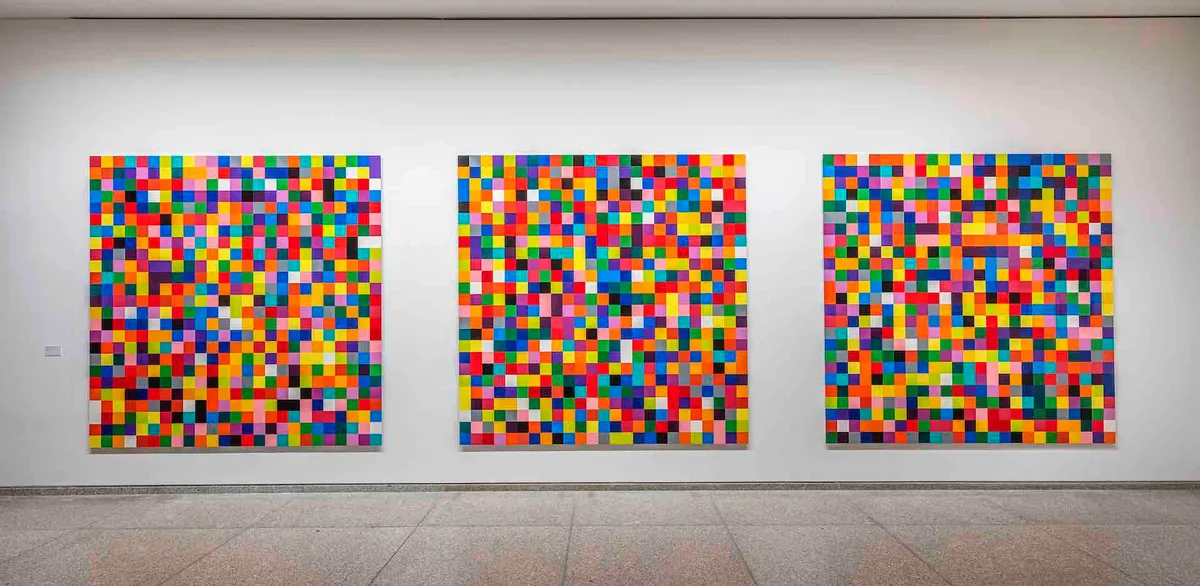
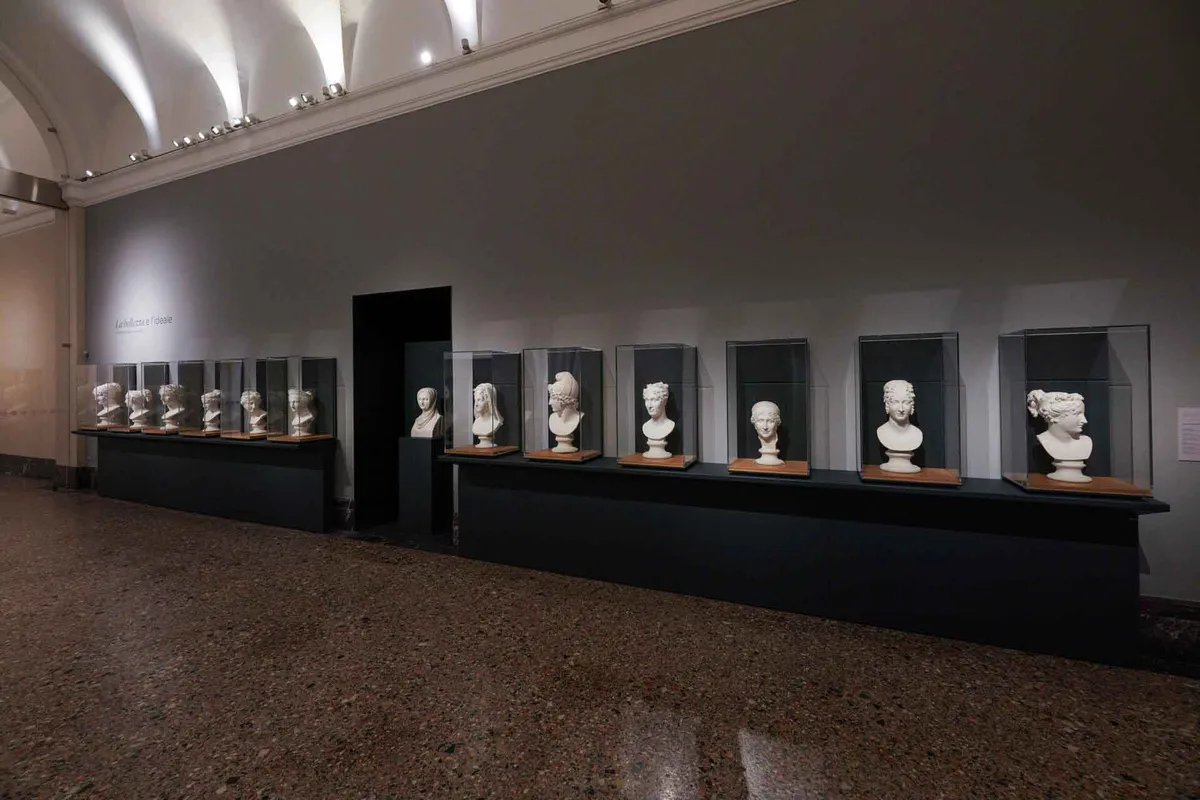
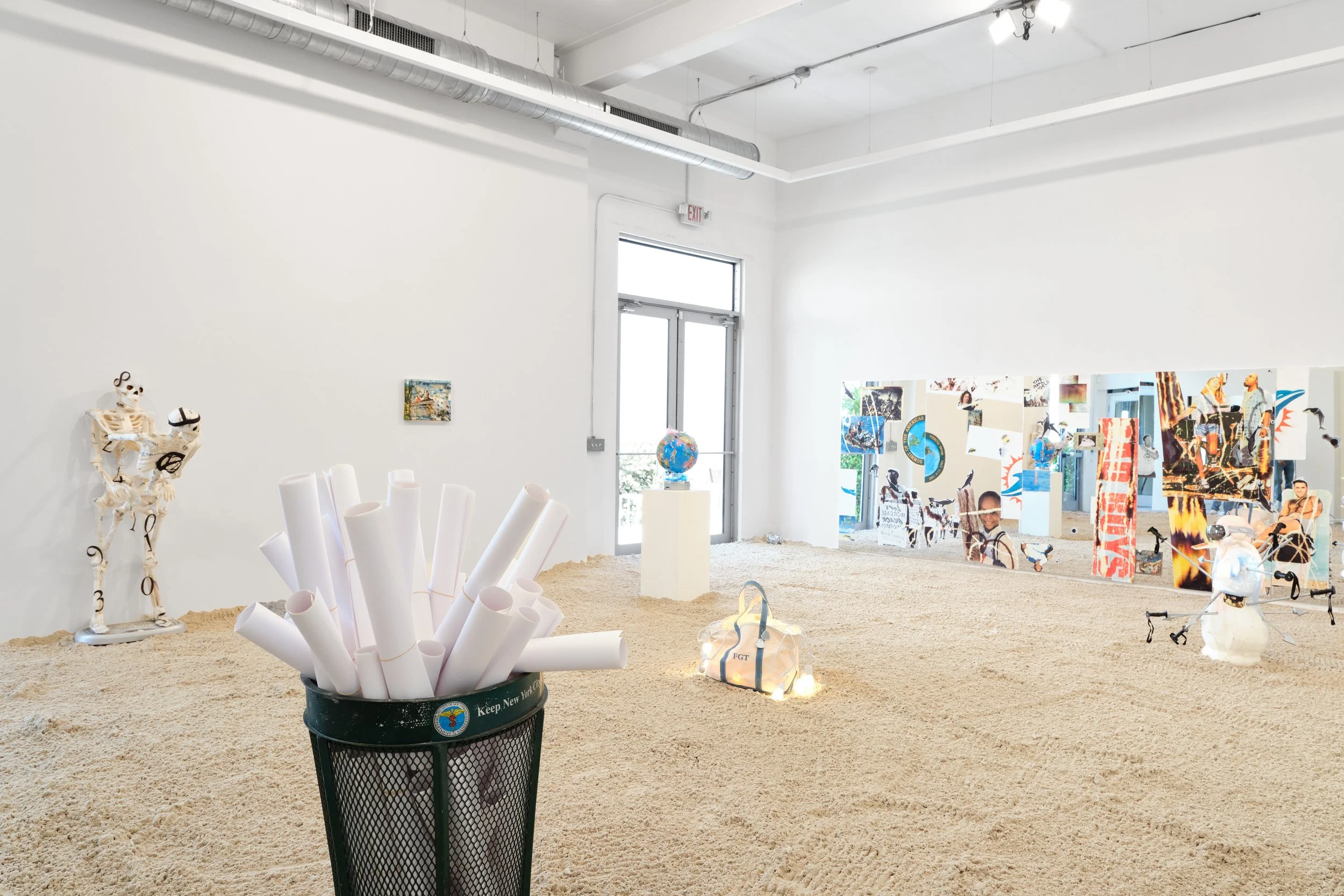
Installation view of Gerhard Richter: 100 Works for Berlin at Neue Nationalgalerie
Installation view, Gerhard Richter: 100 Works for Berlin, Neue Nationalgalerie. © Gerhard Richter 2023 / Foto: David von Becker.
14 / 18German · 1938–2026

Georg Baselitz

Born in Deutschbaselitz, Saxony; died on April 30, 2026

Works to know: The Big Night Down the Drain, 1962–63 (Museum Ludwig, Cologne); Rebel, 1965 (Tate, London)

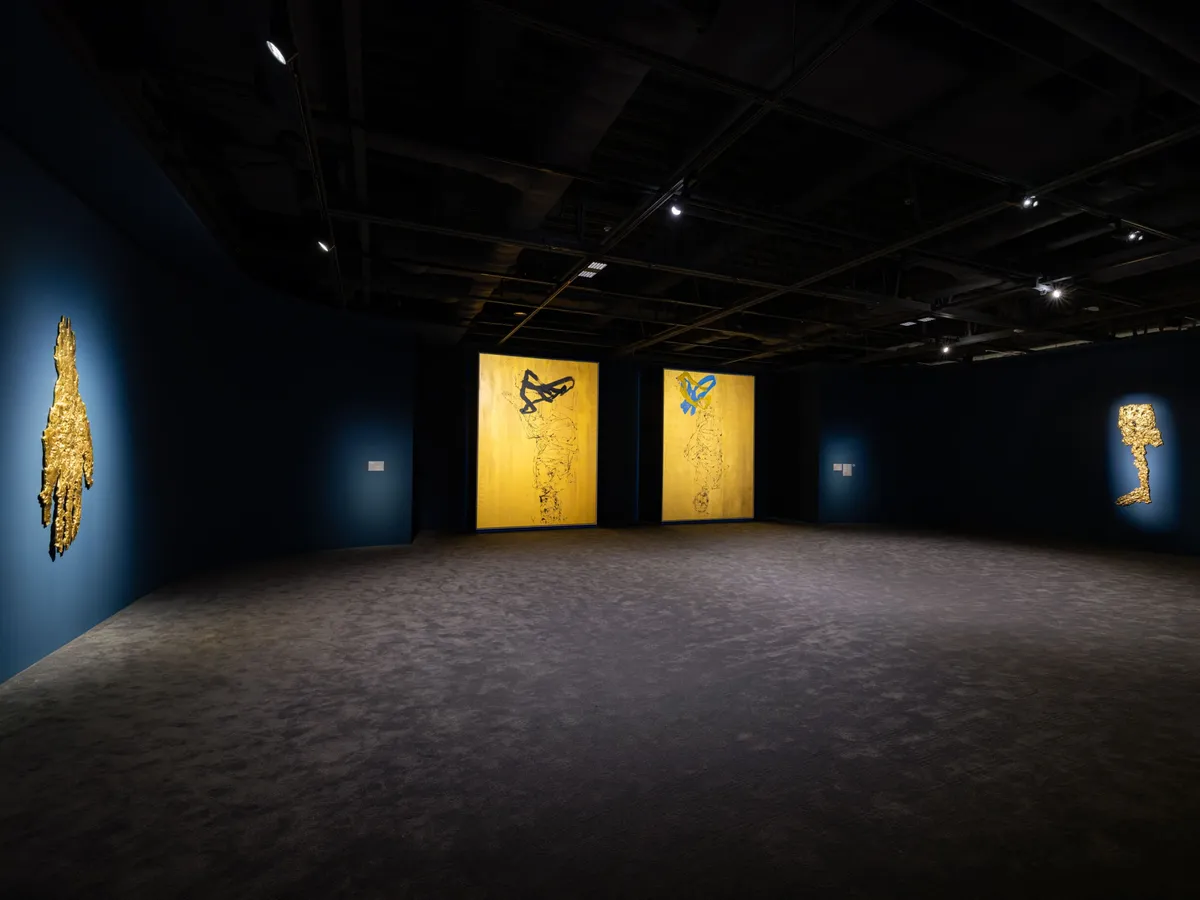
Born Hans-Georg Kern, he took the name of his birthplace in 1961, four years after leaving East Germany. In 1963 the West Berlin prosecutor seized The Big Night Down the Drain and another painting from his first show for indecency, and in 1965–66 he painted the Heroes, ragged soldiers of a defeated country. From 1969 he painted his subjects upside down, to make the painting itself the subject, and with Anselm Kiefer he represented Germany at the 1980 Venice Biennale. He died on April 30, 2026, at 88.

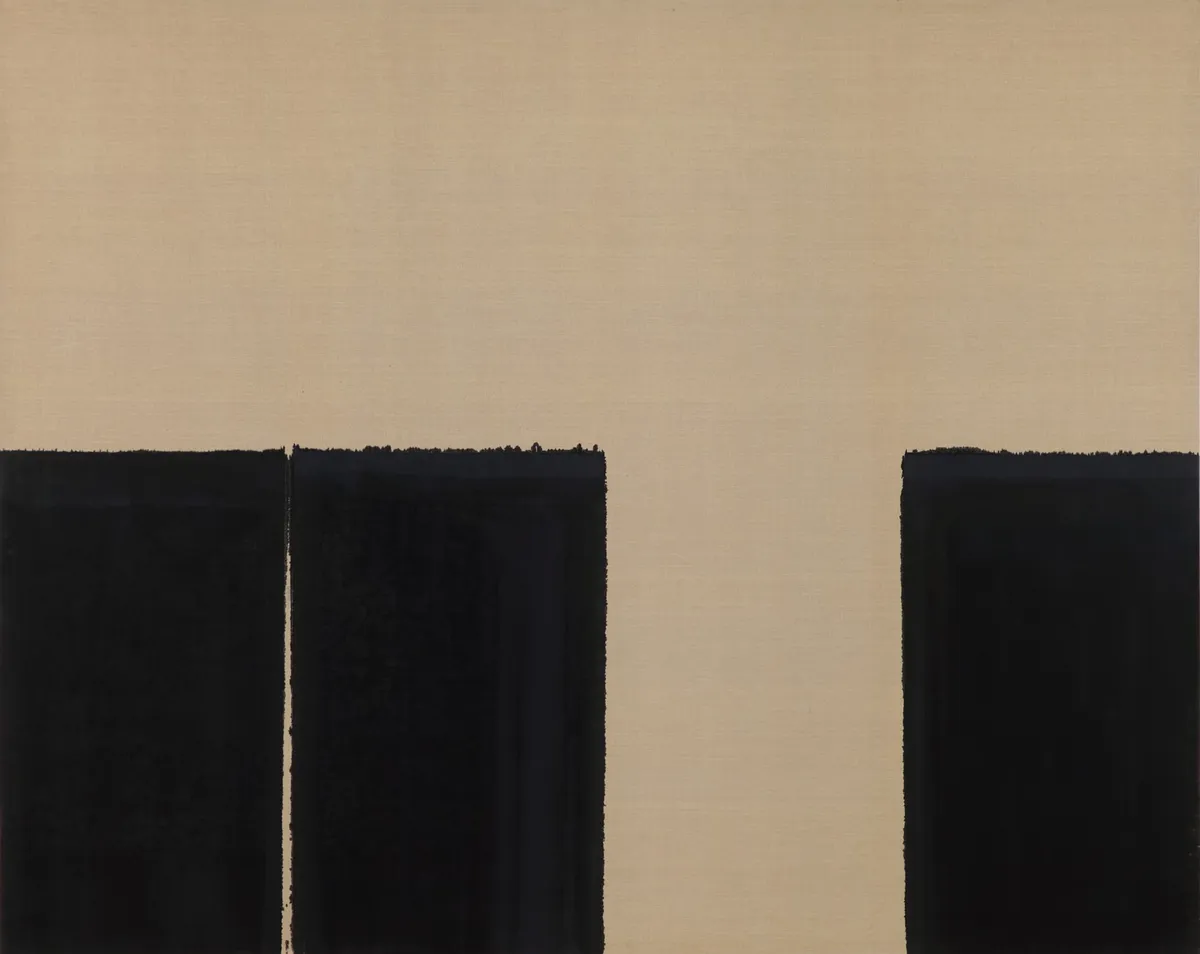
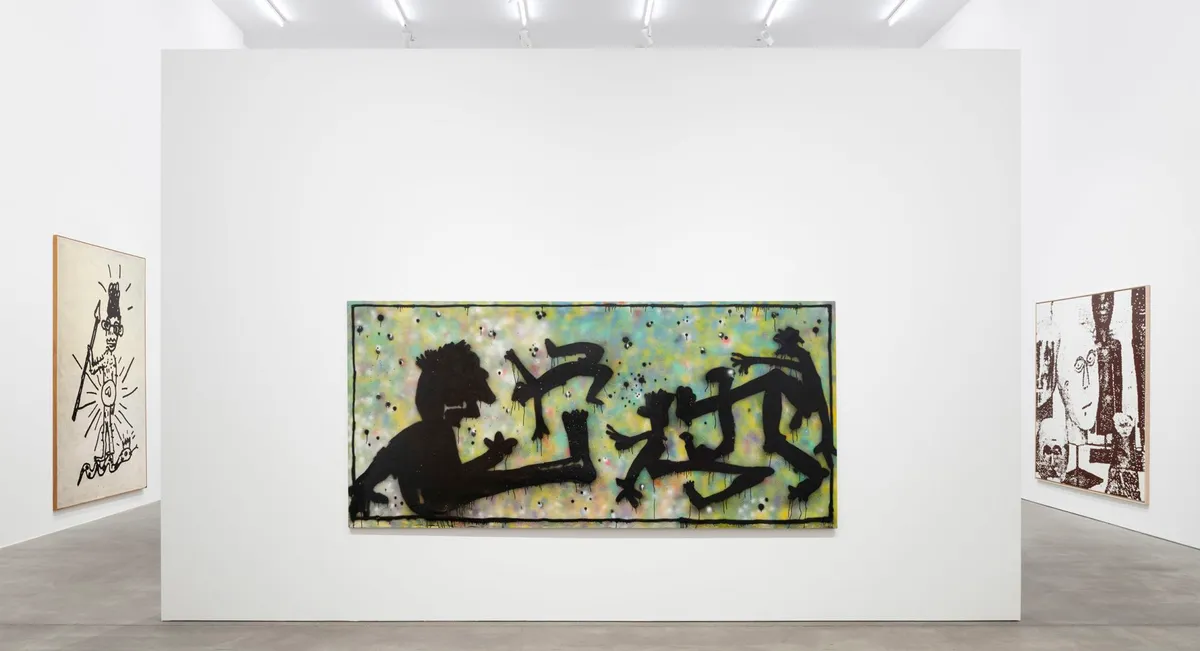
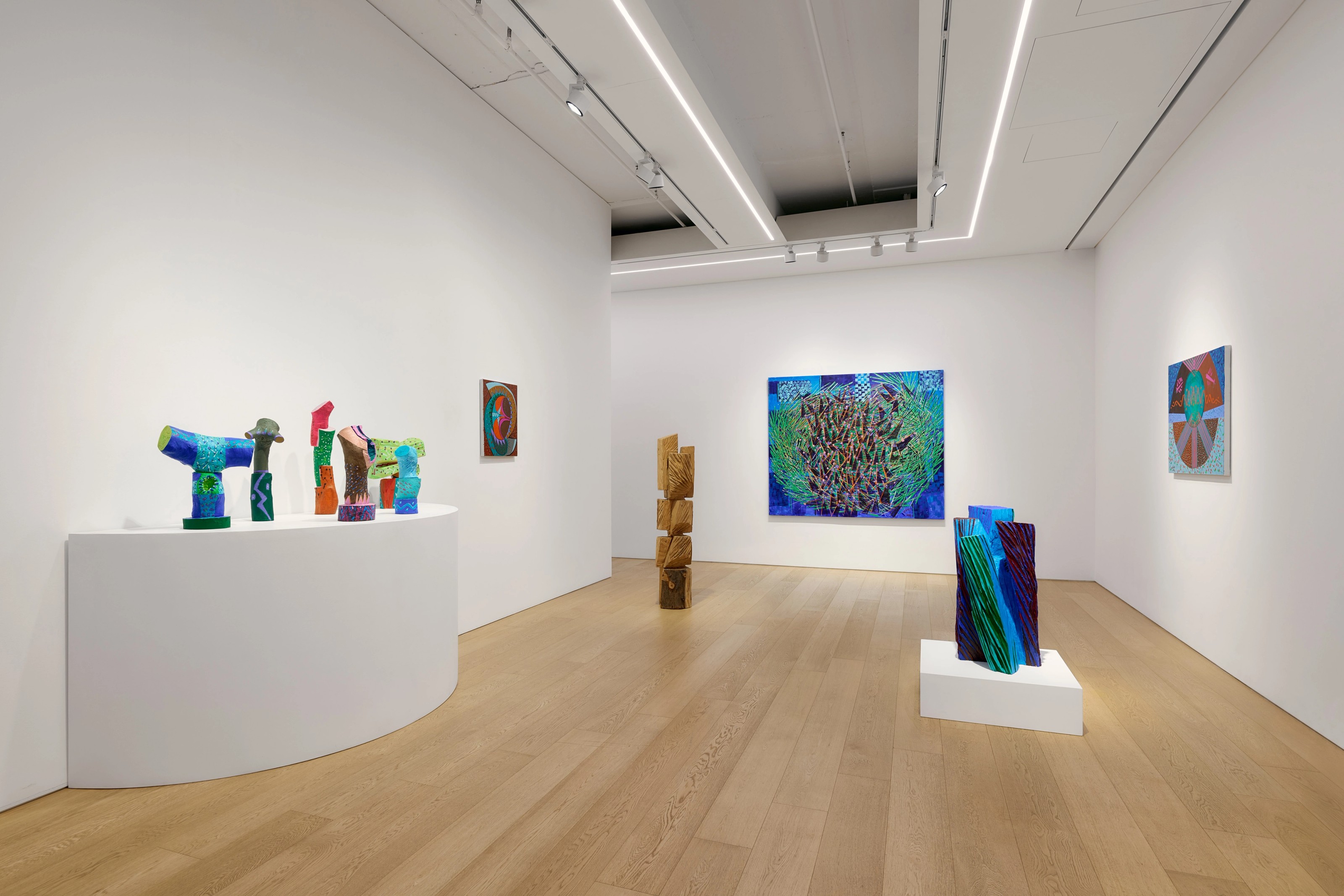
Installation view of Georg Baselitz at Sehwa Museum of Art
Installation view, Georg Baselitz, Sehwa Museum of Art.

15 / 18German · 1941–2010

Sigmar Polke

Born in Oels, Silesia (now Oleśnica, Poland); died in Cologne

Polke’s family fled from Silesia to Thuringia in 1945 and from East to West Germany in 1953. At the Düsseldorf academy he founded Capitalist Realism with Gerhard Richter and Konrad Lueg in 1963, and copied newspaper photographs as dot paintings, every halftone dot painted by hand with the rubber end of a pencil. He went on to paint on patterned fabrics and to work with arsenic, meteor dust and smoke, the most restless experimenter of his generation. He won the Golden Lion at the 1986 Venice Biennale and made the windows of Zurich’s Grossmünster.

16 / 18German · Born 1945

Anselm Kiefer

Born in Donaueschingen; lives in France

Works to know: Parsifal III, 1973 (Tate, London); Ways of Worldly Wisdom: Arminius’s Battle, 1978–80 (Art Institute of Chicago)

Kiefer’s first show, Occupations, in 1969, presented photographs of himself making the Nazi salute across Europe, an affront to a country that had stopped speaking of its past. He studied informally with Joseph Beuys and went on to make huge paintings of German history, myth and Paul Celan’s poetry in straw, ash, clay, lead and shellac. He represented Germany at the 1980 Venice Biennale with Georg Baselitz, has lived in France since 1992, and was the subject of Wim Wenders’s film Anselm (2023).

17 / 18German · 1953–1997

Martin Kippenberger

Born in Dortmund; died in Vienna

Work to know: Untitled (self-portrait), 1992 (Centre Pompidou, Paris)

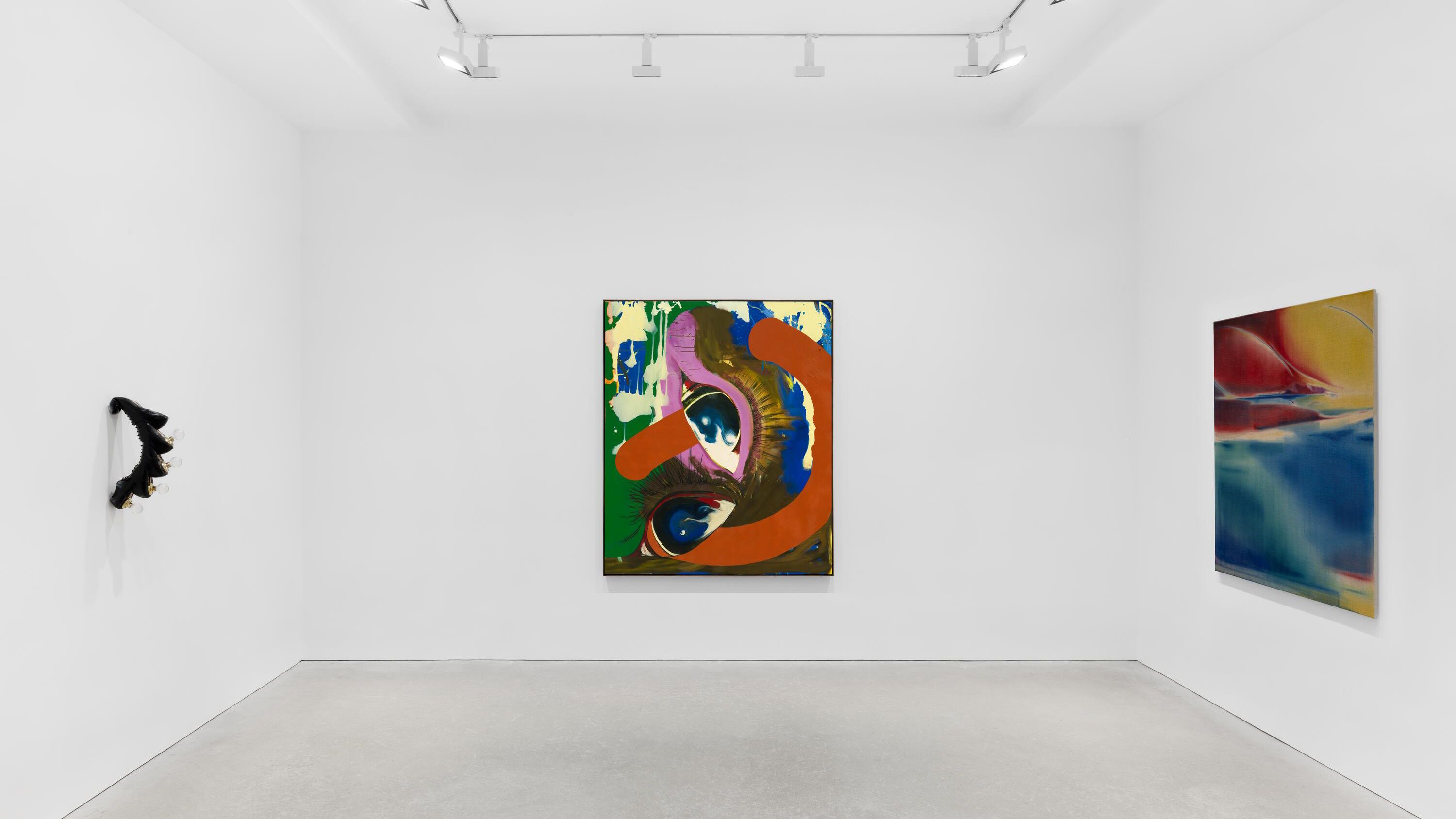
  • On view: Faces & Figures (group show) · Skarstedt, Upper East Side, New York · On view
  • On view: Dark Comedy (group show) · Skarstedt, Upper East Side, New York · Through Dec 19

Painter, provocateur and impresario, Kippenberger ran the punk club SO36 in Berlin in 1978 and became one of the Junge Wilde, the wild young painters of the late 1970s and 1980s. His self-portraits, potbellied, in his underpants, in poses borrowed from Picasso, and his life-size figure of himself facing the wall, Martin, Into the Corner, You Should Be Ashamed of Yourself, mock the heroic painter. He died of liver cancer in 1997, at 43; six years later he represented Germany at the Venice Biennale.

18 / 18German · Born 1960

Neo Rauch

Born in Leipzig; lives in Leipzig

Work to know: Stern, 2001 (Deutsche Bank Collection, on loan to the Städel Museum, Frankfurt)

Rauch’s parents died in a train accident when he was four weeks old, and he grew up with his grandparents. He studied and later taught at Leipzig’s academy of graphic arts, and is the central figure of the New Leipzig School: large, enigmatic figurative paintings in which men in uniforms and workers from an East German past act out scenes no one can explain. The Metropolitan Museum gave him a solo show in 2007, and he shows with Eigen + Art and David Zwirner.

Frequently asked questions

  • Who are the most famous German painters?

    Albrecht Dürer, Lucas Cranach the Elder and Hans Holbein the Younger from the Renaissance; Caspar David Friedrich, the Romantic; Max Liebermann, the Impressionist; the Expressionists Ernst Ludwig Kirchner, Franz Marc, Emil Nolde, Paula Modersohn-Becker and Gabriele Münter; Max Beckmann and Otto Dix from the Weimar years; and since 1960 Gerhard Richter, Sigmar Polke, Georg Baselitz, Anselm Kiefer, Martin Kippenberger and Neo Rauch.

  • Who is the most famous living German painter?

    Gerhard Richter, born in Dresden in 1932, who lives and works in Cologne; Anselm Kiefer, born in 1945 and living in France, is the other. Georg Baselitz, the third of that generation, died on April 30, 2026.

  • What were Die Brücke and Der Blaue Reiter?

    The two groups of German Expressionism. Die Brücke (The Bridge) was founded in Dresden in 1905 by Fritz Bleyl, Erich Heckel, Ernst Ludwig Kirchner and Karl Schmidt-Rottluff; Emil Nolde and Max Pechstein joined in 1906, and it ended around 1913. Der Blaue Reiter (The Blue Rider), led by Wassily Kandinsky and Franz Marc, with Gabriele Münter, held its first exhibition in Munich in December 1911, published its almanac in 1912 and ended with the war in 1914.

  • What was degenerate art?

    The Nazis’ name for modern art they condemned. In 1937 they seized more than 5,000 works from German museums, 16,558 in all after a second sweep, and the Degenerate Art exhibition that opened in Munich on July 19, 1937, with more than 650 works by 112 artists, drew over two million visitors in four months. Some of the confiscated works were auctioned in Lucerne in 1939, and about 4,000 were burned in Berlin. Kirchner, Marc, Nolde, Beckmann, Dix and Modersohn-Becker were among the painters purged.

  • What is the New Objectivity?

    Neue Sachlichkeit, the cool, sharp realism of the Weimar Republic, named by Gustav Friedrich Hartlaub for an exhibition at the Kunsthalle Mannheim in 1925. Its verist wing, Otto Dix and George Grosz, was savagely critical of postwar society; Max Beckmann is often called its most important painter. It ended with the Nazi takeover in 1933.

  • What is Capitalist Realism?

    A movement launched in Düsseldorf in 1963 by Sigmar Polke, Gerhard Richter and Konrad Lueg, its name a play on Socialist Realism, which turned West Germany’s consumer culture and its photographs into painting. In Living with Pop: A Demonstration for Capitalist Realism, staged in a Düsseldorf furniture store that year, Richter and Lueg showed their work among the furniture and sat on it as living sculptures.

  • Where can you see German painting?

    In Berlin, the Gemäldegalerie (Cranach, Holbein), the Alte Nationalgalerie (Friedrich, Liebermann) and the Neue Nationalgalerie (Kirchner, and Richter’s Birkenau); in Munich, the Alte Pinakothek (Dürer) and the Lenbachhaus, with the world’s great Blaue Reiter collection; in Hamburg, the Kunsthalle (Friedrich’s Wanderer); in Frankfurt, the Städel; in Bremen, the Paula Modersohn-Becker Museum; and in Cologne, the Museum Ludwig. Shows on now are under each entry above.

For Kandinsky and the other pioneers of abstraction, see famous abstract artists; for Richter and Kiefer among the artists working now, famous living artists; and for Berlin’s galleries today, the best art galleries in Berlin.

How this list was made

Eighteen painters, chosen for their place in the history of German painting and for how widely their work is known and shown today; painters born elsewhere who worked in Germany, such as Kandinsky, are left to other lists. Dates and places are those Wikipedia gives on October 22, 2026; Georg Baselitz’s death was confirmed by his gallery, Thaddaeus Ropac, and the Austrian press. The works named are in the collections given, from the museums’ own records where they could be opened (Tate, the Centre Pompidou, the Städel, SMK, the National Gallery) and otherwise from Wikipedia.

Sources

Published ; the text was last revised on , from the sources listed above. The shows named as on view, and their pictures, are those in On View’s listings as the page was built.