Interview · New York
This is the real world
Emmanuel Fremin was an atheist for forty years, until an accident led to a near-death experience where he says he was taken through four realms and found new perspectives of his own life. His winter show is his first telling of his story and explores his relationship with death through Karl Lagasse’s Christian iconography and Lina Condes’s steel and sound.
This is the Real World, Fremin Gallery, 520 West 23rd Street, New York. 19 November 2026 – 17 January 2027.
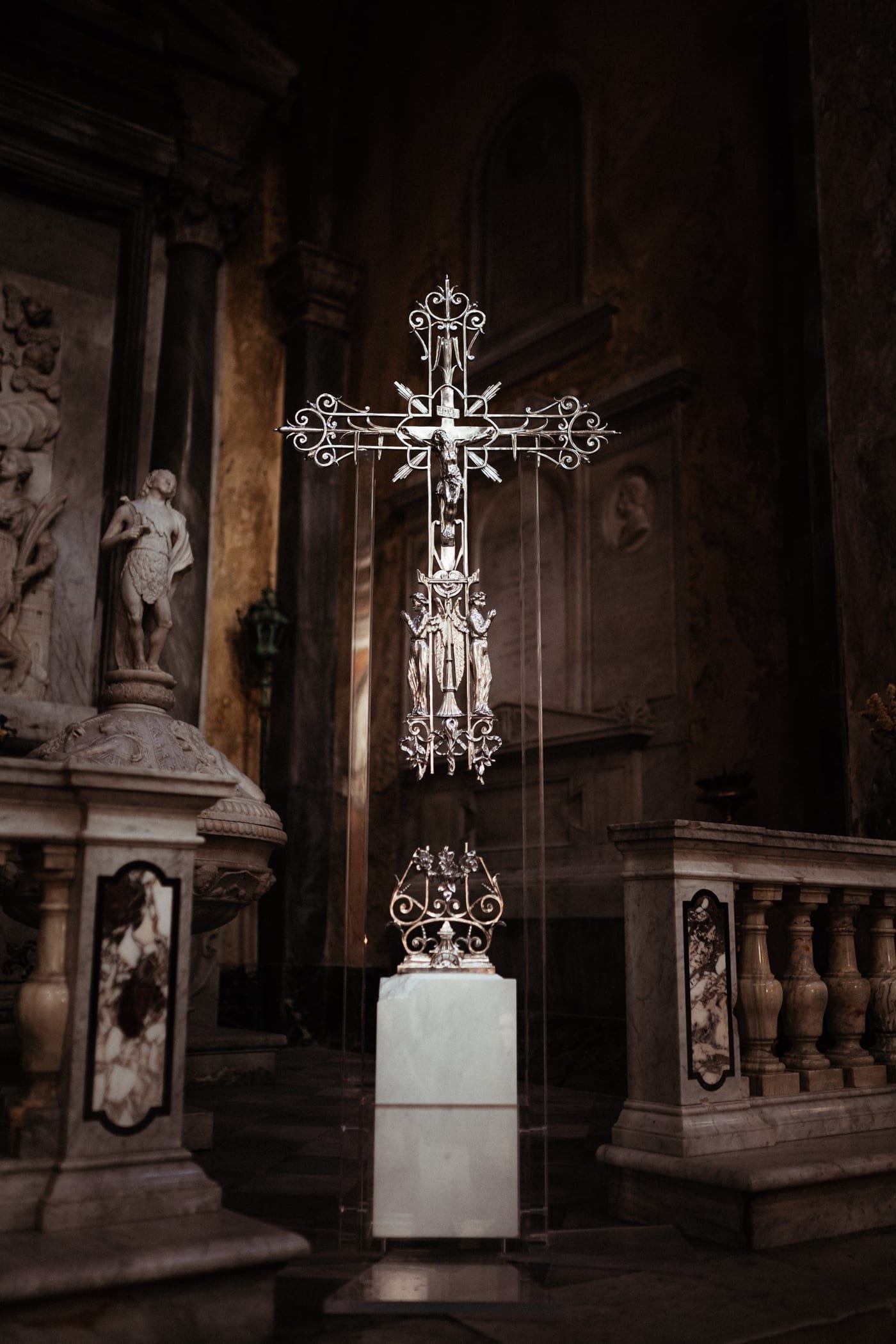
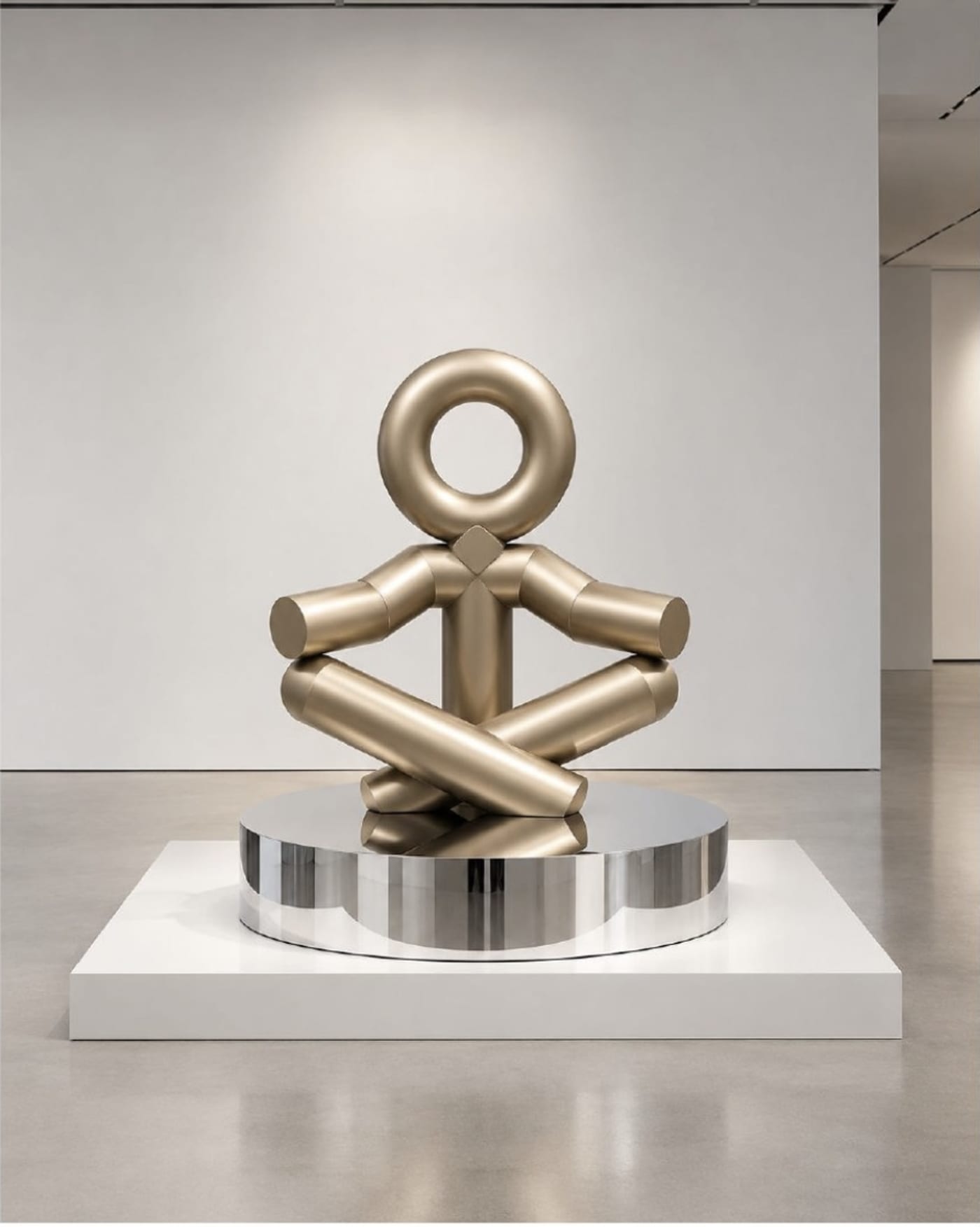
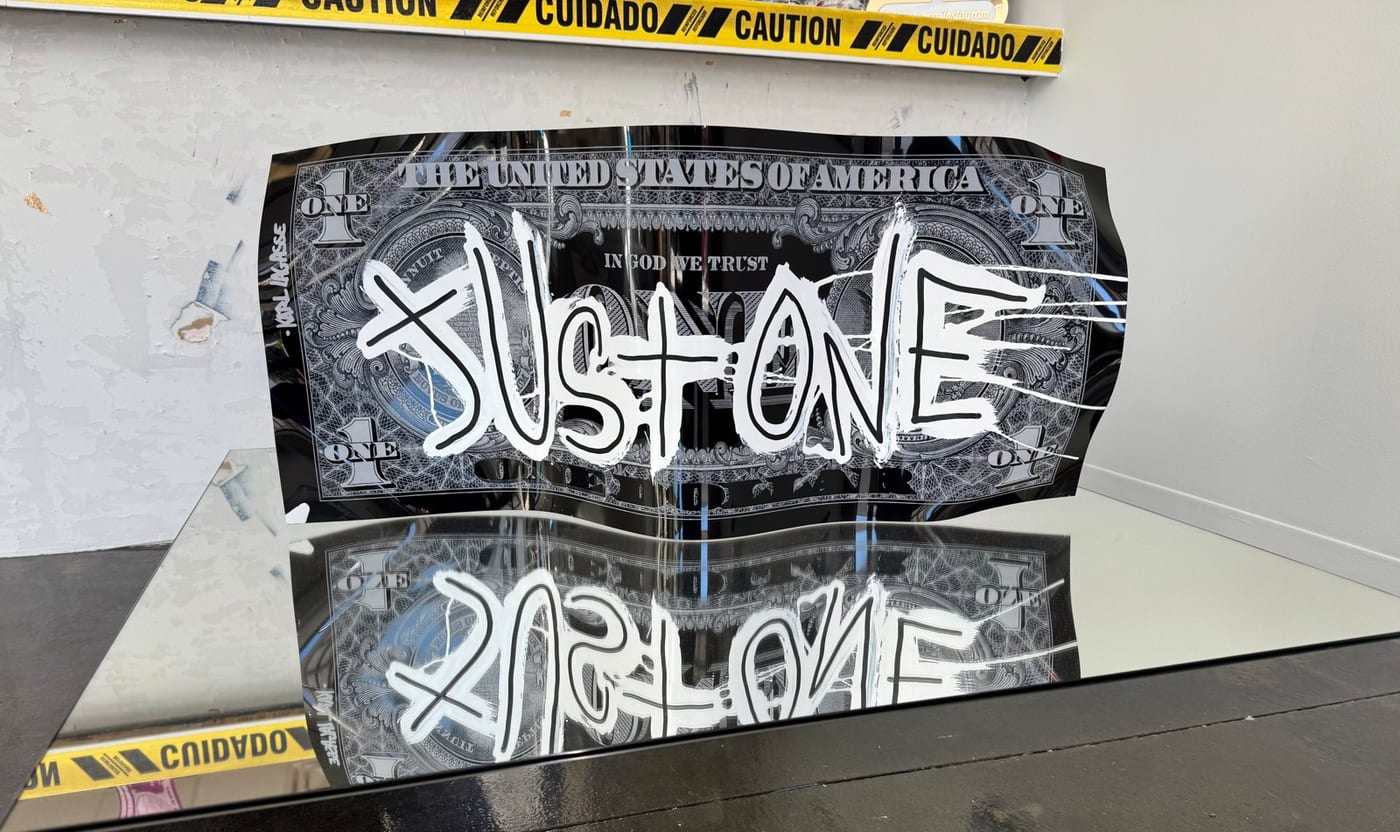
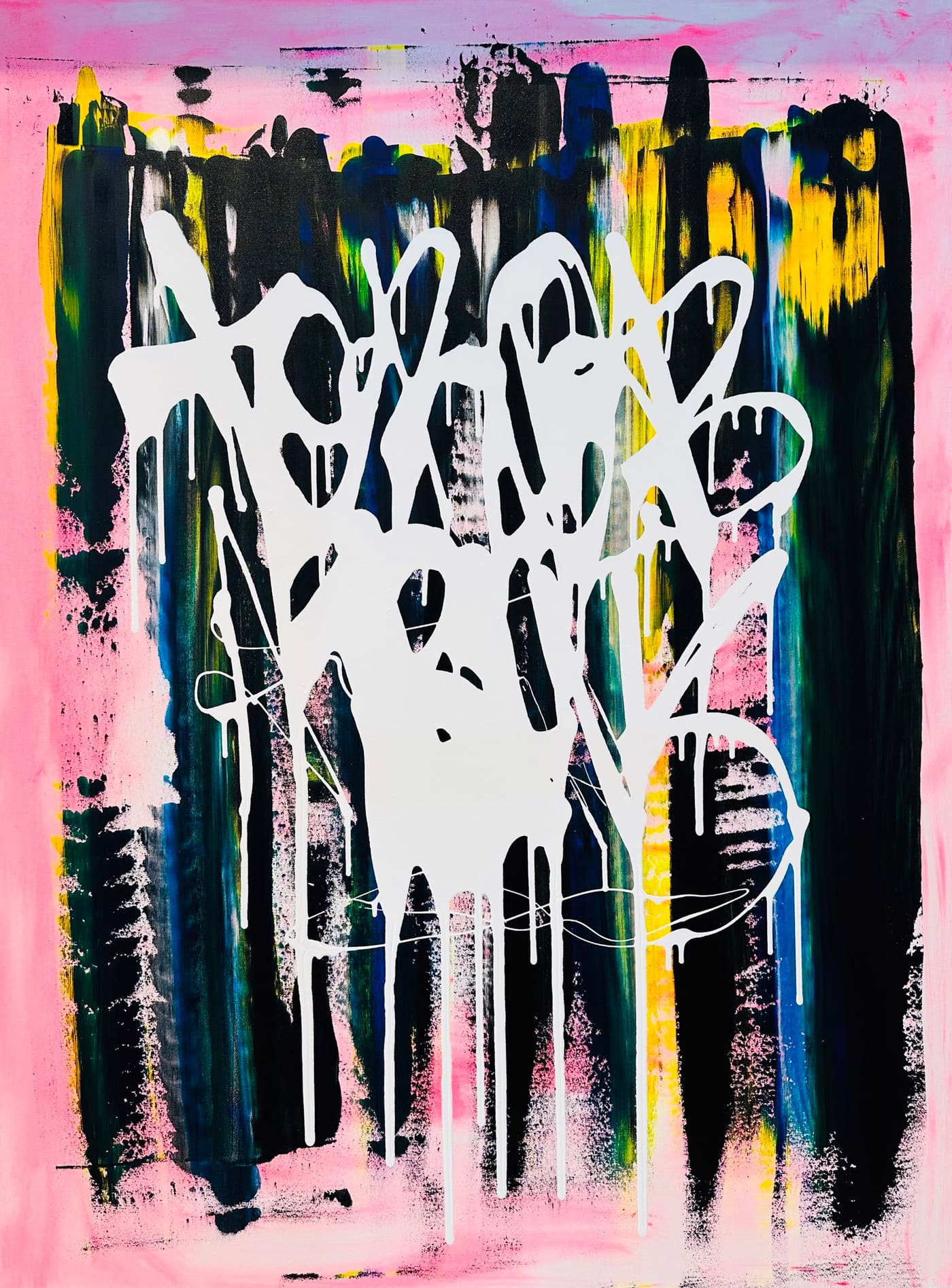
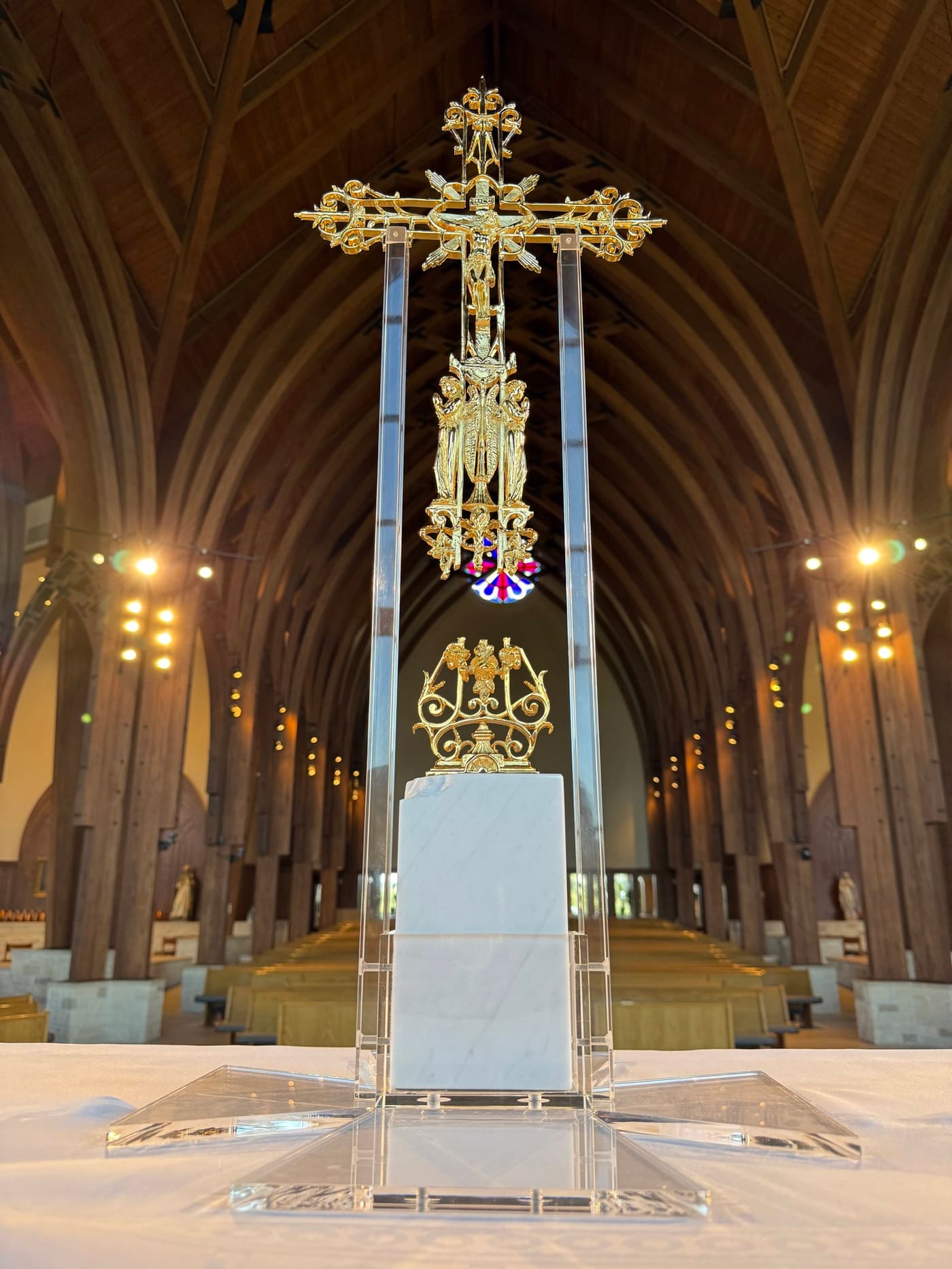
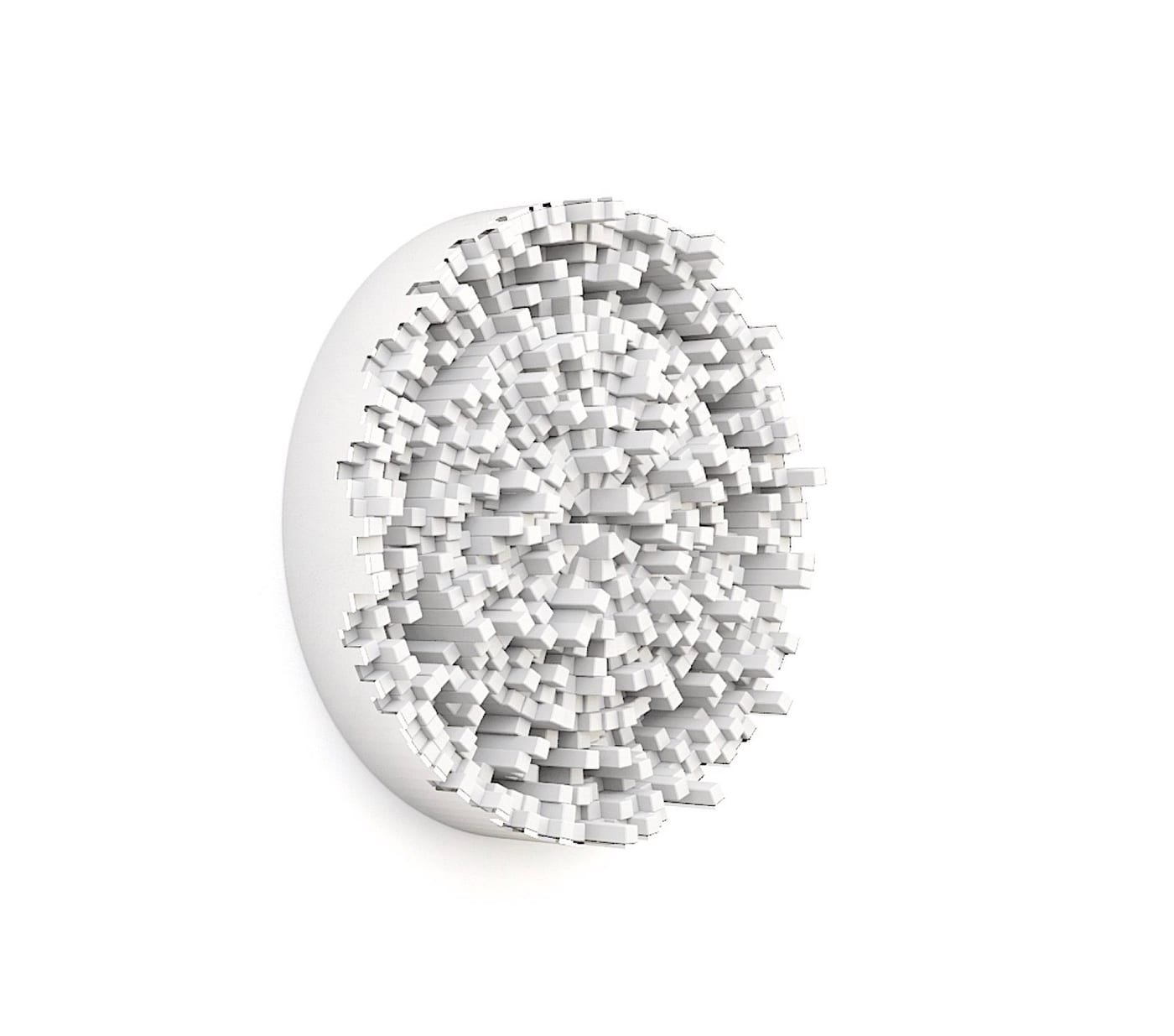
This is the Real World opens at Fremin Gallery on West 23rd Street on 19 November and runs to 17 January. In the two-person show, Karl Lagasse brings a mirror-polished Ascension of Christ on a block of Carrara marble, dollar bills cast in bronze and aluminum, and canvases exclaiming through dripping letters that Jesus is Lord. Lina Condes offers sculpture, including a seated figure, a mandala based on the frequencies of a mantra, and a row of steel flowers whose blossoms are lips, set to play sounds when touched.
What the two have in common is the man who put them together. Emmanuel Fremin was an atheist for forty years. Then an accident put him in a hospital, where, he says, a screen appeared on his lap and showed him four realms and his own life, and he chose to come back. The show is the first time he has told the story in public. He answered our questions in writing, and so did the two artists: Karl Lagasse, who counts his own life as saved once already, and Lina Condes.
The gallerist
Emmanuel Fremin
Take me through the day of your near-death experience. What led up to it, what did you see, and what brought you back?
I was rushed to the hospital after an accident. I woke up at the hospital, and a TV screen appeared on my lap, showing me four realms and a life review. I decided not to stay in the afterlife, as my wife and daughter were not there. I was shot through the stars and came back to my body.
You have described passing through four realms on this journey. What did each one look like, and how did the experience of moving from one to the next go?
All of them are different. The first was a city above New York; the second, inside an orb above water; the third, facing a masked god on a horse; and the last, a large empty field under the stars. Every time I shook my spirit, I moved to the next realm.
In the life review you saw moments from your marriage from three distinct perspectives, your own, your wife’s, and a point outside either of you. What is one moment you saw from another side that you had never seen from yours?
We were on a trip to Turks and Caicos, having breakfast at a hotel, and we argued about not communicating enough in the morning. I felt exactly how my wife felt, what she thought, and saw the two of us from outside during that moment.
Why “This is the Real World”? What is “This” and what is “Real”?
It was what I said when I was projected into the other world: this is real. This is the real world; the one I just came from isn’t. That was a revelation to me. “This” was where I was, in the afterlife. “Real” because it was much more real, colorful and vivid than life on earth.
This is the real world; the one I just came from isn’t.
Emmanuel Fremin
What were your values before the near-death experience, and how have they changed?
I was an atheist, very business-minded. I am now spiritual, driven by nature and people.
Are you afraid of dying now? Were you before?
I was terrified of dying before, especially of cancer; I lost my dad and a dear friend to it. Now, not at all. I am totally at peace with dying.
Talking about death is close to taboo. Have your experiences changed how you talk about it, and how do people react when you do?
A hundred percent. I don’t feel sad when someone passes away; I know it’s a quick move, straight to the afterlife. I see things differently now. People react in different ways to my story. I can’t control that. In the end they will have my experience as well.
Was this the first time your life split into a before and an after? Were there others?
That was the first time.
If you had not come back, what would you regret leaving undone?
Leaving my family behind.
Many artists have had experiences where they came close to death that deeply informed their later work, with Matisse, Frida Kahlo and Warhol among them. What similarities and differences do you see between your experience and theirs, and in what each did to your life and your relationship with art?
I was not aware of that at all. I know of celebrities such as Jamie Foxx and Sharon Stone who died and came back as well, but I didn’t know about those artists. It didn’t change my taste in art. I like what I like, the same as before.
Why these two artists? What does each of them show about what you saw?
These two artists communicate the knowledge of the afterlife, each in a different way: Karl through Jesus, Lina through karma and vibes. To each his own.
Karl Lagasse also had a traumatic near-death experience. Have you talked with him about your experiences? What came out of those conversations?
Yes. He invited me to his home in Austin and we had deep conversations for days. He made me realize that Jesus is probably real, and that doing good deeds always pays off.
Which works in the show most help people understand your perspective?
I can’t choose a particular piece. I let the viewer decide for himself.
Is there something in this show that you have not been able to say any other way?
This is my first time coming out publicly with my story. It is just what I am supposed to do, a kind of promise to God.
What feeling or idea do you want visitors to walk away with?
Very few art exhibitions show pure peace and bliss. I want people to find their own path with us, and to leave the exhibition with a sense of calm and zen.
Is there anything that you want people to know that I didn’t ask?
I was an atheist for more than forty years, went to heaven and realized I was wrong. That’s pretty powerful stuff.
I am using my platform, which is art, to spread that positive message.
The painter and sculptor
Karl Lagasse
Karl Lagasse has been enlarging the one-dollar bill since 2009, for the four words printed on it. His Ascension of Christ, the mirror-polished cross on marble that opens the show, took him seven years. He was baptised at thirty, in Deauville, after three years of preparation.
Your biography says your life was saved in a street confrontation. Tell me as much of that night as you are willing to. What do you remember, and what do you mean by saved?
Yes, during that altercation, I shouldn’t have made it out. It was practically impossible. As I lay on the ground, nearly dead, with fourteen people on top of me beating me, I lost consciousness at one point and called out to God for help. That was the exact moment I found a strength and an energy that doesn’t exist anywhere else, which allowed me to break free from that situation against fourteen people. It was a true miracle.
Your near-death experience drove you toward faith. What was your relationship with Christianity before, and how did that transition take place?
Before, Christianity was quite vague to me. When I was young, I went to Sunday school, but I was mostly thinking about playing video games and hanging out with my friends. It wasn’t really clear in my mind. But after that altercation, I spent fifteen days in the hospital under observation. When I got out, I went to the church in Deauville wanting to attend mass. That’s where I met a priest. He told me, “I’m not celebrating mass here this morning, I’m doing it in Trouville. If you want, I can take you there.” I have several given names: my first name is Élie, and my fourth is Karl, which is the name everyone uses. On the way, he asked my name and I told him Karl. Once we arrived at the mass in Trouville, he asked me to read a passage from the Bible. And the text he gave me to read was specifically about Elijah. It answered absolutely every single question I had been seeking.
When did you know you had become a Christian? Where were you baptised, and how old were you?
The moment I knew I was going to give my life to Christ was when I attended my very first baptism preparation meeting. It all started during the funeral of a fellow artist in Deauville. At the end of the service, the priest mentioned that he guided people preparing for adult baptism, through monthly gatherings. Curious, I decided to go and see what it was all about. During that first meeting, as soon as he opened the Bible and began reading and speaking, I had a deep realization: all the values he was sharing were the exact values I had carried deep inside me all along, without realizing they belonged to this faith. That was the exact moment I knew I was meant to be a follower of Christ. I continued my baptism preparation for three years, eventually being baptized in Deauville at the age of thirty. A year later, after another year of study, I received my confirmation at the cathedral in Bayeux.
The text he gave me to read was specifically about Elijah. It answered absolutely every single question I had been seeking.
Karl Lagasse
One Dollar began in 2009 with the motto on the bill, In God We Trust. Looking back, was the faith already in the work before you had it?
I believe the faith was already there deep inside me for a long time. I have always believed in God and always felt Him like a father. But you know, faith is like many things in life: you have an idea, and actually executing it, bringing it to life, is another step altogether. For me, true faith goes hand in hand with actions. Looking back, the signs were there long before I understood them all. In 2006, during one of my very first solo shows in Brussels at the Gabriel Brachot Gallery, while I was painting in my studio, I painted a cross right over my heart. At the time, I didn’t pay attention to all those signs. It’s only later that I understood their true meaning.
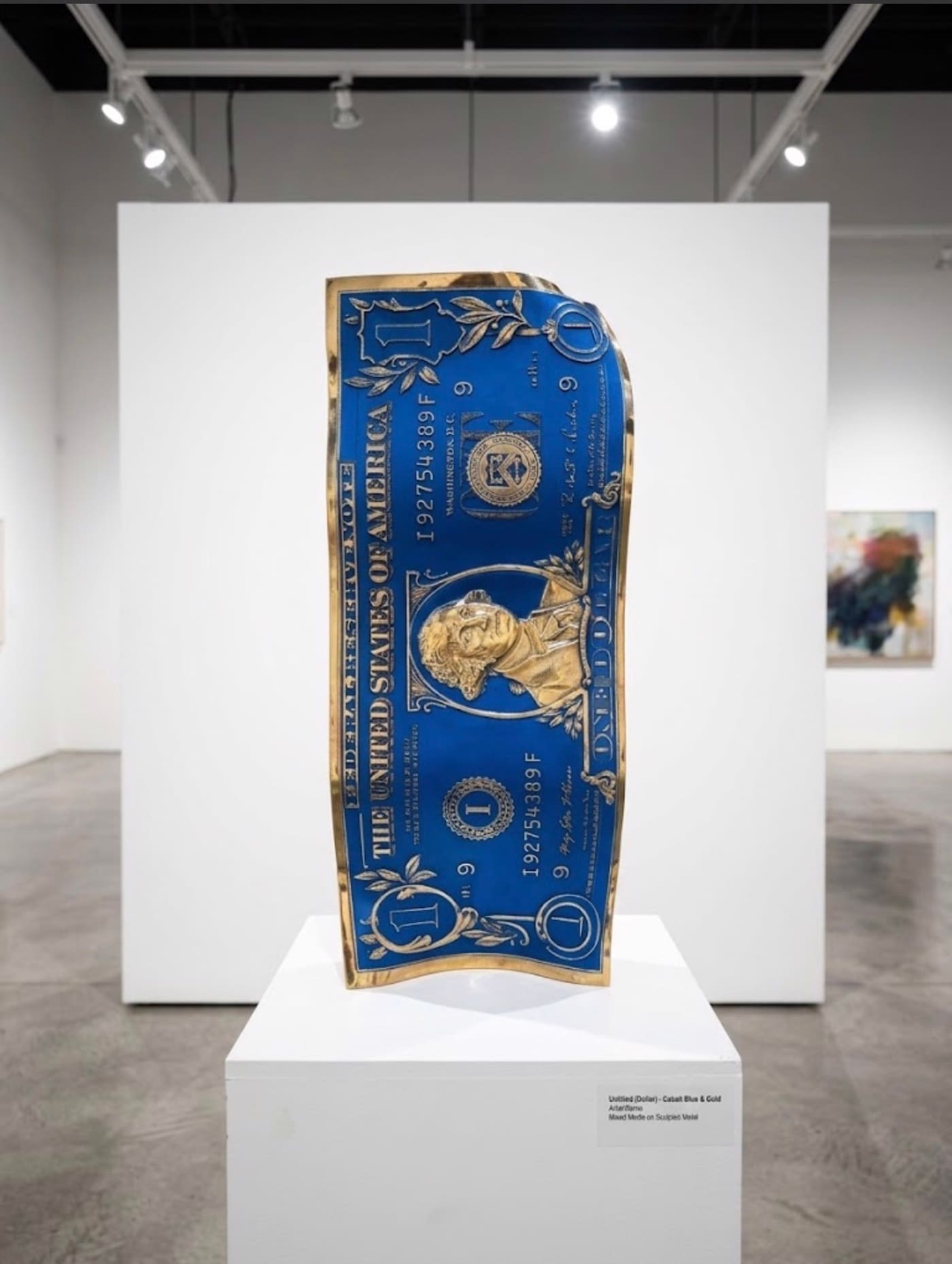
A dollar bill and the risen Christ in the same room. What do you want a visitor to make of that pairing?
Bringing a one-dollar bill and Christ together in the same piece has a profound meaning, and it is all connected. If I enlarged the one-dollar bill in the first place, it was to highlight what is written on it: In God We Trust. I find that extraordinary; it’s something I deeply admire about the American people for putting that on their currency. Back in 2015, for my collaboration with Maserati at the Grand Palais during Art Paris, I created an installation called A Piece of Heaven on Earth. It featured a white Maserati, my first sculpture of Christ, and at His feet, one-dollar bill sculptures representing the repayment of humanity’s greatest debt. Ultimately, these works naturally belong together because they carry the exact same spiritual message.
The title of the work “To Rob a Bank” stands out among the faith paintings. What is its relationship to the others and why is it included?
There is a piece in the exhibition titled To Rob a Bank Is Easier Than Being an Artist. This message speaks directly to those from the world of organized crime. Often in those circles, people think that being a “tough guy” means robbing a bank or committing acts of violence. But that is not true strength. Being truly tough is succeeding honestly, sleeping in peace every night, and fighting honorably for your family. This work goes far beyond the simple act of robbing a bank: it encompasses everything negative, everything tied to deception and destructive shortcuts. I created it to reach young people and anyone searching for their path, especially those who might mistakenly believe that dishonest success leads somewhere, when in truth it leads to nothing. The real message here is one of faith: it’s about realizing that Jesus has His arms wide open, and that you only need to turn toward Him. That is why this piece has such deep meaning within this exhibition and helps tell its overall story.
Many artists have had experiences where they came close to death that deeply informed their later work, with Matisse, Frida Kahlo and Warhol among them. What similarities and differences do you see between your experience and theirs, and in what each did to your life and your relationship with art?
Yes, and in fact, after being clinically dead, Andy Warhol created his works and exhibition on Christ, The Last Supper, in Milan, revisiting Leonardo da Vinci’s masterpiece. The reason? I believe he too understood something fundamental through that near-death experience, and in a way, he dedicated his work to Christ following that moment.
Are you afraid of dying now? Were you before?
Before, yes, I was sometimes a bit afraid, facing illness or going through dangerous situations in my life. But after what happened to me, I’m not afraid of dying anymore. I gave my life to Jesus and I understood 100% that God and Jesus Christ exist; I got concrete proof of it. So today, no, I have no fear left regarding death, because I know that if I die one day, it’s simply to join Him.
Talking about death is close to taboo. Have your experiences changed how you talk about it, and how do people react when you do?
Actually, I don’t really talk about death. What matters to me is life itself, and what people must do during this time they’ve been given to save it, take the right direction, and avoid making the mistakes I’ve made.
Which works are you most excited to show?
The piece that is closest to my heart and that I am most eager to showcase is, of course, my principal work dedicated to Christ, a three-dimensional sculpture I worked on for nearly seven years to bring to life: The Ascension of Christ. I am also thrilled to share my new creations, notably a large two-meter-wide canvas, as well as the new series of bronze One Dollar sculptures featuring brand-new patinas. I believe this exhibition brings together quite simply my most important and significant works.
What do you want visitors to walk away with?
What I would like above all is for visitors to have a great time surrounded by these works of positive energy, and to feel inspired by them. As Picasso said, it’s the viewer who makes the painting: everyone will see what they need to see. But deep down, what I truly wish for this exhibition is that if my art can help even just one person who might feel a bit lost to find the right direction and be enlightened, then it’s a win. And if we can reach 2,000 people, even better! If through my work I can help save or guide someone, then my role as an artist takes on its full meaning.
Is there anything that you want people to know that I didn’t ask?
I think you’ve already asked the really important questions.
The sculptor
Lina Condes
Lina Condes made sculptures of bodies pared down to a few lines for ten years, but the eight works she shows here are almost all without any body, and now sound has come in. She developed their music and electronics with the composer Christeana Nahas Khan.
For ten years your sculptures were figures, bodies pared down to lines. The new work has no body in it. What changed?
The human being has always been the central subject of my work, and that hasn’t changed. For years, I approached the body through reduction, removing anatomical detail until the figure became an almost architectural structure. But I was never interested in the body as an object alone. What fascinated me was what existed within the human experience: thought, emotion, identity, and consciousness.
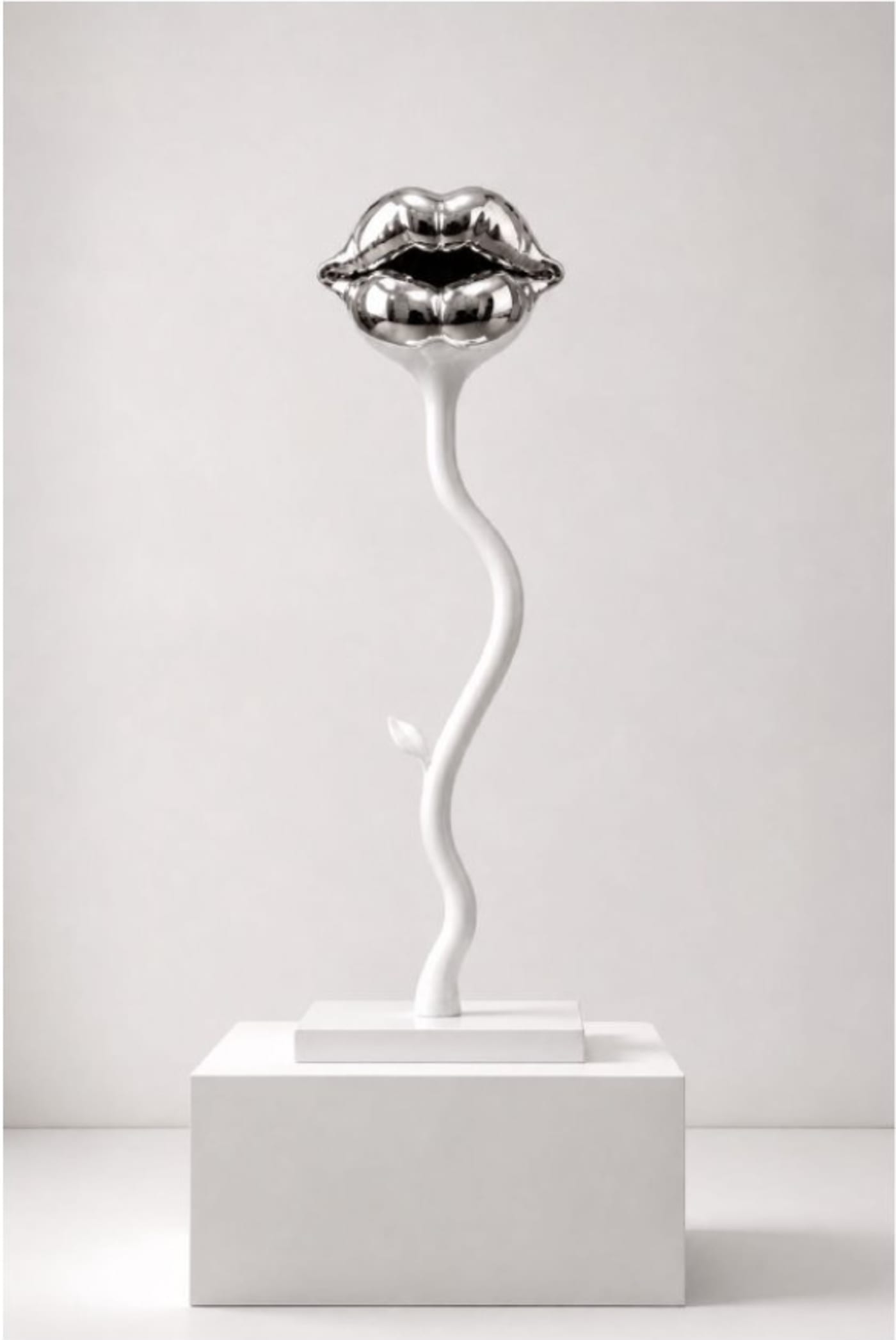
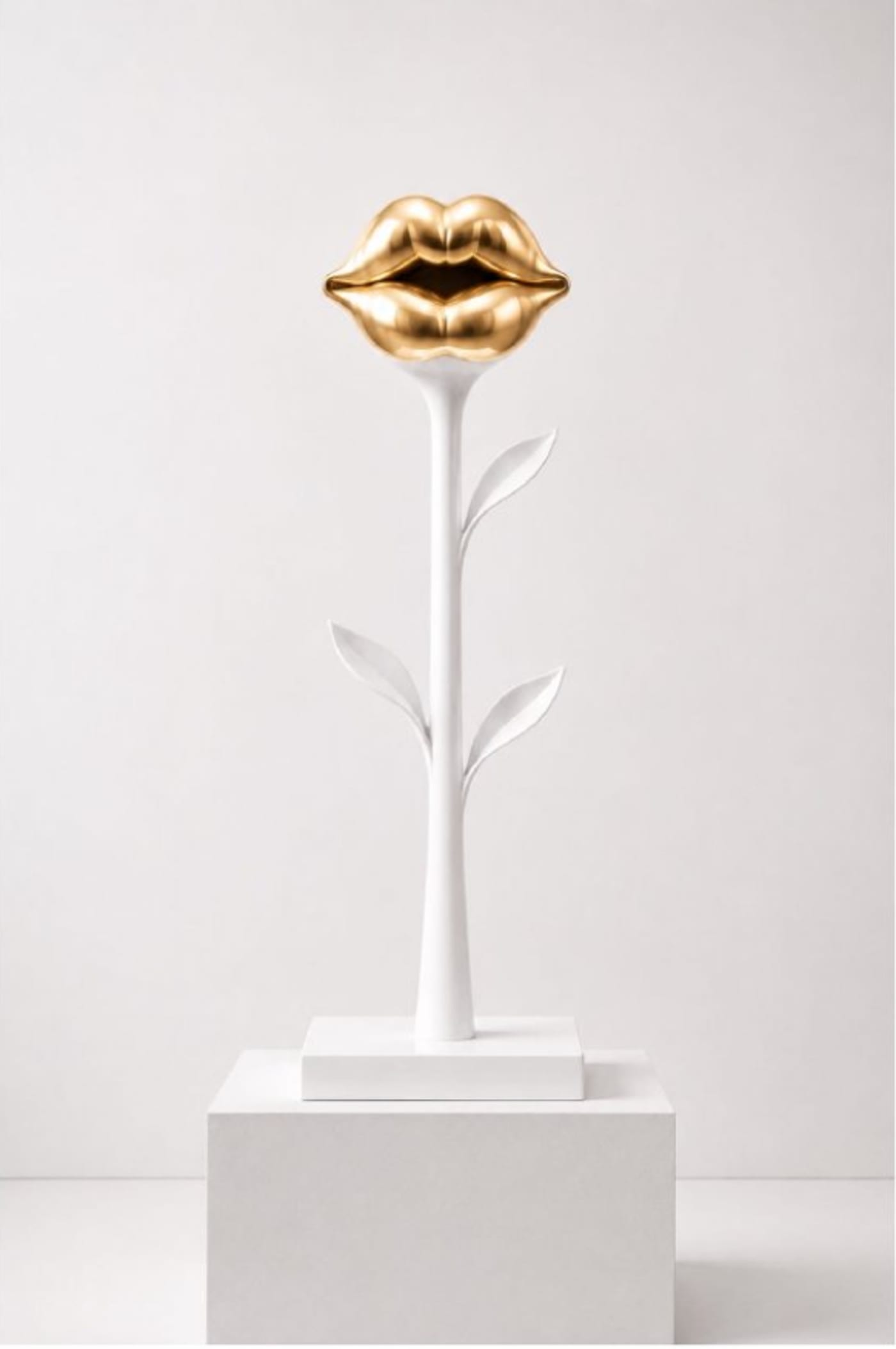
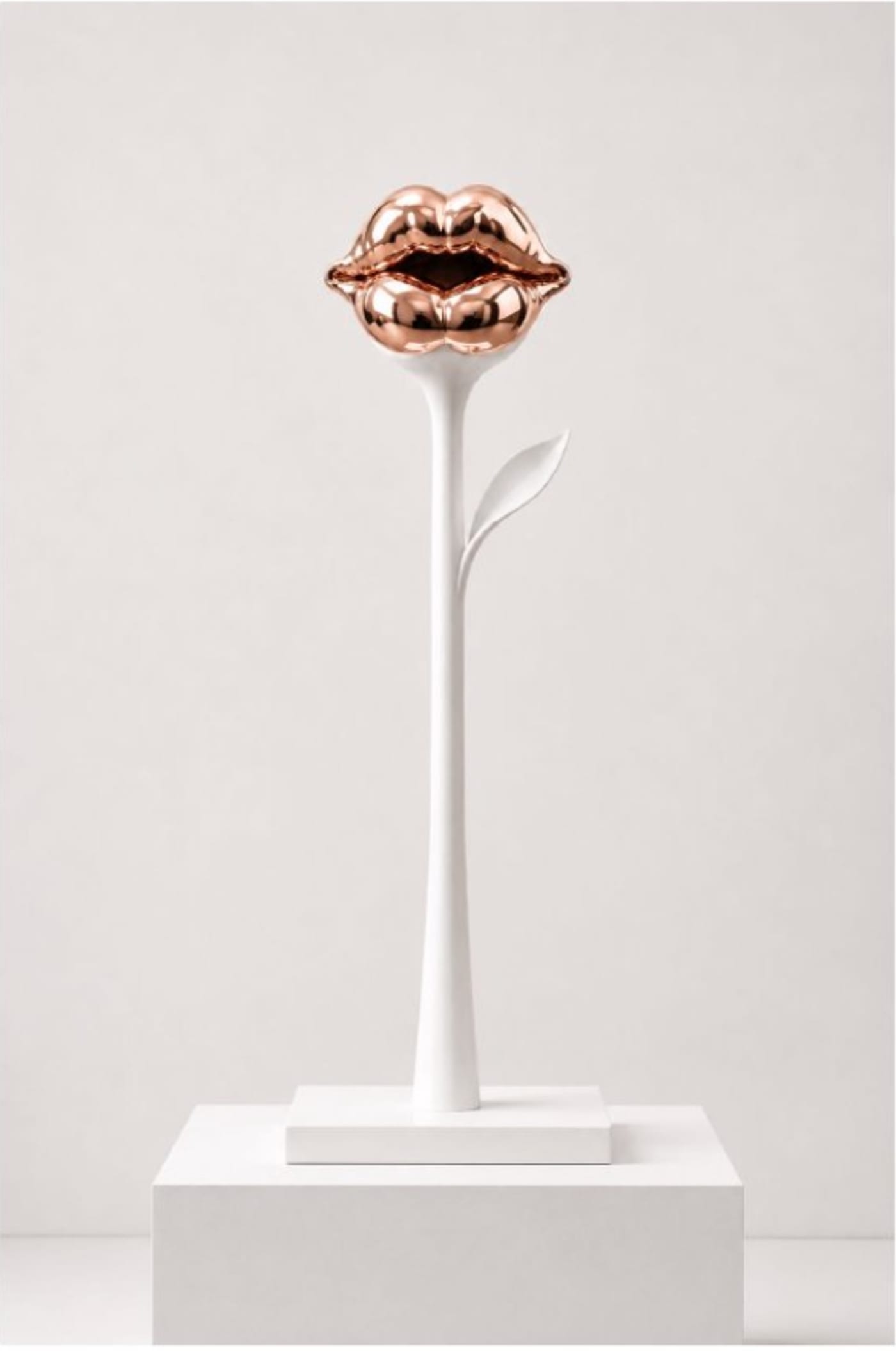
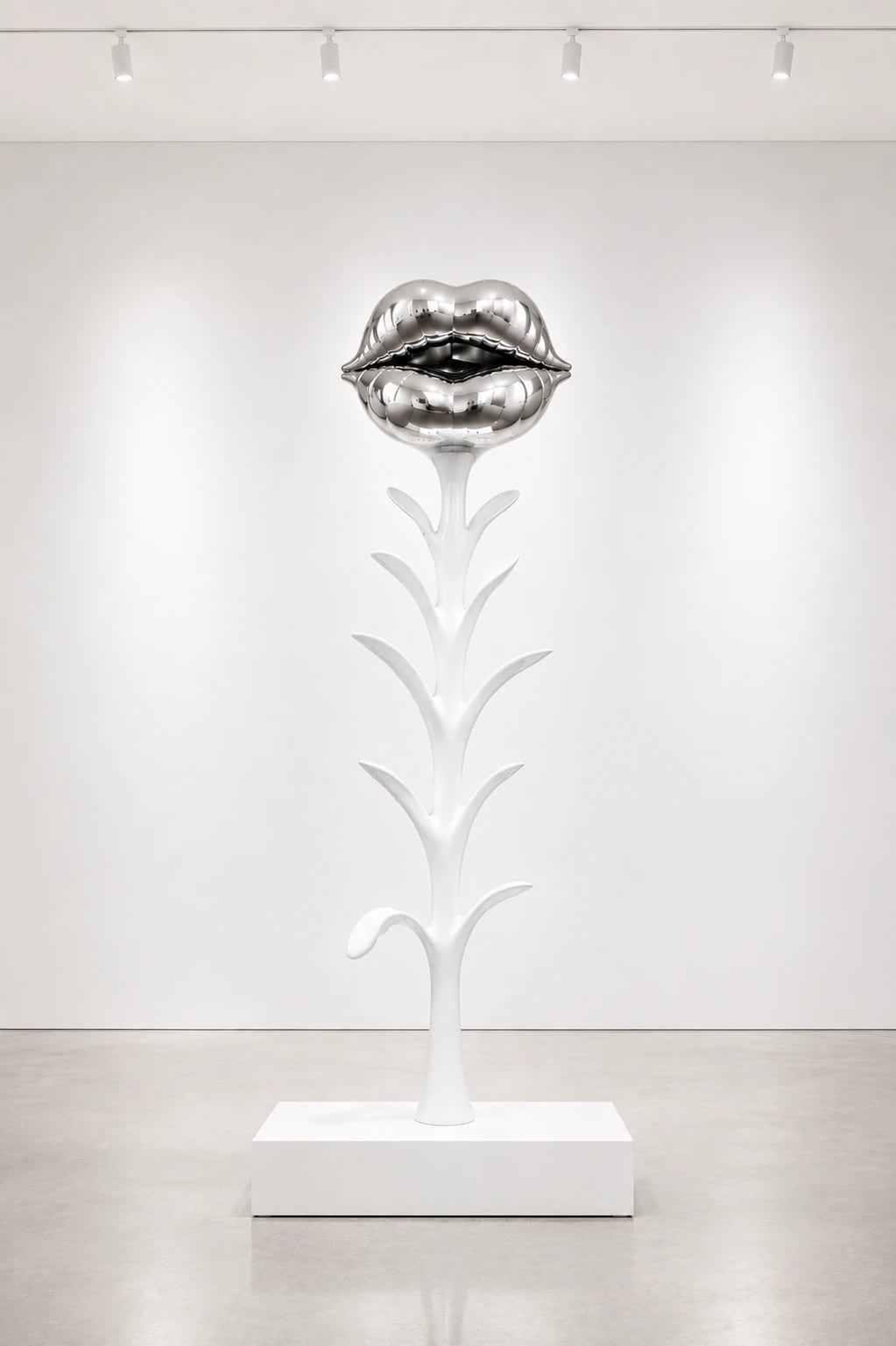
What has changed is the language through which I explore these questions. In Sanctum, the figure remains, but the circular opening becomes a space for consciousness and inner stillness rather than an absence. In Resonance, the body enters the work differently. The visitor’s own body becomes part of the sculpture through physical interaction. The touch of a hand triggers an acoustic response, making human presence an active element of the experience. The Threshold of Voice approaches the human condition through another form. The flowers retain their botanical structure, but their blossoms are replaced by human lips, bringing together organic growth and the human capacity for expression.
I don’t see this as a departure from figuration toward abstraction. I see it as an expansion of the same investigation. The human being remains at the center of my work, even when the physical representation of the body disappears.
What’s the relationship between the Mandala and the other works in the show? Are they saying similar things, or did you want to share a spectrum of ideas?
I see these works as different expressions of one continuous investigation: how something intangible can acquire a physical presence.
The Mandala, titled Resonance Array No. 1, began with a recording of the Gayatri Mantra, one of the oldest sacred mantras in the Vedic tradition. The mantra is a prayer for the illumination of human consciousness, seeking wisdom, clarity, and spiritual awakening. I was particularly drawn to its understanding of light not simply as a physical phenomenon, but as a symbol of inner awareness and transformation.
I worked with its acoustic information through digital processes, isolating and manipulating selected frequencies, then using that material as the foundation for a three-dimensional sculptural composition. Through repetition and spatial organization, individual elements developed into a complex radial structure. The resulting geometry is not simply an ornamental reference to a spiritual symbol. It originates from an actual sound recording, interpreted through digital technology and my own sculptural decisions. It is important to me that this is understood as an artistic translation rather than a literal scientific visualization of sound.
The circular composition evokes continuity, concentration, and the meditative process itself. I think of it as a contemporary sculptural amulet, an object that retains the intention associated with the original sound, even in silence.
Resonance takes this investigation into a more interactive dimension. When a visitor touches the sculpture, the contact triggers an audible response. The human body becomes part of the work, connecting physical presence with sound.
The Threshold of Voice approaches expression through a series of sculptural flowers. A flower has its own silent language. It communicates through form, color, and presence. By replacing the blossom with human lips, I introduce another dimension: the ability to give voice to what exists within us. The flower represents growth and transformation, while the lips suggest the emergence of consciousness into expression.
And Sanctum returns to the meditative human figure, to the inner stillness from which thought and intention emerge.
Although these works differ in form, material, and sensory experience, they are connected by the same underlying question: how can sculpture give physical presence to something we can experience but cannot see?
The Thresholds have sound built in. What does a visitor hear, and why put sound into steel?
What interests me is the contrast between the permanence of steel and the transient nature of sound. Steel is durable, precise, and physically present. Sound is intangible. It emerges, occupies space, and disappears. Bringing these two conditions together allows sculpture to exist beyond its purely visual form.
Visitors hear original sound compositions developed specifically for The Threshold of Voice. The acoustic element is not intended as background music or an accompaniment. It is conceived as part of the sculptural experience.
The visual language of the flowers is equally important. A flower represents growth, transformation, and the unfolding of life. By replacing its traditional blossom with human lips, I introduce another form of becoming: the emergence of voice. I am fascinated by the moment when something internal becomes external, when thought becomes language and breath becomes sound. For me, the spiritual dimension of voice is not necessarily religious. It concerns the expression of our inner experience: consciousness, intention, and emotion.
To develop the musical and technical dimensions of these works, I collaborate with Christeana Nahas Khan, professionally known as SHEISDZ, a Hollywood, California-based composer and creator of experimental musical instruments. Her professional experience includes a songwriting credit on Breakbot’s You Should Know, released through the influential French electronic music label Ed Banger Records. Our collaboration brings together two distinct disciplines. I develop the sculptural form and conceptual framework, while Christeana creates original musical compositions and custom-engineered sound systems that integrate sound into the work. Her vision for the musical and interactive dimension captures the essence of our collaboration: “Sculpture that listens. Music you can touch.”
What interests me is how these elements can transform our relationship with a physical object. The material preserves the form, while sound introduces duration, movement, and an experience that cannot be captured in a single moment. The sculpture remains physically constant, but our encounter with it can change.
Which works are you most excited to show?
I am particularly excited about Resonance because it represents an important turning point in my practice. For many years, the physical form of a sculpture was my primary means of communicating an idea. With Resonance, the viewer becomes part of that communication. A simple touch of the hand triggers sound. The sculpture is no longer experienced only as an object to observe, but as something with which a person can establish a direct relationship. What excites me is the possibility of transforming such a small, instinctive gesture into an unexpected sensory experience.
I am also excited to present Sanctum alongside the newer works because it reveals the connection between my earlier figurative language and the direction my practice is taking today. For me, these works are not separate experiments. They represent an evolution in how I understand sculpture and its relationship to human consciousness.
What excites me most is that sculpture is no longer confined to what we see. It can become something we touch, hear, and participate in. And I feel that I am only beginning to explore what that relationship can become.
What do you want visitors to walk away with?
A heightened awareness of being alive. Much of our experience is shaped by things we barely notice: sound, rhythm, silence, and our own internal state. These elements constantly influence how we perceive the world. My recent sculptures bring these relationships into physical form. A simple touch can produce sound. An acoustic recording can become a three-dimensional structure. An apparently static object can create an experience that unfolds through time.
I am interested in the moment when visitors become aware of their own participation, when they begin to perceive something they might otherwise have overlooked. Above all, I want the encounter to be life-affirming. I want people to leave with a stronger awareness of life, not a greater awareness of death.
I want people to leave with a stronger awareness of life, not a greater awareness of death.
Lina Condes
Is there anything that you want people to know that I didn’t ask?
Meditation and the relationship between consciousness, intention, and sound have become increasingly important to my practice. I have long been interested in what I describe as elevated frequencies, both in their acoustic sense and as a way of thinking about our internal state. There is an important distinction between the two. Acoustic frequencies are measurable. They can be analyzed, manipulated, and translated into visual structures. The experience of meditation is subjective. It concerns awareness, inner balance, clarity, and the way we direct our consciousness. My work brings these dimensions into conversation.
I am particularly fascinated by the human voice. Before a word is spoken, it exists internally as thought, intention, or feeling. Through breath and sound, something intangible acquires a presence beyond the body. For me, the voice represents a threshold between our internal and external worlds.
I approach spirituality not as a theory to be proven, but as an aspect of human experience that sculpture can make perceptible. Ultimately, I am interested in the relationship between what we can measure, what we can perceive, and what we experience within ourselves.