Interview · New York
Everything and nothing all at the same time
Channing Hansen spins wool from rare breeds of sheep, knits it by hand to scores his own code writes, and stretches it like canvas. With his show Metaphotical Spectra at Susan Inglett Gallery, he tells us why he stopped calling himself an artist after art school, why he now calls the knitted works superpositions, and how a colorblind artist picks color by wavelength.
Metaphotical Spectra, Susan Inglett Gallery, 522 West 24th Street, New York. 22 October – 25 November 2026.
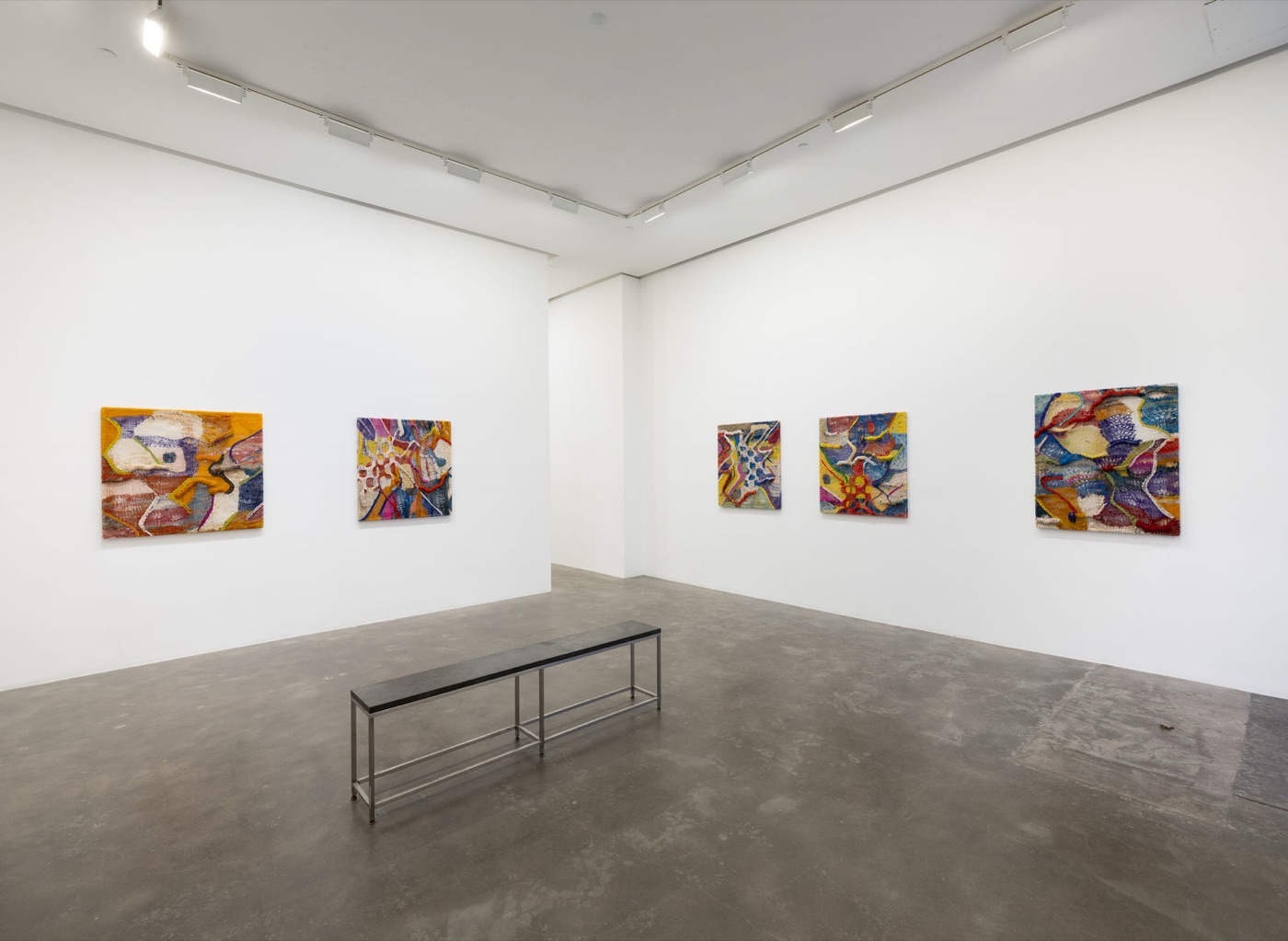
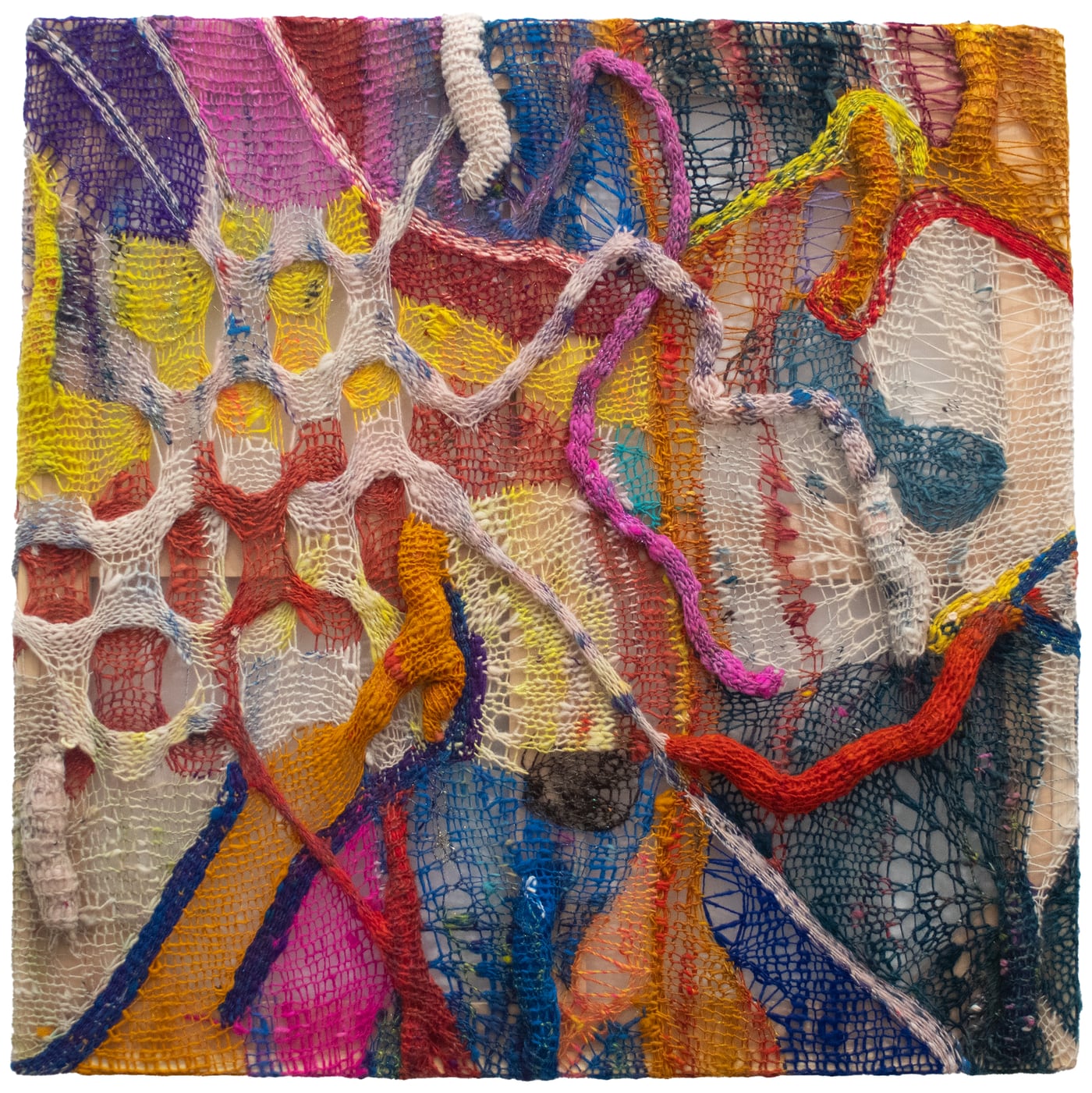
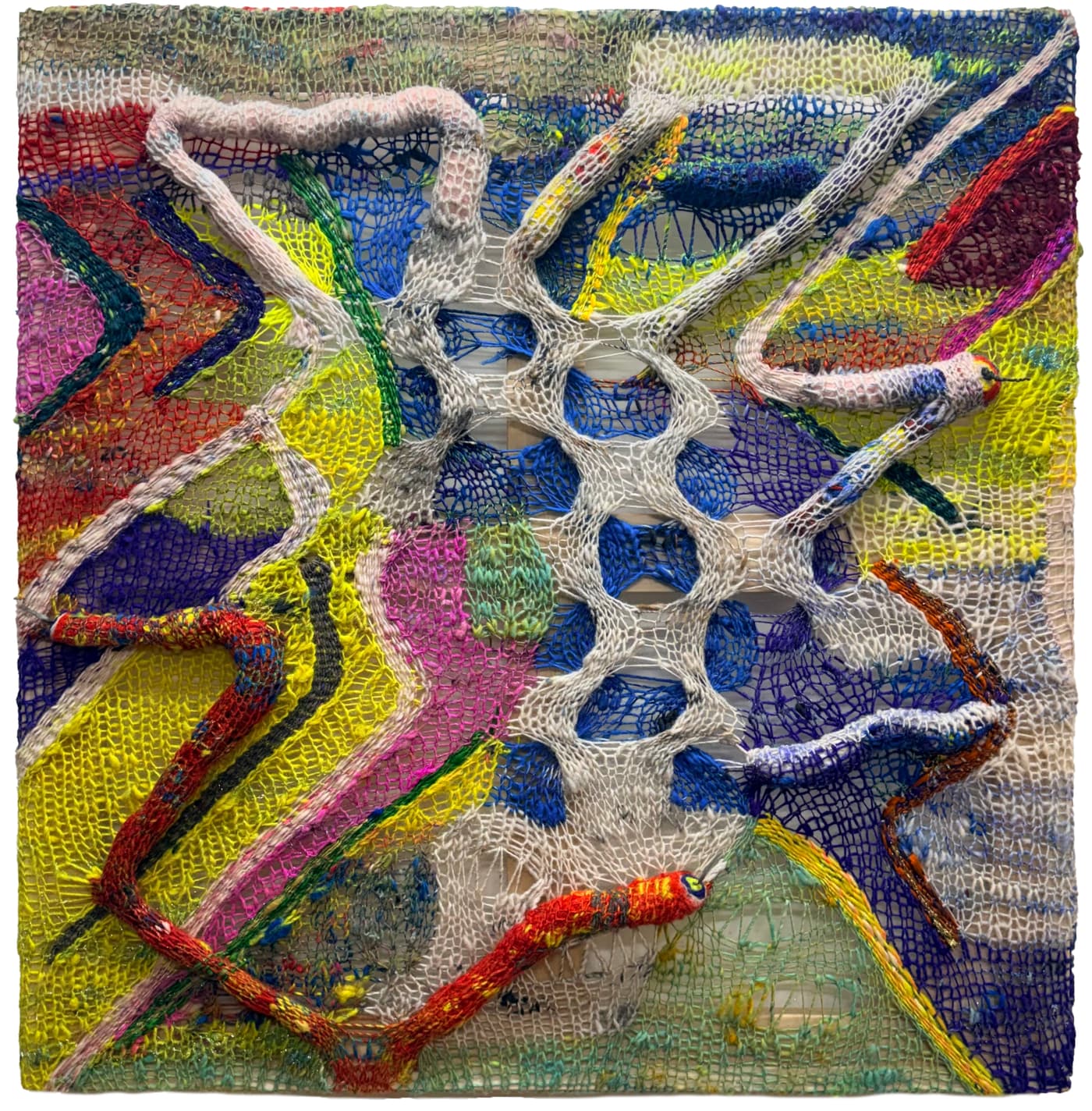
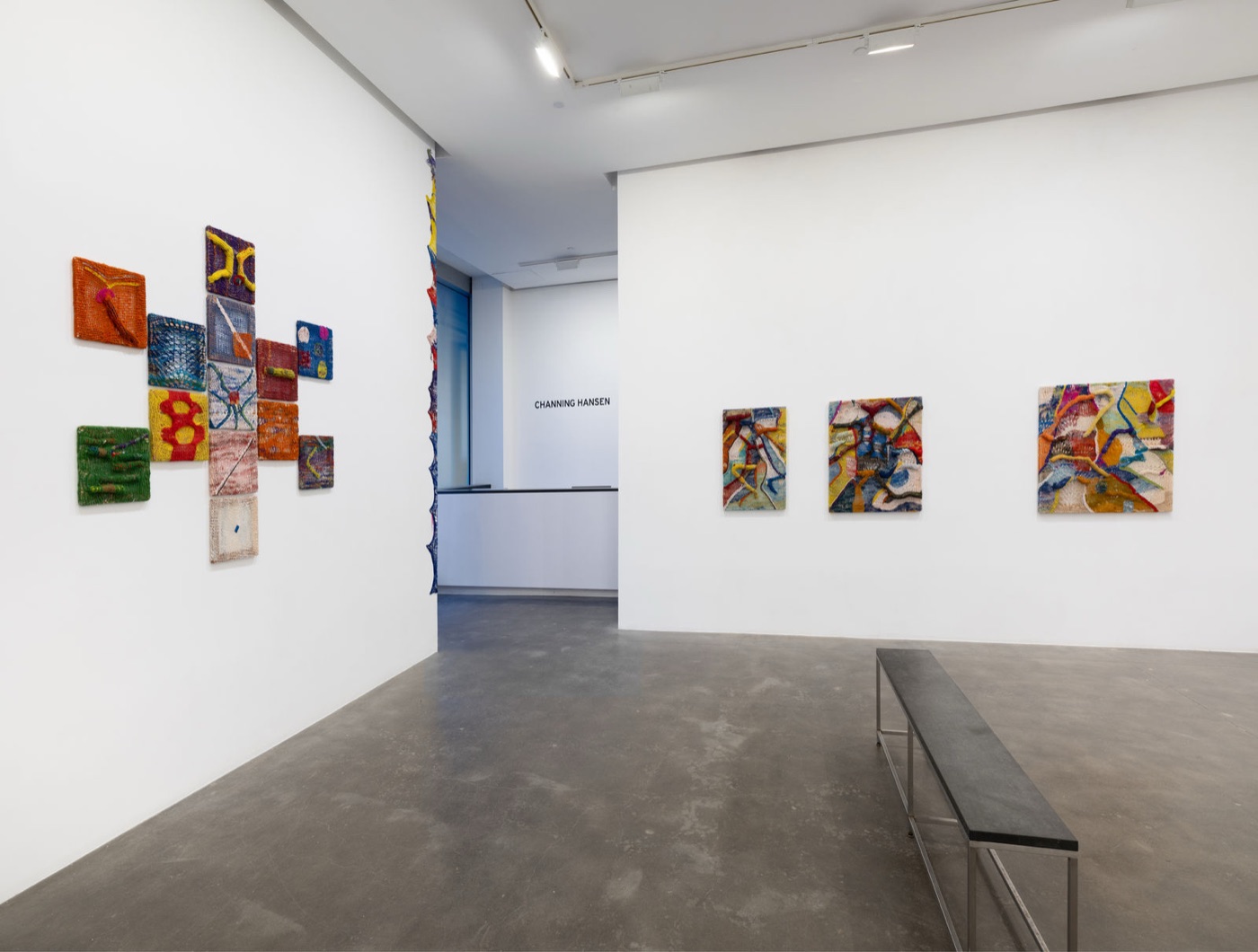
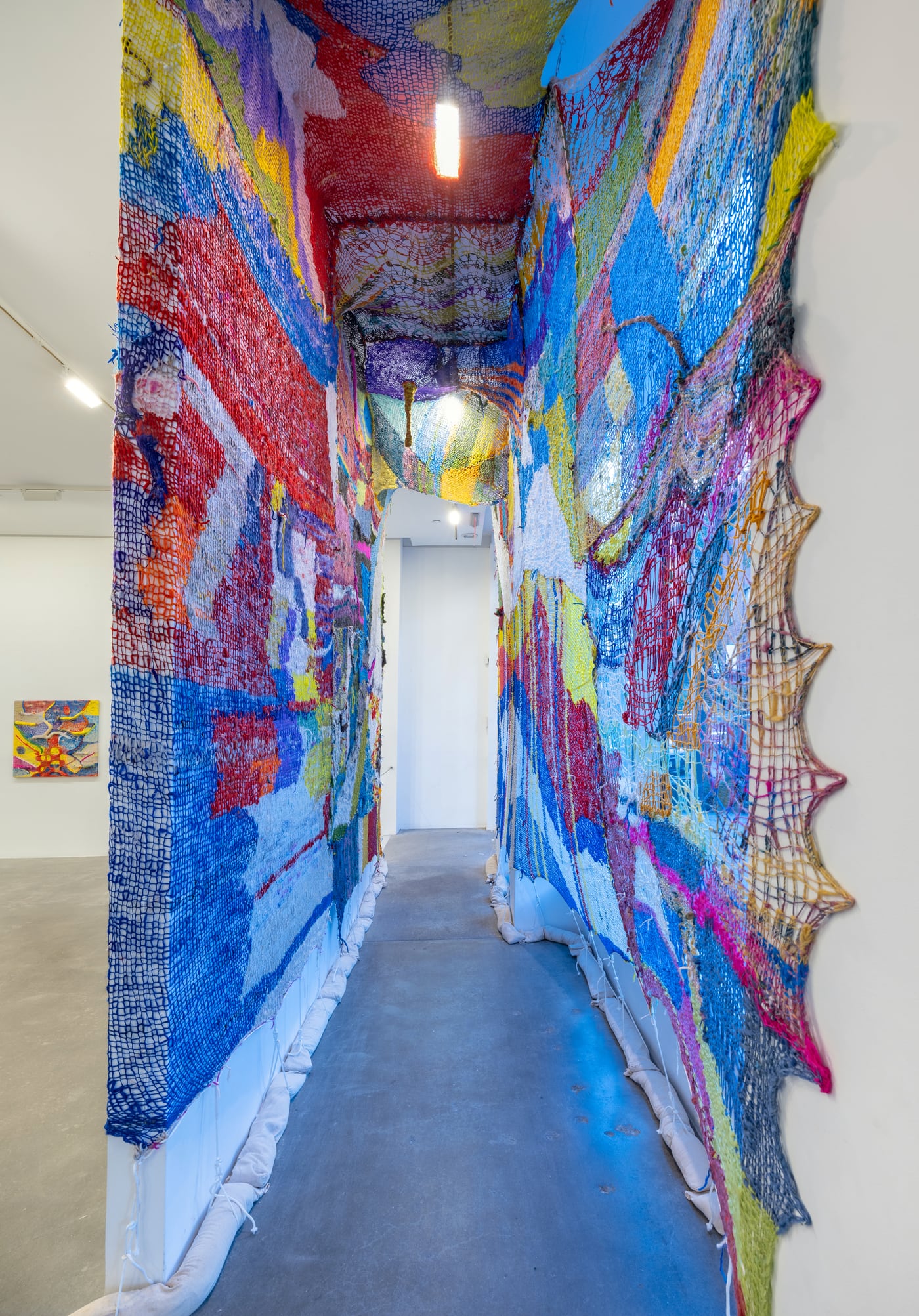
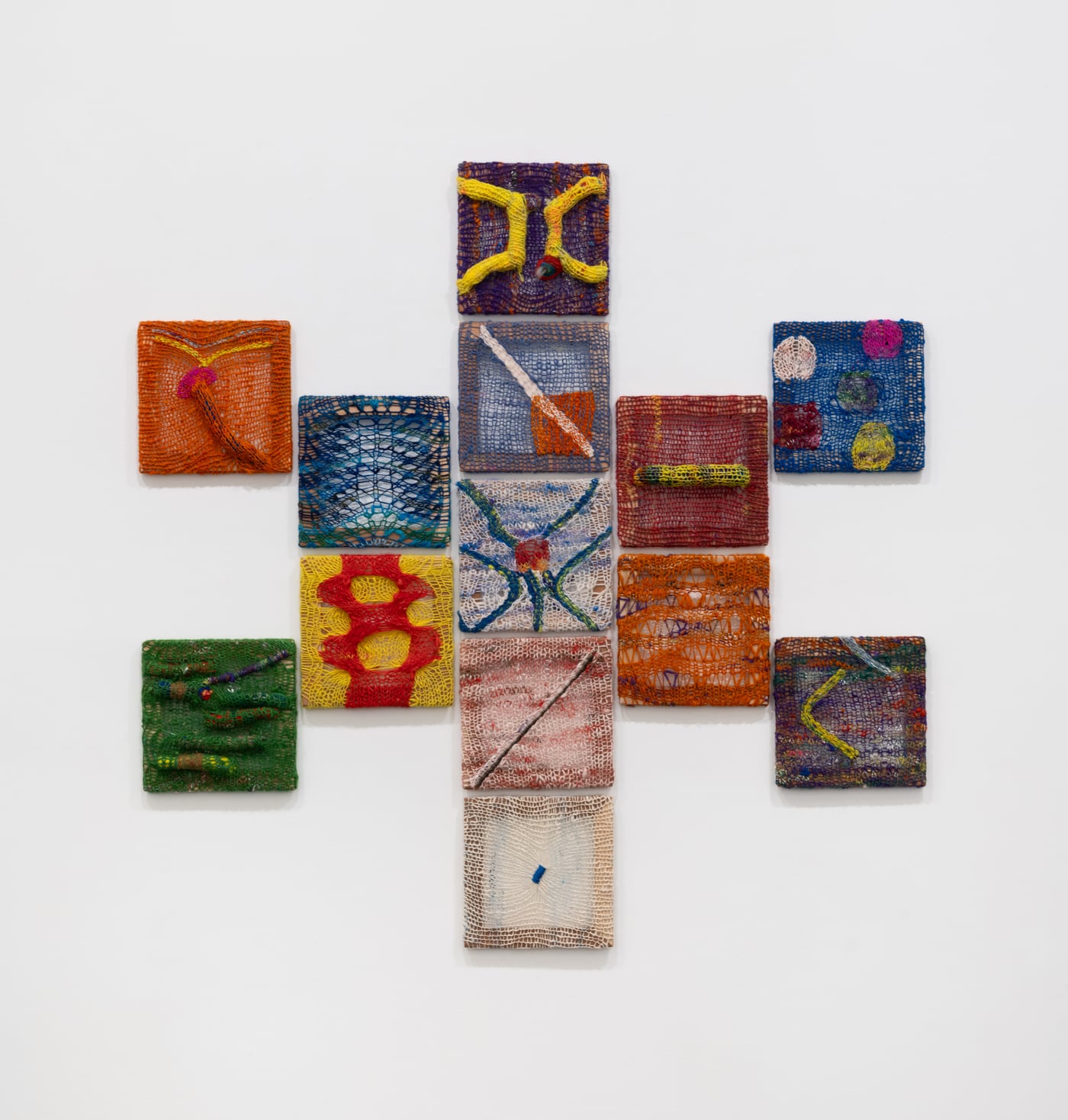
Metaphotical Spectra, on view at Susan Inglett Gallery in Chelsea through November 25, is Channing Hansen’s second solo show with the gallery. Hansen knits every superposition, as he calls his works, by hand, from wool he spun and dyed himself. The pattern follows a score written by his own code, which decides each stitch, fiber and color. The finished knit is then stretched over a wooden frame like a canvas. The scores for this show are inspired by biophotons, the faint light that living things give off.
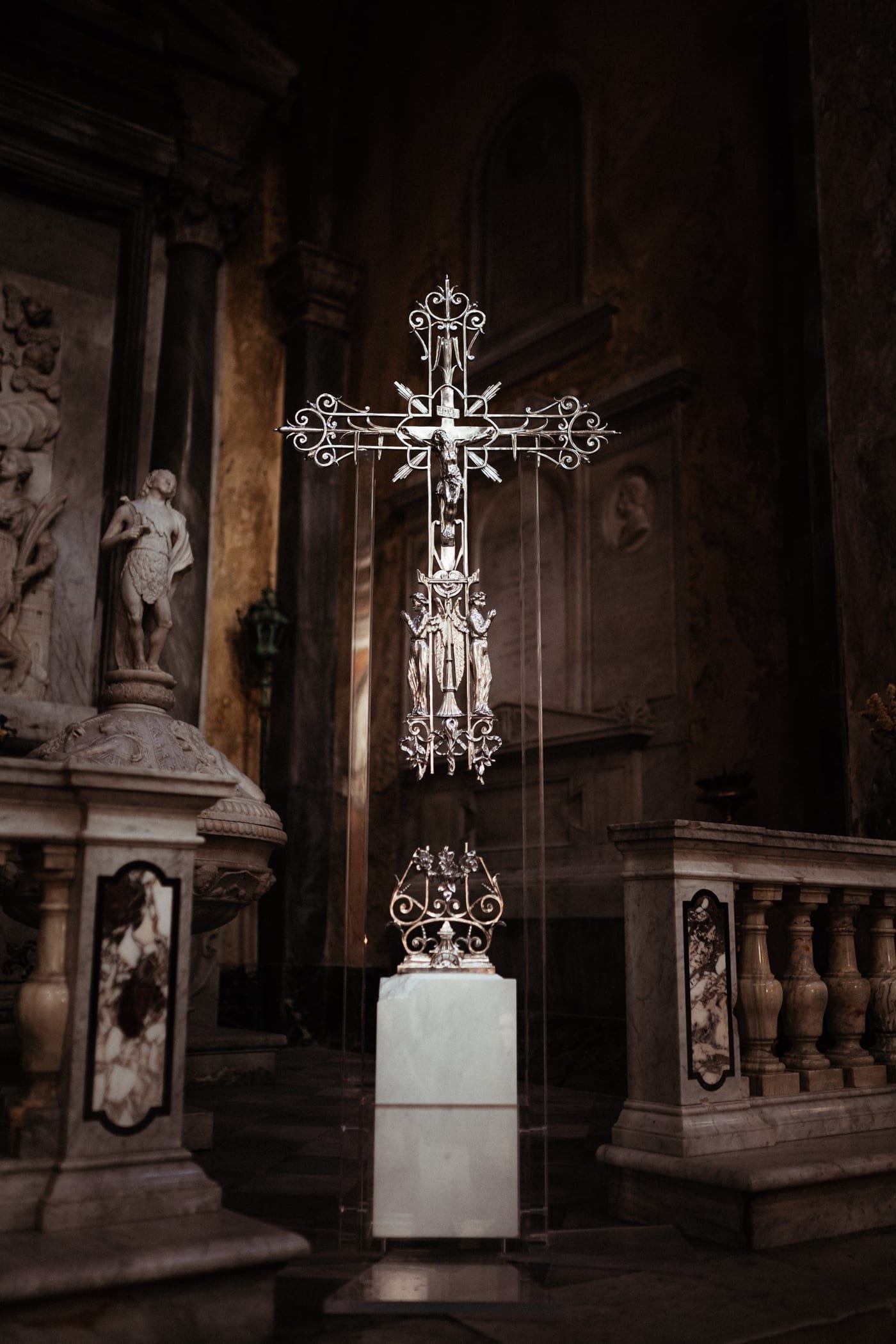
Hansen was born in Los Angeles in 1972 and grew up taking part in the Happenings of his grandfather, the Fluxus artist Al Hansen. He studied at the San Francisco Art Institute, learned to knit in the mid-2000s, and by 2010 was making what he called knitted paintings, which the Hammer Museum, LACMA, MOCA, the Art Institute of Chicago and the Stedelijk Museum now hold. He works in Hudson, New York, and Los Angeles. He answered our questions in writing.
The artist
Channing Hansen
You learned to knit from a friend after seeing him making a hat at your table, got hooked and, as you have said, knitted twelve hours a day. What were you making before you started the knitted paintings in 2010?
I grew up in an art family. I’ve been making and altering things for as long as I can remember. After art school, where I studied performance and video, I stopped calling myself an artist. I could have gone right into showing at galleries just for who my family was, but I didn’t think my work added anything new. It didn’t create new knowledge as good art should.
Did you always picture that you’d turn your knitting into fine art, or were you working toward something else initially?
I never stopped making things, mind you, I just stopped calling it art. Instead, I started collecting hobbies as my hobby. Wood turning, robotics, fencing, astrophonetography, and yes, knitting. I was knitting so much it started bleeding into my art practice. Fiber became a medium for me to explore in dialogue with painting.
How do you view the transition from creating sculptures and performances to knitted paintings? Do you view knitting as a continuation of what came before or as a new direction?
My work has always had Fluxus DNA in it. In the beginning of my exploration of fiber as a medium, I really distanced myself from craft and the title “fiber artist.” I kept saying, “Craft resolves questions; art asks them.” I wanted to shift the discussion away from “knitting as craft” and toward craft as a philosophical instrument.
I wanted to shift the discussion away from “knitting as craft” and toward craft as a philosophical instrument.
Channing Hansen
Why do you refer to your works as paintings rather than textiles or sculptures?
I’ve always had difficulties with what to call my works. Sol LeWitt writes about resisting words like painting and sculpture as they can place limitations on the artist. Recently, I’ve decided to call my knitted works superpositions, a term I’ve borrowed from quantum physics.
Some people think of my fiber works as sculptures, as drawings, paintings, or tapestries. In that way my works exist in “superposition.” Everything and nothing all at the same time until observed, and then it becomes a painting, or textile, or whatever. All interpretations are valid.
Your captions name the animals that the fiber is made from. A sheep called January is mentioned in works from 2017 to 2021 and Daisy from 2019 to now. How do you come to know these sheep, and who is responsible for them?
I source all sheep wool from conservation farms to raise awareness of the monoculture and factory farming of Merino sheep. The overwhelming majority of wool-breed sheep in the world are now from a single breed, Merino. Breeds that have been around for millennia are now endangered.
Has seeing the raw material ever changed your intention for a work?
Intention always dictates the raw material for me.
Color is a clear focus of your work, but you’re colorblind. How do you navigate picking colors?
I am completely colorblind. A rare kind, where I do see colors, just not any anyone else sees. I often have custom dyes made to reflect specific wavelengths of the visible light on the electromagnetic spectrum. Instead of saying “red,” which is subjective, I have to say 625 nanometers.
As for picking colors, it entirely depends on the ideas and concepts I’m working with.
You said that you deliberately gave the program a list of mistakes to choose from. Why did you build errors into the system?
My grandfather would write to me when I was in art school with advice like, “Be wrong. Make mistakes. Your mistakes will reveal the future of your work. Progress is a series of funerals.” That’s why I always add a mistake variable subroutine to my scores.
I’ve seen you mention many STEM ideas: topology, the pseudorandom limitation of computers, al-Khwarizmi’s invention of the algorithm, genetics, single-photon emission. Where does the interest in science come from, and what impact does blending this with your art have?
I’m interested in how my scientific fascinations can inform an abstract artwork without requiring it to illustrate a scientific concept. My algorithms don’t simply automate the work. They create a situation in which I have to negotiate with something I didn’t completely decide. The work emerges from a feedback loop. It is a translation system between different kinds of information.
I don’t think the technology behind the making of the work is all that interesting. Whether I use code I made in Python, a custom coded AI construct, or analog processes like GPS data overlaid on solar charts, I have created a system in which information becomes physical. To me that is interesting.
I have described the algorithm as a score. An algorithm, in my practice, is essentially a set of instructions with set variables, which act as constraints that give me infinite possibilities. My variables can include: color, stitch, density, direction, repetition, mistakes, and dimensional relationships. From there, I interpret these instructions physically. That makes the process strangely closer to musical composition or choreography, genetic sequencing, or a Fluxus score.
You have a clear dedication to science, but your gallery’s description of the show references the metaphysical. Where does the science end and the metaphysics begin for you?
My current show at Susan Inglett Gallery is called Metaphotical Spectra. It’s a combination of metaphysical + photonic.
The more I explore the overlapping edges of quantum physics and metaphysics, the more mystical I’ve become. I’m not claiming physics proves metaphysics. I’m interested in the questions physics can’t answer, the “we just don’t know” questions, rather than using physics to prove mystical ideas.
To answer your second question, science uses the scientific method and deals with what is measurable. Metaphysics uses logic and deals with non-physical structures of reality that lie beyond direct physical detection. Both figure deeply in my practice.
Wool can degrade, stretch, sag, and get eaten by moths. How do you view conservation, and if a work needs repair in fifty years, what are your instructions?
Like Tony Conrad’s Yellow Movies. He thought of them not as traditional paintings, but as infinite-duration, non-narrative films. In this way, my superpositions are also cinema.
That said, I also have the utmost respect for conservation scientists. They can repair anything.